Banquet chairs do much more than provide a place to sit. In hotels, wedding venues, conference centers, country clubs, and event halls, they play an important role in guest comfort, room appearance, and the speed at which spaces can be prepared for different occasions. A ballroom arranged for a wedding reception on Saturday may need to accommodate a business conference on Monday. The right chairs make these transitions easier while creating a comfortable and welcoming environment for guests.
Although banquet chairs may appear similar at first glance, their features can make a considerable difference in how a venue operates. Stacking capacity affects storage requirements, flex-back designs provide additional comfort, and optional ganging mechanisms help maintain organized seating rows. Some models even feature front casters or integrated handholds that make transporting and arranging chairs more convenient.
Choosing the right banquet chairs begins with understanding these differences. This guide explores the various banquet chair styles, explains the advantages of five-high and ten-high stacking designs, and examines how different features can benefit venues of all sizes.
Understanding Different Banquet Chair Types
Banquet chairs are designed for commercial environments where seating must accommodate frequent use, changing room arrangements, and a wide variety of events. Unlike traditional restaurant chairs that generally remain around dining tables, banquet seating is frequently moved, stacked, transported, and repositioned. This makes durability, manageable weight, comfort, and storage important considerations when choosing chairs for an event space.
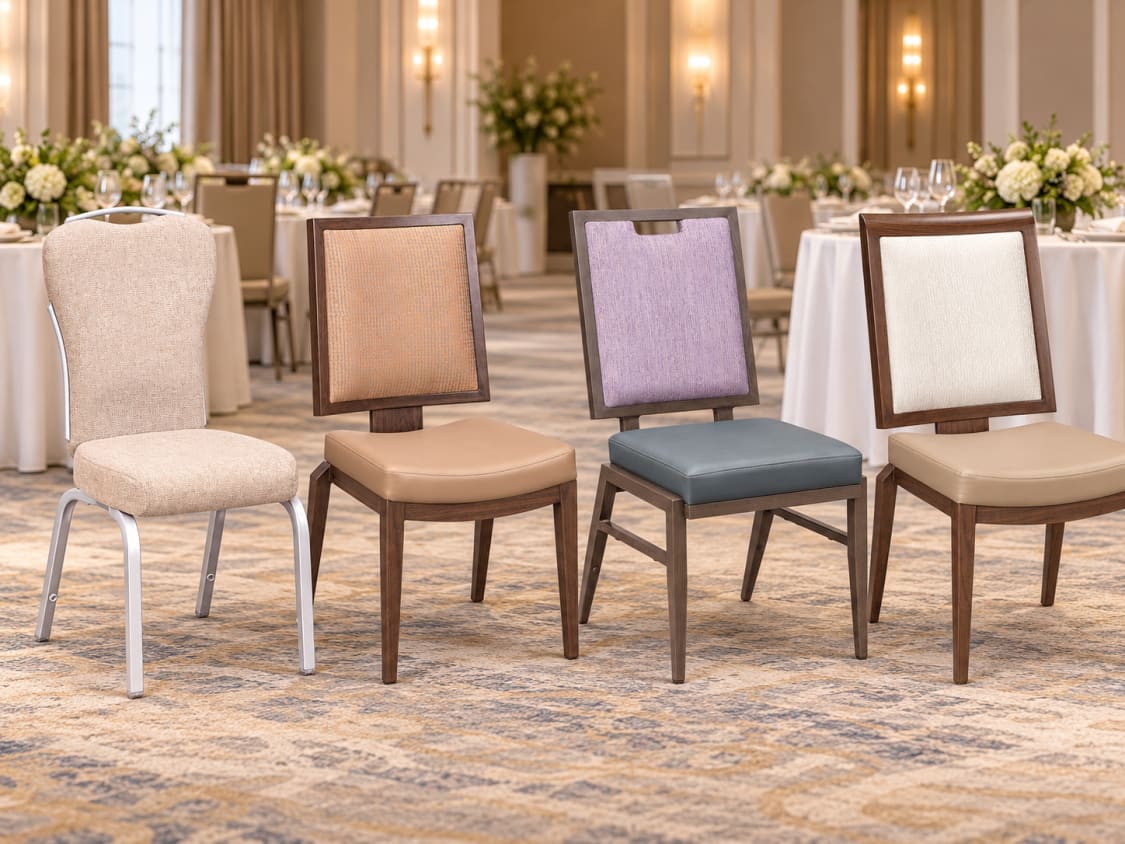
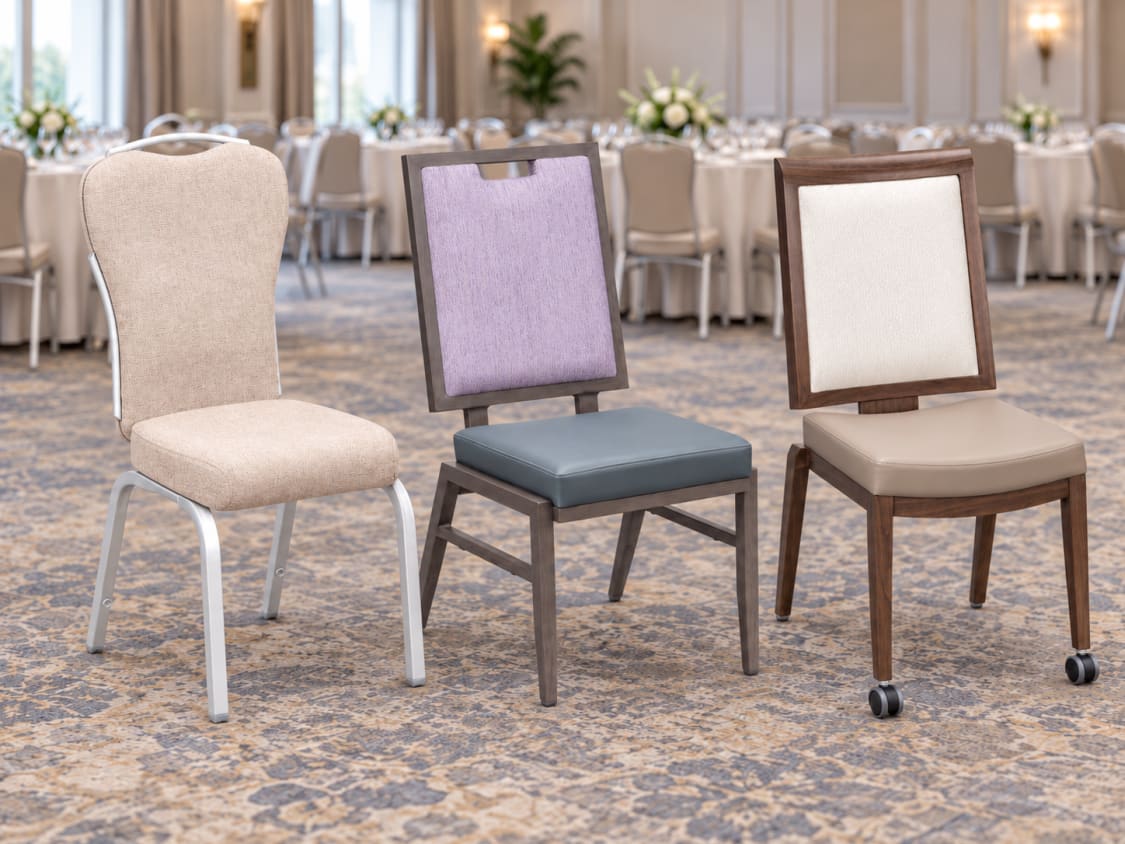
Commercial banquet chairs are available in several designs, ranging from traditional upholstered chairs with rounded backs to contemporary styles featuring geometric frames and decorative detailing. Some have stationary backs, while others incorporate flex-back mechanisms that allow gentle movement as guests shift in their seats. Select models can also be equipped with ganging mechanisms or front casters to make room arrangements and chair handling more convenient.
The most important differences generally fall into four categories:
Chair Feature
Primary Benefit
Stacking Capacity
Determines how chairs can be organized and stored between events
Flex-Back Design
Provides gentle back movement for additional seated comfort
Ganging Mechanism
Connects adjacent chairs to maintain organized seating rows
Optional Front Casters
Makes moving and repositioning chairs more convenient
Understanding these features makes it easier to select seating that suits both the atmosphere of the venue and the demands of its event schedule.
Banquet Chair Stacking: Five-High vs. Ten-High
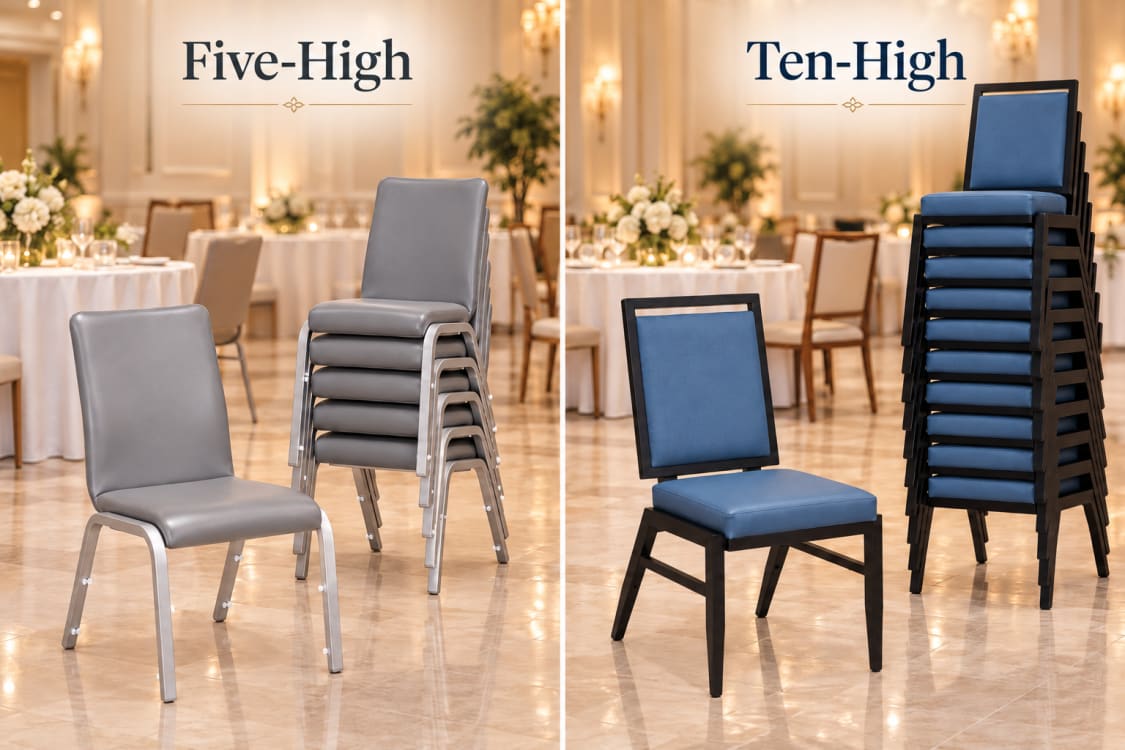
One of the most important considerations when purchasing banquet chairs is how many can be stacked together. Stacking chairs allow facilities to store large quantities of seating without dedicating an entire room to individual chairs. However, not every stackable banquet chair is designed for the same stacking height.
Two of the main stacking options are chairs that stack up to five high and models that stack up to ten high. Both provide space-saving storage, but each suits different operational priorities. Five-high chairs may be appropriate for venues with manageable seating inventories and fewer room changes. Ten-high designs can be especially valuable in facilities that regularly store hundreds of chairs or change their seating arrangements between events.
Convention centers, conference facilities, large event halls
Setup Requirements
Suitable for smaller inventories and moderate room changes
Useful for frequent large-scale seating changes
Main Advantage
Convenient storage with manageable stack heights
Greater stacking capacity for larger chair inventories
Consider a venue with 100 banquet chairs. At their maximum stacking capacities, five-high models would require 20 stacks, while ten-high models would require just 10. Although the actual storage footprint depends on chair dimensions and the storage arrangement, the difference in the number of stacks can be significant for venues managing large seating inventories.
Storage Tip:
Always check the manufacturer's stacking limit, the available storage height, and the appropriate handling equipment. Stacking capacities are model-specific, and some specialty banquet chairs have different limits. The permitted storage stack and permitted transport load may differ. Staff should use compatible handling equipment and follow its load limits. Optional casters or ganging hardware should be checked for any effect on stacking.
How Stacking Requirements Change Between Venues
Not every event facility has the same seating needs. A hotel ballroom that hosts several different events each week may prioritize stacking capacity and easy transportation, while a private country club may place greater emphasis on upholstery, comfort, and appearance. The number of chairs, frequency of room changes, available storage, and types of events all influence which banquet seating is most suitable.
Larger facilities may need to remove hundreds of chairs after a conference or wedding reception before preparing the room for another function. In these environments, ten-high stacking can reduce the number of separate stacks staff must organize. Smaller banquet rooms and private dining spaces may find five-high chairs sufficient, particularly when seating arrangements remain relatively consistent.
Matching Banquet Chairs to Different Venues
Venue Type
Seating Priorities
Features Worth Considering
Hotels and Ballrooms
Flexible seating for weddings, receptions, and business events
Five-high or ten-high stacking, flex-backs, optional casters
Conference Centers
Frequent changes between classroom and theater arrangements
Facilities that regularly change their floor plans should evaluate how much time staff spend moving and arranging chairs. A meeting room may need straight rows for a presentation in the morning and round dining tables for a luncheon later that afternoon. Lightweight banquet chairs, integrated handholds, and suitable stacking equipment can make these transitions easier.
For venues with fewer events or more permanent layouts, stacking height may be less important than guest comfort and appearance. The goal is to select chairs that accommodate the venue's regular schedule without paying for features that will rarely be used.
Design Takeaway
Stacking capacity should reflect how a venue actually uses its seating. Larger inventories and frequent room changes may benefit from ten-high designs, while smaller spaces can often meet their needs with five-high models.
Five-High Stackable Banquet Chairs
Five-high banquet chairs are a popular option for hotels, country clubs, wedding venues, and banquet rooms where seating comfort and appearance are important. These chairs can be stacked in groups of up to five, allowing staff to remove extra seating and keep rooms organized between functions.
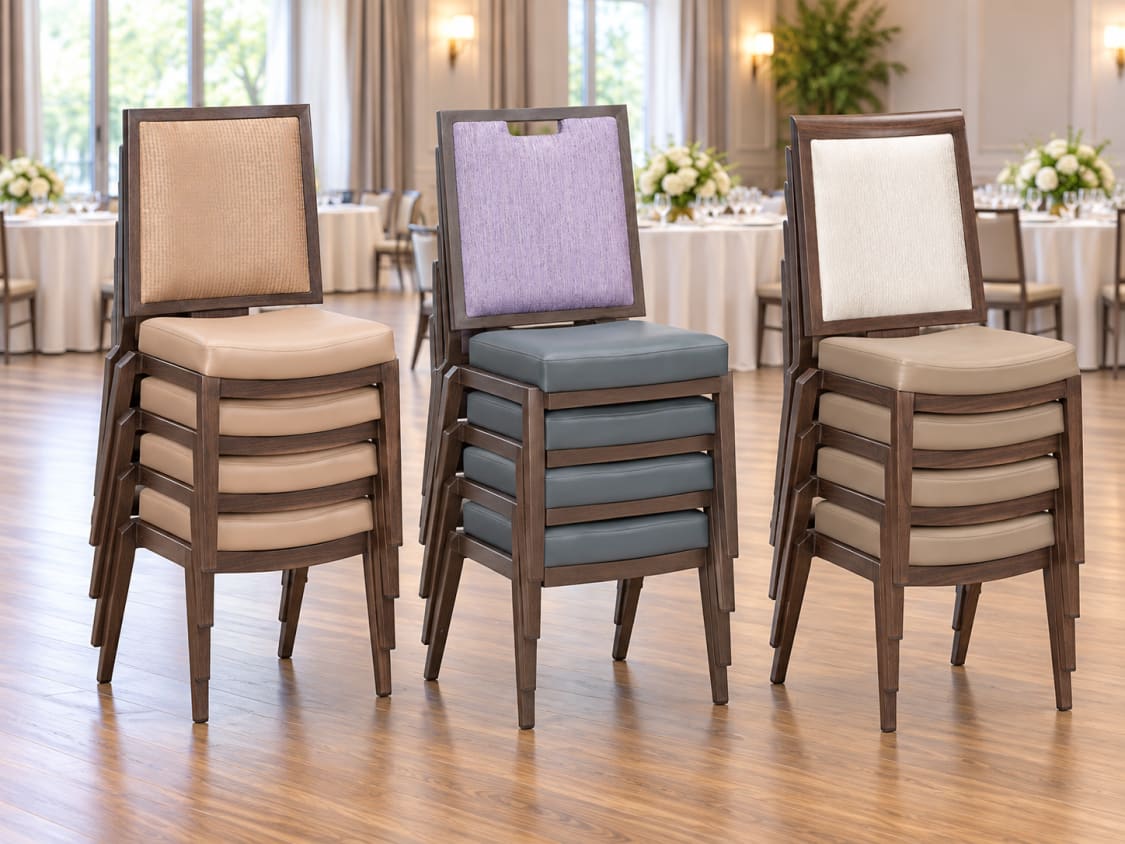
Many five-high models feature upholstered backs, padded seats, and a variety of frame designs. This provides flexibility when selecting chairs to coordinate with the character of a particular venue. A traditional ballroom may favor softly rounded upholstered backs and warm wood-grain finishes, while a contemporary conference room may benefit from a more geometric frame design.
Five-High Banquet Chair Styles
The collection includes several designs with five-high stacking capabilities. The Avelique Aluminum Flex-Back Banquet Chair features a geometric upholstered back with an integrated flex-back system and optional front casters. The Loravix Aluminum Flex-Back Banquet Chair has a softly rounded upholstered back and is also available with optional front casters and a ganging mechanism.
Other choices include the Trevall Slim Banquet Chair, featuring a lightweight steel frame and narrow upholstered back, and the Virexen Premium Stainless Steel Banquet Chair, which introduces a distinctive stainless steel appearance. These options allow facilities to match their seating with the style of their interiors while maintaining practical storage capabilities.
Where Five-High Chairs Work Best
Five-high stacking can be an excellent choice for venues with dedicated storage rooms, moderate chair inventories, and event schedules that do not require constant large-scale furniture changes. They are also worth considering for venues that want specific seating designs or comfort features that happen to be available in five-high models.
For example, a country club hosting private dinners and occasional receptions may prefer upholstered five-high chairs that coordinate with its dining room. The chairs can remain in use for regular functions and be stacked when additional floor space is required.
>
Ten-High Stackable Banquet Chairs
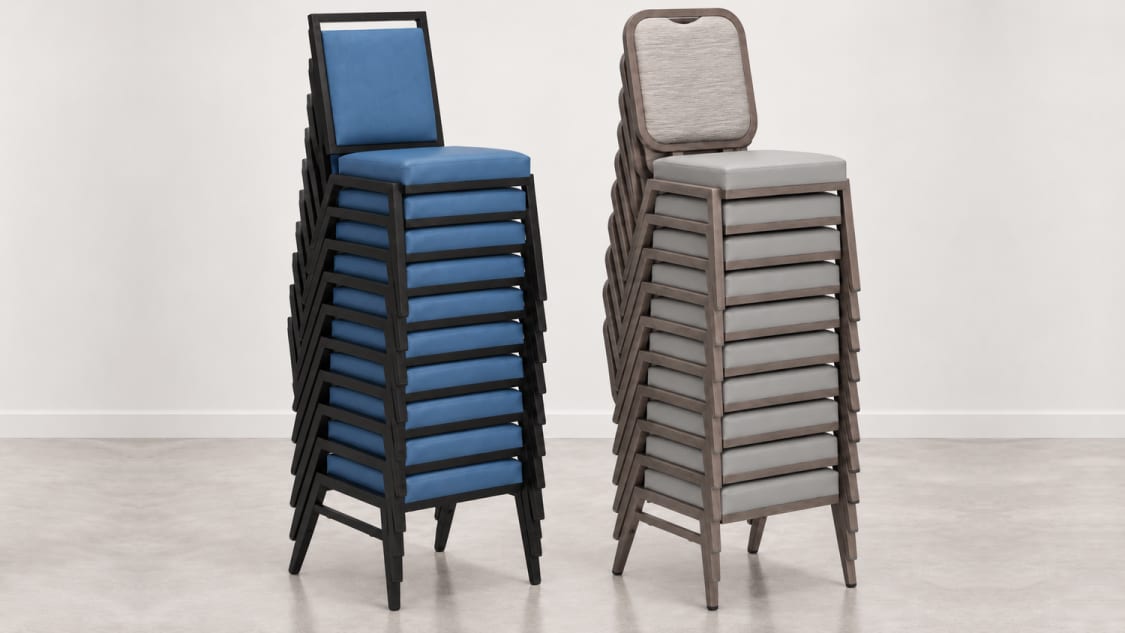
The Noveltra Aluminum Flex-Back Banquet Chair features a fully upholstered back with an integrated handhold and flex-back design. Its lightweight aluminum frame makes it practical for busy event environments, while the optional ganging mechanism allows chairs to be connected in organized rows.
The Eldorven Aluminum Flex-Back Banquet Chair also stacks up to ten high and features an upholstered back with a built-in handhold. It can be specified with an optional ganging mechanism or front casters, making it particularly useful for venues that frequently rearrange seating.
Another option is the Geraldine Flex Back Aluminum Stack Chair, which features a molded foam seat, aluminum frame, and flex-back support with ten-high stacking capacity.
When Greater Stacking Capacity Matters
Imagine a conference center preparing for a 300-person presentation. Once the event concludes, the same room may need to accommodate dining tables for an evening reception. The ability to stack chairs in taller groups can help reduce the number of stacks that need to be organized and stored during the transition.
Ten-high stacking is particularly valuable when storage space is limited relative to the size of the seating inventory. However, the height and weight of a fully loaded stack must be considered when choosing storage equipment and planning staff handling procedures.
Flex-Back Banquet Chairs
Comfort becomes increasingly important when guests remain seated for extended periods. Wedding receptions, conferences, award ceremonies, and formal dinners often last several hours, making seating support a significant part of the overall experience.
Flex-back banquet chairs are designed with a mechanism that allows the backrest to move gently as a person shifts position. Unlike a stationary back, which remains fixed, a flex-back provides controlled movement that accommodates natural changes in seated posture. The result is a more adaptable seating experience that can be particularly appealing during longer events.
How Flex-Back Chairs Improve Guest Comfort
Guests rarely remain in one position throughout an entire event. They may lean forward during a presentation, sit back during a meal, or adjust their posture during a lengthy ceremony. Flex-back chairs allow small changes in backrest position without requiring guests to move the entire chair.
These designs can be especially useful in:
Conference rooms hosting extended presentations and training sessions
Hotel ballrooms used for business meetings and formal dinners
Country clubs hosting banquets and special celebrations
Event facilities where guests remain seated for longer periods
Flex-Back Options for Different Stacking Requirements
Flex-back chairs are available in both five-high and ten-high stacking designs. Models such as the Avelique, Loravix, and Calvena stack up to five, while the Noveltra and Eldorven provide ten-high stacking capacity.
This allows venues to consider comfort and storage together rather than treating them as competing priorities. Facilities with limited storage space can select ten-high flex-back chairs, while smaller venues may prefer one of the five-high designs.
Design Takeaway
Flex-back seating can be a worthwhile addition for venues hosting longer events. When paired with comfortable upholstery and supportive cushioning, these chairs help create a more pleasant experience for guests without sacrificing stackability.
Ganging Mechanisms for Organized Seating
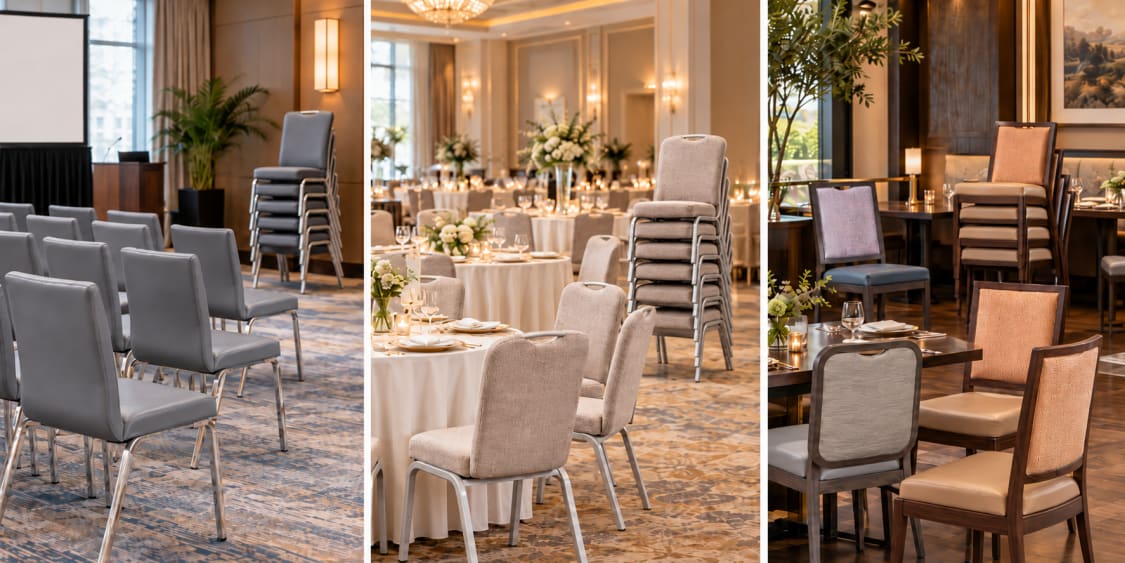
Some events require banquet chairs to be arranged in long, evenly spaced rows rather than around dining tables. Conferences, seminars, lectures, ceremonies, and presentations often depend on this type of seating arrangement, making a ganging mechanism a valuable optional feature.
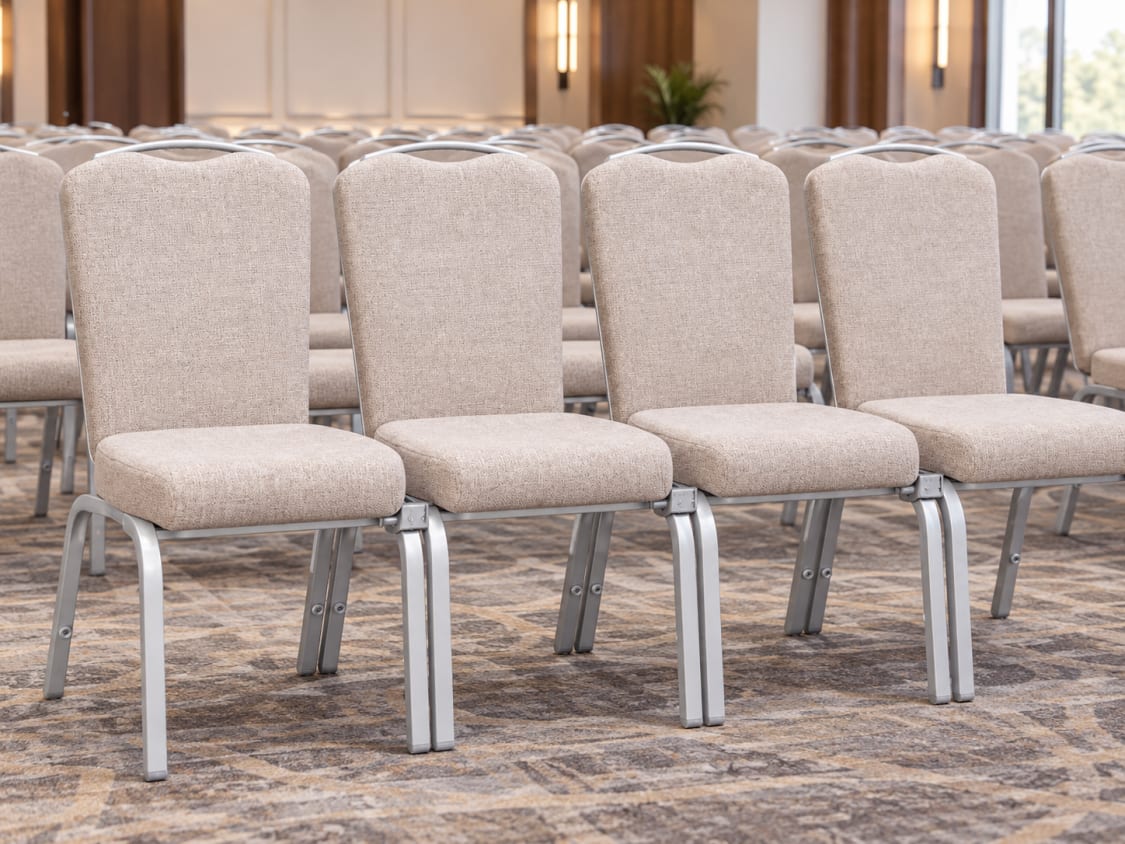
A ganging mechanism connects adjacent chairs, allowing them to remain aligned in a consistent seating configuration. Instead of arranging every chair independently and repeatedly correcting uneven rows, staff can create connected seating sections that maintain a more orderly appearance throughout the event.
Ganging mechanisms are particularly helpful in conference centers, hotel meeting facilities, auditoriums, and multipurpose event spaces. They are especially valuable when large audiences need to face a stage, speaker, or presentation area.
Common applications include:
Theater-style seating for conferences and presentations
Training sessions and educational seminars
Wedding ceremonies with straight seating rows
Award ceremonies and corporate gatherings
Large meetings and other assembly-style events
Several banquet chair models are available with optional ganging mechanisms, including the Noveltra, Eldorven, Avelique, Loravix, Calvena, Trevall, and Selvior.
Planning Seating Rows
Ganging mechanisms can improve the consistency of a seating arrangement, but the overall floor plan must still provide suitable aisle widths, accessible seating positions, and safe movement through the room. Assembly seating requirements vary by location and event configuration, so any applicable building and fire-code requirements should be verified during planning.
For venues that host both seated dinners and theater-style events, selecting chairs with optional ganging mechanisms can provide additional flexibility without requiring a completely separate seating inventory.
Optional Front Casters and Handholds
Moving banquet chairs is a regular part of event preparation, particularly in facilities that host several functions throughout the week. Even relatively lightweight chairs can require considerable handling when staff must arrange or remove hundreds of seats. Features that make chairs easier to grip, reposition, or transport can therefore have a meaningful impact on room setup.
Select banquet chair models are available with optional front casters. These small wheels make it easier to reposition chairs and reduce the need to carry them over short distances. They can be particularly useful in large ballrooms, conference facilities, and event halls where furniture is regularly moved across sizable floor areas.
Banquet Chairs With Optional Front Casters
The Avelique and Loravix five-high banquet chairs can be configured with optional front casters. Both also feature upholstered flex-backs, making them suitable for venues that prioritize guest comfort while regularly changing room arrangements.
For facilities requiring greater stacking capacity, the ten-high Eldorven banquet chair includes optional front casters along with its integrated handhold and optional ganging mechanism.
The Advantage of Integrated Handholds
Some banquet chairs feature handholds built into the backrest, giving staff a convenient gripping point when lifting or repositioning the chair. The Noveltra and Eldorven are examples of ten-high designs with integrated handholds.
These details may appear minor, but they are worth considering when a facility regularly moves a large seating inventory. Staff should still follow the recommended lifting, stacking, and transport procedures for each chair model, especially when moving multiple chairs together.
Banquet Chair Materials, Finishes, and Upholstery
The materials used in banquet chairs influence their appearance, weight, maintenance needs, and suitability for commercial environments. Most commercial banquet chairs feature metal frames paired with upholstered seats and backs, providing the strength required for frequent handling and the comfort expected during events.
Aluminum and steel are common frame materials, while select premium designs use stainless steel. Each material has different characteristics. Aluminum frames are often selected for easier handling, although the actual chair weight should always be compared across models. Steel provides a durable frame option, while stainless steel can introduce a distinctive decorative appearance suited to formal venues.
Choosing Frame Materials
Frame Material
Characteristics
Common Applications
Aluminum
Lightweight options, versatile frame designs, various finish choices
Upholstery plays an equally important role, especially in venues where guests remain seated for several hours. Commercial-grade foam cushioning provides support, while fabric and vinyl coverings allow seating to be coordinated with the surrounding interior.
Many models are available with numerous upholstery choices, including commercial fabrics, vinyls, and Customer's Own Material (COM). Frame finishes may include powder-coated colors and decorative wood-grain appearances, depending on the chair.
A hotel ballroom may favor neutral upholstery that works with many event themes, while a country club may choose warmer fabrics and wood-grain finishes that complement its existing furnishings. A conference center might prioritize stain-resistant vinyl and finishes that are easier to maintain after frequent events.
Choosing the Right Banquet Chairs for Your Venue
Selecting banquet chairs involves more than deciding which design looks best in a furnished room. The most suitable seating should reflect the venue's event schedule, guest expectations, available storage, and the amount of furniture handling required between functions.
A good starting point is to evaluate the facility's busiest and most demanding events. How many chairs are needed at full capacity? How often does the floor plan change? How much storage space is available? Do guests remain seated for extended periods, and are straight seating rows a regular requirement? The answers will help narrow the available chair styles and optional features.
Banquet Chair Selection Checklist
Before placing an order, consider the following:
Stacking capacity: Determine whether five-high or ten-high stacking better suits your storage and event requirements.
Guest comfort: Consider flex-back seating and commercial-grade cushioning for longer functions.
Seating arrangements: Select optional ganging mechanisms when organized rows are frequently required.
Ease of movement: Evaluate chair weight, integrated handholds, and optional front casters.
Frame materials: Compare aluminum, steel, and stainless steel according to weight, appearance, and intended use.
Upholstery choices: Select fabrics or vinyls that coordinate with the venue and accommodate regular maintenance.
Flex-back, handhold, optional ganging and front casters
Geraldine
Up to 10
Aluminum frame, flex-back, molded foam seat
Planning Beyond the Chair
Even the most suitable banquet chairs need a thoughtful room and storage plan. Storage areas should be conveniently located, accessible to staff, and large enough to accommodate the recommended stacking arrangements. Event layouts should account for guest circulation, service access, and appropriate spacing between rows or dining tables.
For larger venues, coordinating stacking capabilities with suitable chair carts or transport equipment can make room changes more manageable. Smaller facilities may benefit more from lightweight frames and versatile seating styles that can remain in place for different events.
The best solution is one that supports both the guest experience and the practical requirements of preparing the room.
Final Thoughts
Banquet chairs are an essential part of creating comfortable, adaptable event spaces. From intimate country club gatherings to large conferences and wedding receptions, the right seating allows venues to accommodate different occasions while maintaining a consistent appearance. Understanding the differences between five-high and ten-high stacking, flex-back designs, ganging mechanisms, and optional front casters makes it easier to choose chairs that fit the needs of the facility.
When selecting banquet chairs, consider how frequently they will be moved, the number of guests they must accommodate, and the amount of available storage. RestaurantFurniture.net carries a variety of commercial banquet chairs, including models with flexible backrests, multiple stacking capacities, and convenient handling options. By choosing seating that matches the venue's layout, event schedule, and design preferences, facilities can create inviting spaces that are easier to prepare and comfortable for every occasion.