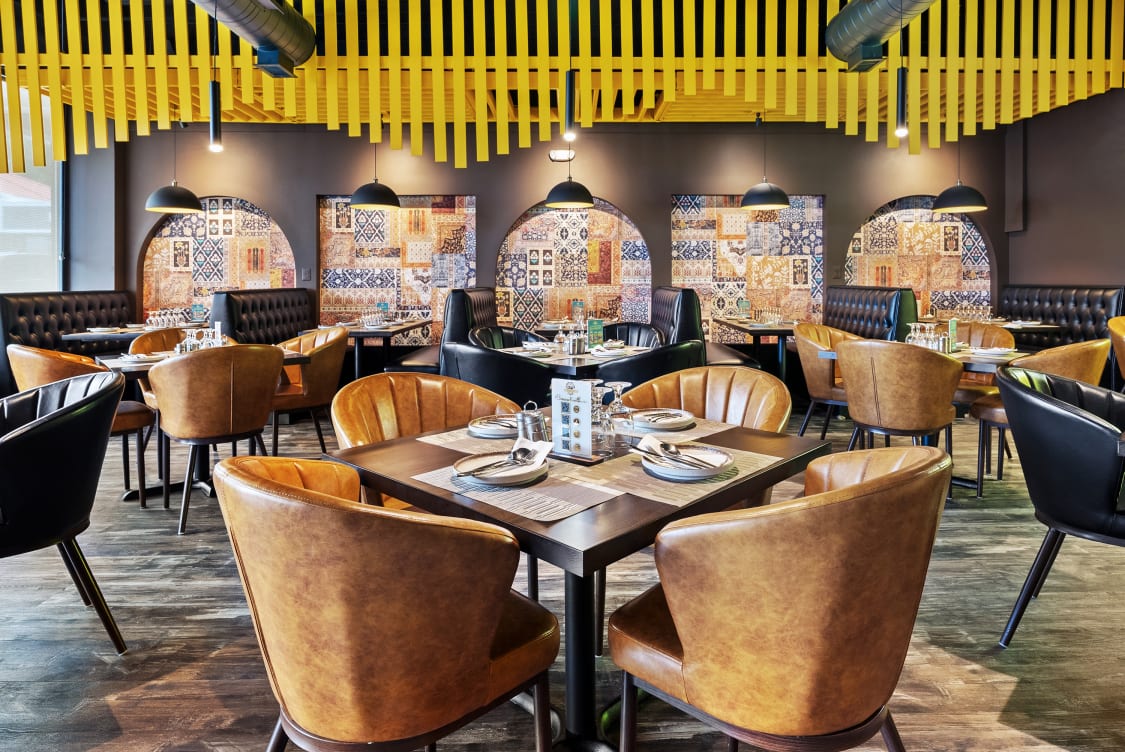
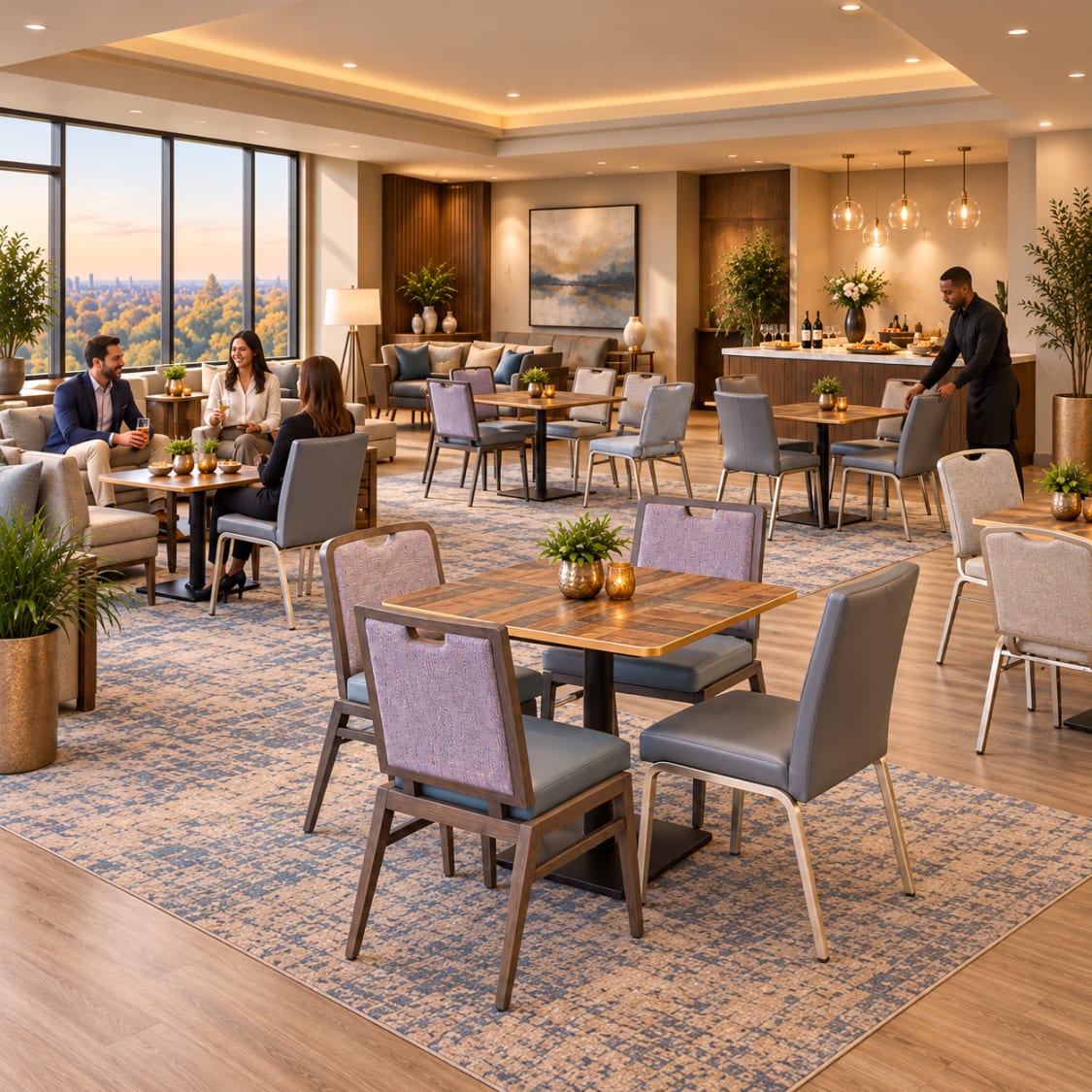
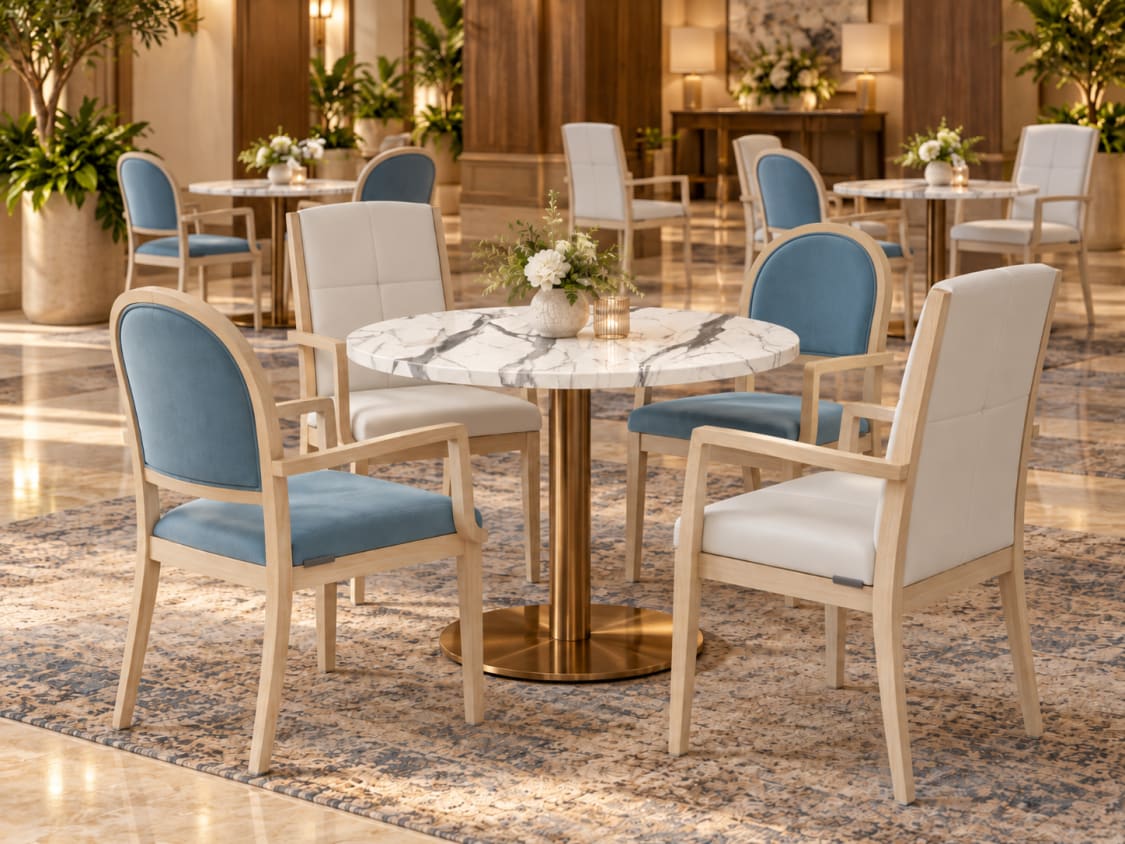
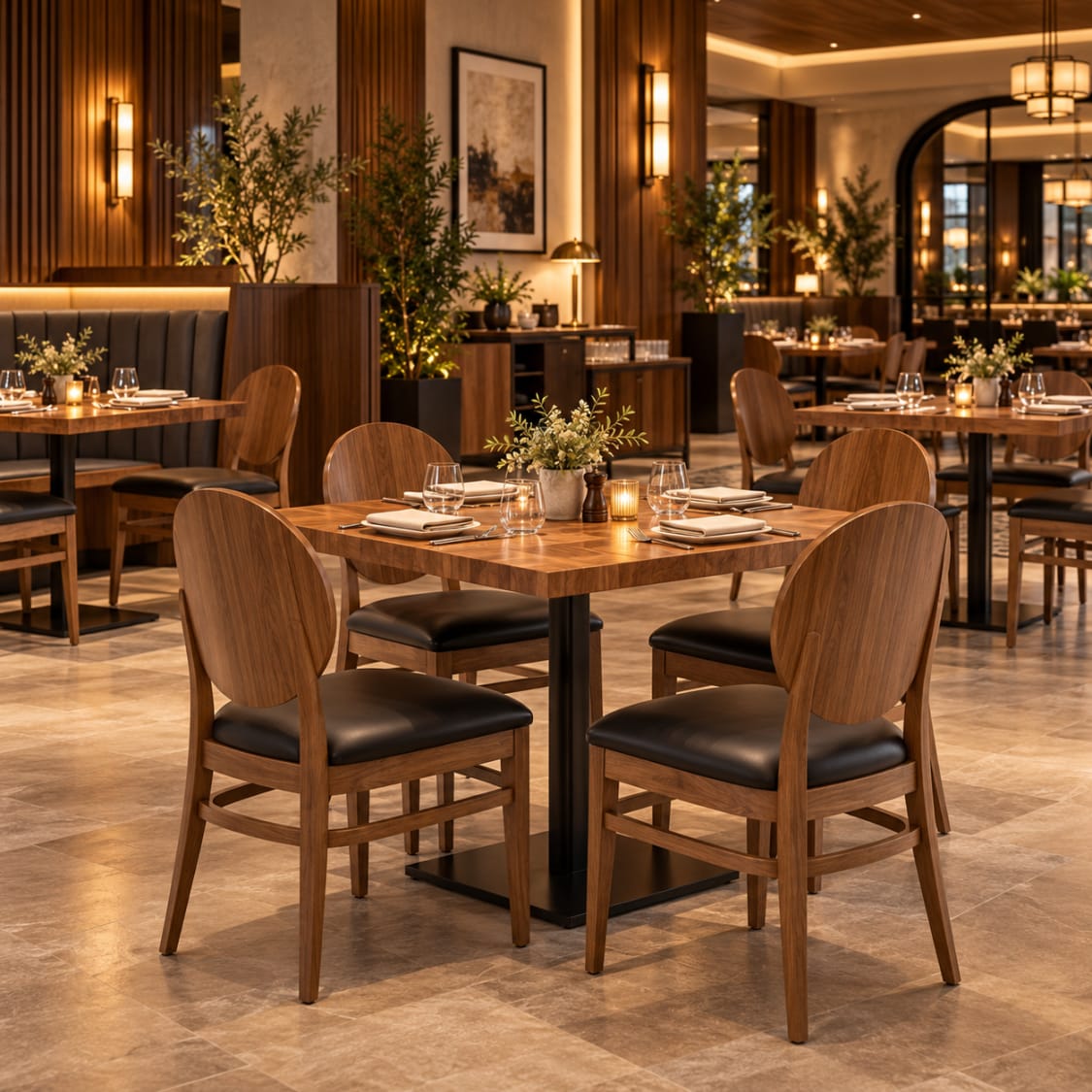
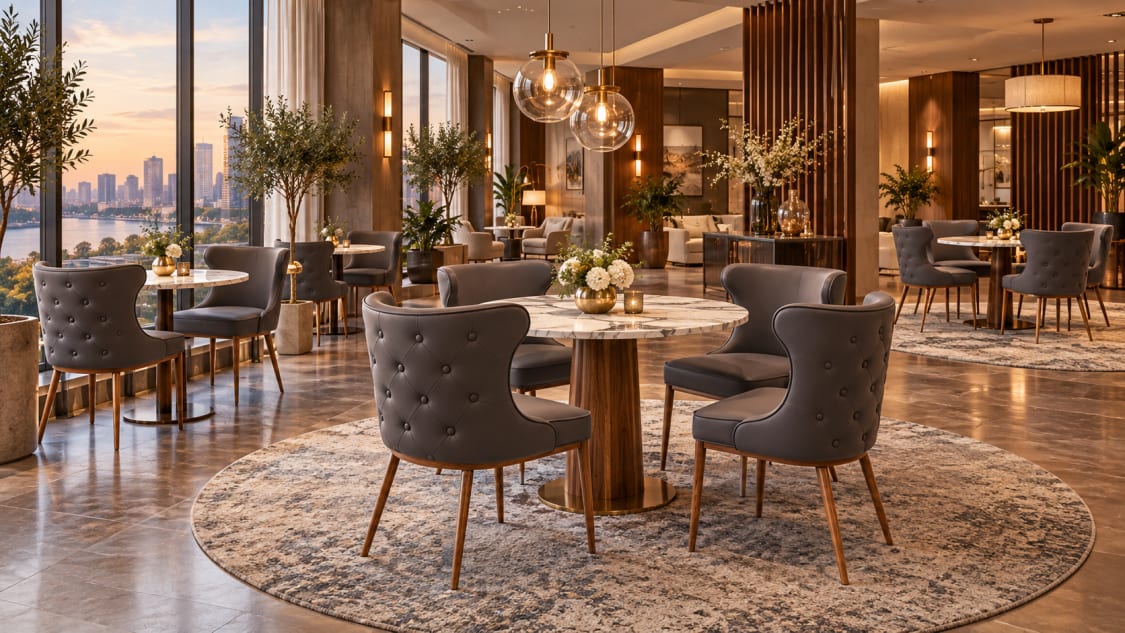
The most memorable hotels and luxury hospitality venues are designed to impress long before guests sit down for a meal or order their first drink. From an elegant hotel lobby to an intimate cocktail lounge or exclusive country club, every detail contributes to the atmosphere. Furniture plays a particularly important role, influencing how guests experience the space, where they choose to sit, how comfortably they can relax, and how easily they can move between different areas.
Unlike traditional restaurants, luxury hospitality venues often serve several purposes throughout the day. A hotel lobby may welcome arriving guests in the morning, provide casual meeting spaces in the afternoon, and become a lively social destination in the evening. Upscale restaurants and private clubs have different requirements, often emphasizing personalized service, greater privacy, and comfortable seating for extended visits. Designing these interiors requires an understanding of how furniture, layout, lighting, and materials work together.
This guide explores the design principles behind hotel lobbies, lounges, private clubs, and high-end restaurants, with particular attention to selecting commercial furniture that supports an attractive environment, lasting comfort, and the practical demands of hospitality use.
Understanding Different Luxury Hospitality Spaces
Luxury hospitality design is about creating an experience that matches the expectations of each venue. Although hotel lobbies, lounges, clubs, and fine dining restaurants may share similar design elements, each space serves a different purpose and requires a distinct approach to furniture selection and layout.
Hotel lobbies prioritize first impressions, circulation, and comfortable waiting areas. Lounges encourage conversation and relaxation, while private clubs emphasize exclusivity and a sense of belonging. Fine dining restaurants focus on intimate seating arrangements, exceptional comfort, and an environment that complements the dining experience.
Hospitality Space
Primary Design Focus
Recommended Furniture
Hotel Lobbies
First impressions, comfort, and circulation
Lounge chairs, upholstered armchairs, sofas, and coffee tables
Hotel Lounges
Relaxation, conversation, and social interaction
Club chairs, upholstered seating, cocktail tables, and bar stools
Private & Country Clubs
Exclusivity, comfort, and versatility
Premium wood chairs, armchairs, upholstered booths, and lounge seating
Upscale Restaurants
Intimate dining, atmosphere, and guest comfort
Upholstered restaurant chairs, booths, premium tables, and bar stools
Hotel Lobby Design
The following sections explore how furniture and layout choices can enhance each type of hospitality space.
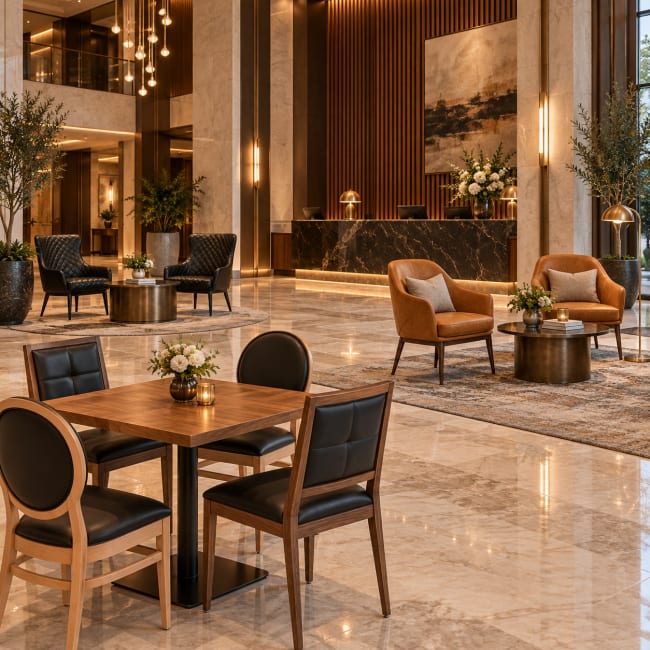
A hotel lobby is much more than an entrance or reception area. It introduces guests to the property's character and establishes expectations for the rest of their stay. For luxury hotels, the lobby should make an immediate impression while providing comfortable, convenient spaces for waiting, relaxing, and socializing.
A large open lobby can feel impressive, but without thoughtfully arranged furniture, it may also appear empty or impersonal. Smaller seating arrangements, coordinated materials, and architectural focal points help create an environment that feels welcoming without sacrificing the grandeur associated with upscale hospitality.
Hotel Lobby Layout Planning
Successful hotel lobby design balances open circulation with comfortable seating areas. Guests arriving with luggage need direct access to reception, elevators, and other hotel facilities, while visitors waiting for transportation or meeting friends should have places to sit without feeling exposed to constant foot traffic.
Rather than positioning furniture in long rows against the walls, consider creating small conversation areas throughout the lobby. Groups of upholstered armchairs arranged around coffee tables encourage interaction, while sofas and individual lounge chairs provide seating for guests traveling alone or with companions.
Furniture placement can also help establish distinct areas without requiring permanent partitions. A pair of sofas positioned back-to-back can visually separate two seating zones, while a large area rug can define a gathering space within an expansive lobby.
Choosing Comfortable Hotel Lobby Seating
Lobby furniture should make a strong visual impression while providing the comfort expected in luxury accommodations.
Upholstered lounge chairs, premium armchairs, and sofas are popular choices because they introduce warmth and softness to large architectural spaces. Generously padded seats and supportive backrests encourage guests to relax, while armrests provide additional comfort and assistance when sitting down or standing up.
The proportions of the furniture are equally important. Oversized lounge chairs may suit expansive hotel interiors but overwhelm smaller boutique lobbies. Compact upholstered armchairs can provide a similar upscale appearance while allowing more flexibility in furniture placement
.
For hotels that accommodate business travelers, seating arrangements should also consider guests who may use laptops, review documents, or hold informal meetings. Appropriately sized tables near comfortable chairs make these activities more convenient.
Furniture finishes help reinforce the hotel's architectural character. Rich wood tones, textured upholstery, leather, decorative metal accents, and carefully selected fabrics can create a sophisticated environment without making the room feel overly formal.
Durability should remain a priority, even in the most luxurious settings. Commercial-grade upholstery, reinforced chair frames, durable finishes, and materials that can withstand frequent cleaning help maintain the appearance of lobby furniture despite constant guest traffic.
Hotel lounges are designed to encourage guests to slow down, settle in, and enjoy their surroundings. Unlike lobby seating, which frequently accommodates shorter visits, lounge furniture should support extended conversations, casual drinks, light dining,
and relaxed social gatherings.
The atmosphere can vary significantly between properties. A boutique hotel may favor intimate seating arrangements with warm fabrics and residential-inspired furniture, while a luxury urban hotel may emphasize dramatic lighting, premium upholstery, and impressive architectural features.
Regardless of the design direction, the furniture should make guests feel comfortable enough to remain in the space rather than simply pass through it.
Creating Intimate Lounge Seating Areas
One of the most effective approaches to hotel lounge design is dividing a larger room into smaller seating groups. Instead of filling the space with identical tables and chairs, use a variety of furniture styles to establish areas with different levels of privacy and social interaction.
A pair of upholstered club chairs surrounding a cocktail table creates an inviting setting for two guests. Larger sofas and armchairs can accommodate groups, while banquette seating along perimeter walls maximizes available space and creates a more secluded atmosphere.
These arrangements also allow guests to choose the environment that suits their visit, from quiet conversations to more energetic social gatherings.
Selecting Lounge Chairs, Sofas and Cocktail Tables
Comfort is particularly important in hotel lounges because guests may remain seated for extended periods. Chairs with supportive backs, comfortable seat cushions, and well-positioned armrests contribute to a more relaxing experience.
Cocktail tables should be selected with the intended service in mind. Low coffee tables work well with deep lounge chairs and sofas when guests are primarily enjoying drinks. For spaces that also serve appetizers or light meals, slightly higher tables and more upright seating may provide a better experience.
Balancing Privacy and Social Interaction
Not every guest wants the same lounge experience. Some prefer a quiet corner for conversation, while others enjoy sitting near the bar or watching activity throughout the room.
Furniture placement can accommodate both preferences. Upholstered booths and banquettes provide greater privacy, while open seating groups near the bar encourage interaction. Lighting and decorative partitions can further distinguish these areas without interrupting the room's overall appearance.
Coordinated furniture helps clubs create welcoming spaces that reflect their character, traditions, and quality.
Private clubs and country clubs occupy a distinctive position within the hospitality industry. Their interiors must feel welcoming to returning members while maintaining an atmosphere of exclusivity, tradition, and quality.
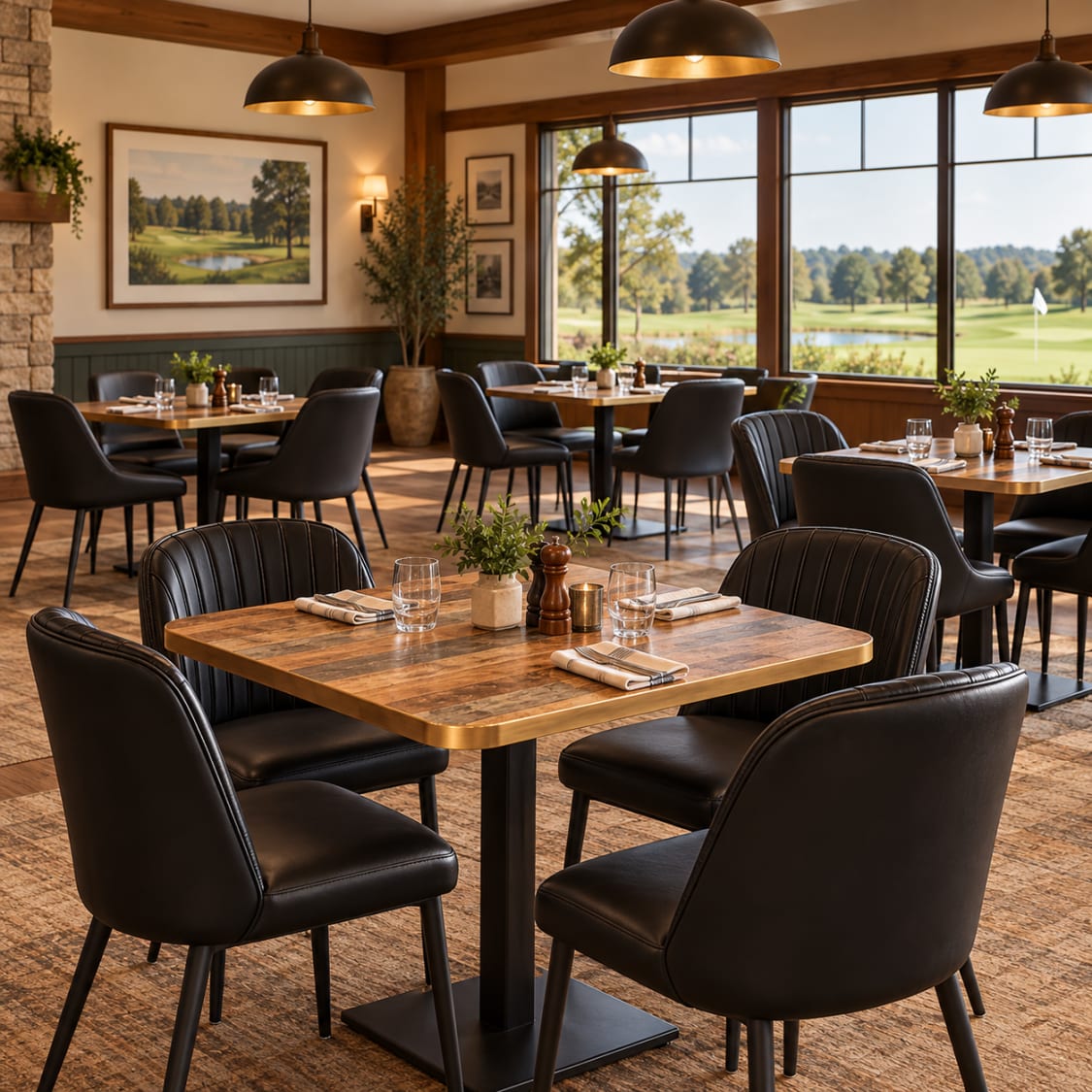
Furniture plays a central role in establishing this identity. Premium wood finishes, upholstered seating, comfortable dining chairs, and coordinated furniture collections create a sense of continuity throughout dining rooms, lounges, bars, and private meeting areas.
Country club dining areas frequently accommodate everything from casual lunches and family dinners to formal celebrations and private events. Their furniture must support these different experiences while maintaining a consistent appearance.
Premium wood restaurant chairs and upholstered armchairs are particularly well suited to club dining rooms. Wood frames introduce warmth and traditional character, while padded seats and upholstered backs provide comfort during longer meals.
Tables should accommodate different party sizes, with smaller configurations for couples and larger arrangements for families or member gatherings. Round tables encourage conversation and provide a balanced arrangement for group dining, while rectangular tables make efficient use of dining room space.
Club Lounge and Social Area Furniture
Private club lounges often serve as gathering places before or after meals, making comfort and atmosphere especially important.
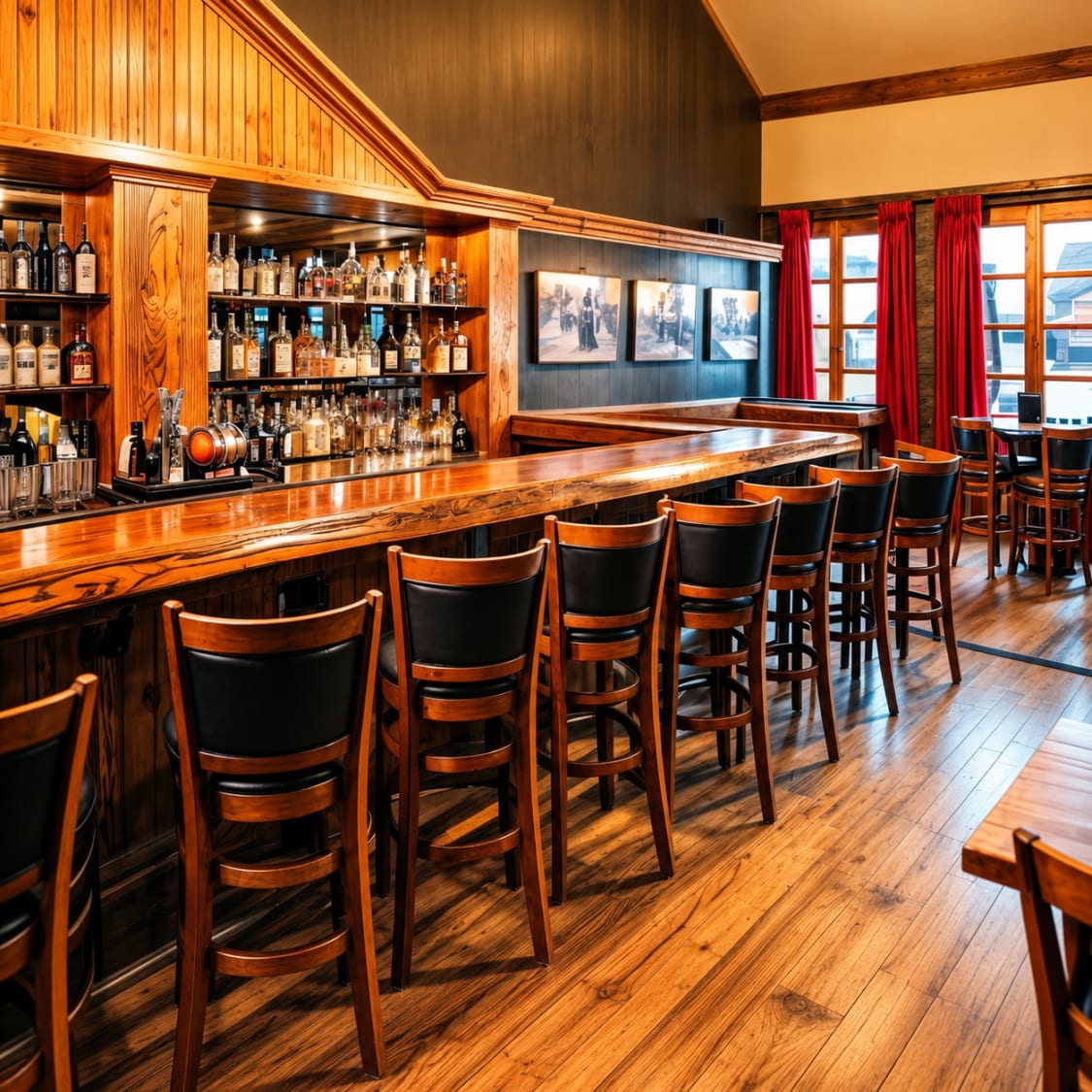
Deep upholstered armchairs, compact sofas, and occasional tables create relaxed seating arrangements for conversation. In club bars, upholstered bar stools and high-top tables provide additional seating while supporting a more social environment.
Furniture materials can reinforce the club's identity. Dark wood finishes and rich upholstery create a traditional atmosphere, while lighter woods, neutral fabrics, and decorative metal details can introduce a more contemporary character.
Furniture Flexibility for Club Events
Private clubs frequently host meetings, celebrations, and social gatherings, making adaptable furniture an important consideration.
Movable restaurant tables allow dining rooms to accommodate different group sizes. Chairs that are appropriately weighted and easy to reposition simplify room changes, while coordinating furniture styles help maintain a consistent appearance across different configurations.
For rooms that require frequent changes, stackable commercial chairs may provide practical advantages, particularly when a separate event space needs to be cleared or rearranged.
Upscale Restaurant and Fine Dining Design
Fine dining is about more than exceptional food. The dining room itself should contribute to the occasion, creating an atmosphere where guests feel comfortable, valued, and encouraged to enjoy a leisurely experience.
Furniture has a major influence on this atmosphere. Upholstered dining chairs, elegant booths, premium table surfaces, and carefully planned seating arrangements create the physical setting for a memorable meal.
Unlike fast-casual restaurants that often prioritize high seating turnover, upscale establishments generally place greater emphasis on comfort, privacy, and the quality of the overall dining experience.
Fine Dining Restaurant Layout Planning
An upscale restaurant should feel intimate without becoming crowded. Tables positioned too closely together can make conversations less private, while narrow pathways can interrupt service and diminish the dining experience.
An effective layout provides enough space for guests to enter and leave their seats comfortably, allowing servers to move between tables without disturbing neighboring diners.
A mix of table sizes provides greater flexibility. Two-person tables accommodate couples, four-person tables serve smaller groups, and larger tables create opportunities for celebrations and private dining.
Booths can be especially valuable along perimeter walls, providing comfortable seating while helping define quieter dining areas.
Choosing Premium Restaurant Chairs
In fine dining environments, chairs should complement the restaurant's character while remaining comfortable throughout an extended meal.
Fully upholstered restaurant chairs are popular in upscale dining rooms because padded seats and supportive backs enhance comfort while adding richness to the interior.
Wood restaurant chairs with upholstered seats are another excellent option, particularly for establishments featuring traditional, transitional, or contemporary luxury interiors. Premium wood finishes contribute warmth and can coordinate with architectural details, wall treatments, and tabletops.
Armchairs may be appropriate for larger dining tables and private dining rooms, although their dimensions should be considered carefully. Armrests must fit comfortably beneath or alongside the table, and chair widths should allow enough space for neighboring guests.
Incorporating Upholstered Restaurant Booths
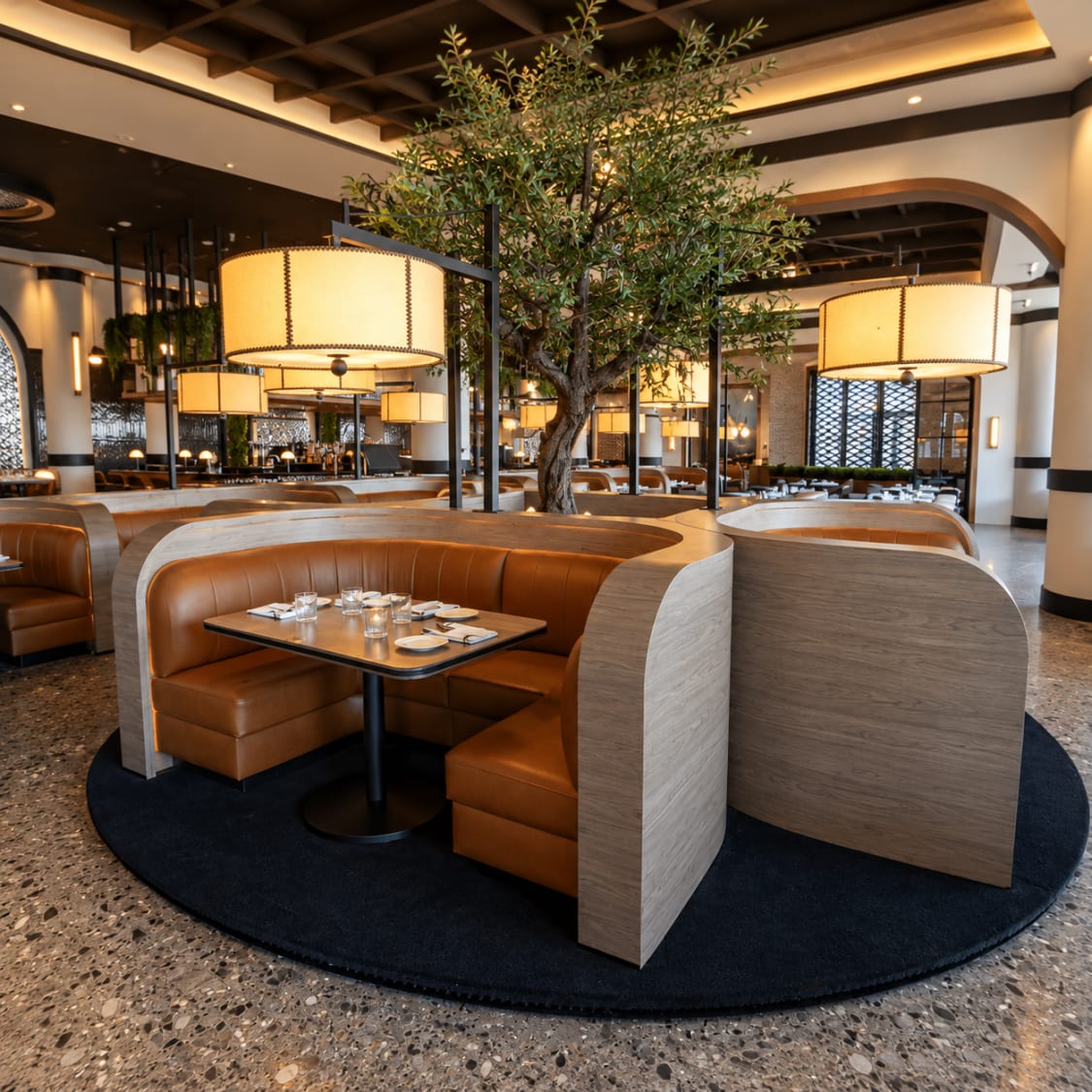
Restaurant booths can add a greater sense of privacy and intimacy to luxury dining spaces. High upholstered backs help visually separate dining groups, while padded seats provide comfort throughout the meal.
Custom upholstery, decorative stitching, channel tufting, and premium materials can turn booth seating into an important design feature.
Booth configurations should reflect the available floor space. Wall-mounted arrangements make effective use of perimeter areas, while double booths can create organized rows of seating in larger dining rooms. Curved booths can also establish distinctive
dining areas and accommodate group seating around round or specially shaped tables.
The size, shape, and finish of a dining table have a direct effect on guest comfort and presentation.
Tabletops should provide adequate room for place settings, glassware, shared dishes, and decorative elements without making guests feel crowded. Larger surfaces are often beneficial in fine dining settings, where multiple courses and elaborate
table presentations are common.
Solid wood, premium veneer, and high-quality commercial resin tabletops can contribute to different design styles. Decorative edges, rich finishes, and carefully selected table bases can enhance the appearance of the room.
Luxury restaurant furniture should enhance the dining experience without distracting from it. Comfortable upholstered seating, properly proportioned tables, carefully arranged booths, and generous spacing create an environment suited to extended meals
and special occasions.
Designing for Guest Comfort and Movement
Even the most impressive hospitality interiors can fall short when furniture placement makes a space uncomfortable or difficult to navigate.
Hotel lobbies, lounges, clubs, and upscale restaurants each have unique movement patterns. Lobby guests may arrive with luggage, lounge visitors may move between the bar and seating areas, and restaurant servers require consistent access to dining tables.
Understanding these patterns before selecting furniture helps prevent layouts that look appealing in photographs but create difficulties during daily use.
Planning Comfortable Circulation Routes
Walkways should provide adequate room for guests, staff, and mobility devices to move through the space. In hotel lobbies, furniture should not obstruct reception desks, elevator access, or main entrances.
Restaurant layouts must account for occupied chairs, guests getting up from tables, and servers carrying trays. A passage that appears spacious when the dining room is empty may become restrictive once guests are seated.
Circulation widths should be checked against applicable accessibility, building, and fire requirements rather than relying on appearance alone.
Hospitality guests vary in age, mobility, and personal preferences. Providing several seating styles can make a venue more accommodating.
Armchairs with supportive backs and appropriately positioned arms may be easier to enter and exit than deep lounge sofas. Standard-height dining chairs are important in spaces that also contain bar-height or low lounge seating.
Seat height, cushioning, seat depth, and the relationship between chairs and tables should all be evaluated before making furniture selections.
Some hospitality spaces must support several activities within a single day. A hotel lounge may accommodate casual meetings in the morning, afternoon refreshments, and evening cocktails.
Movable tables and coordinating chair styles allow these spaces to adapt without extensive rearrangement. However, flexibility should not come at the expense of stability or comfort.
Furniture should be easy for staff to reposition when necessary while remaining appropriate for its intended use.
Luxury hospitality furniture should complement the interior and withstand frequent commercial use.
Hospitality guests vary in age, mobility, and seating preferences. Offer a mix of seating styles, including standard-height options alongside bar stools and low lounge seating. Armchairs with supportive backs and well-positioned arms may be easier to enter and exit than deep sofas.
Evaluate seat height, depth, cushioning, and the fit between chairs and tables before ordering. Choose furniture intended for commercial use, with frames, upholstery, and finishes suited to frequent use and cleaning, so appearance and comfort hold up beyond the showroom.
Successful hospitality layouts anticipate how people actually use a space. Comfortable furniture, accessible circulation, and thoughtful seating arrangements improve the guest experience while supporting more efficient service.
Selecting Commercial Furniture for Luxury Hospitality Spaces
Upholstery and Cushioning
Upholstery is one of the most noticeable features of luxury seating. Fabric introduces texture and warmth, while commercial vinyl and other performance materials may provide advantages in areas exposed to spills and frequent cleaning.
High-density foam cushioning can help upholstered chairs and booths maintain their shape while supporting guest comfort.
When evaluating upholstery, consider abrasion resistance, stain resistance, cleaning requirements, color retention, and how the material will perform in its intended setting.
Wood and Metal Furniture Frames
Wood furniture is frequently associated with upscale hospitality because of its warmth and versatility. Premium wood finishes work particularly well in fine dining restaurants, country clubs, and traditional hotel interiors.
Metal frames provide additional design possibilities, ranging from understated contemporary seating to decorative furniture with metallic finishes.
Regardless of the material, reinforced joints, appropriate frame specifications, stable seating, and durable protective finishes are important considerations for commercial environments.
Hotels and clubs often contain multiple spaces that should feel connected without appearing identical.
For example, a hotel might use upholstered armchairs in its lobby, lounge chairs in its cocktail area, and premium wood dining chairs in its restaurant. Repeating selected wood tones, upholstery colors, or decorative metal finishes can establish continuity throughout the property.
Each furniture collection can have its own character while still contributing to a cohesive hospitality interior.
Creating a Luxury Atmosphere Through Interior Design
Furniture establishes the foundation of a hospitality interior, but lighting, materials, color, and architectural details help define how the space feels.
The most successful luxury interiors treat these elements as part of a unified design rather than separate decorative decisions.
Lighting That Enhances Comfort and Atmosphere
Lighting can dramatically change how a hospitality space is experienced. A bright, welcoming hotel lobby may require a different approach from an intimate cocktail lounge or upscale dining room.
Layered lighting allows designers to establish the appropriate atmosphere for different areas. Chandeliers and decorative fixtures can provide visual interest, while wall sconces, pendants, and table lamps create softer pools of light around seating areas.
Restaurants and lounges often benefit from adjustable lighting that accommodates daytime and evening service. Guests should have enough illumination to read menus and move comfortably without losing the atmosphere created by lower ambient lighting.
Choosing Materials and Color Palettes
Natural wood, stone, upholstered surfaces, and decorative metals can create depth and visual interest throughout a luxury interior.
Darker wood finishes and rich upholstery may suit traditional country clubs and intimate dining rooms, while lighter colors and contemporary furniture can establish a more open atmosphere in boutique hotels.
Contrasting materials can also be effective. Upholstered dining chairs paired with wood tables, or soft lounge seating positioned alongside stone and metal details, create visual variety while maintaining a coordinated appearance.
The goal is to choose materials that complement the architectural setting and support the intended guest experience.
Coordinate seating for dining, drinks, and the view
Furniture can divide larger interiors into distinct areas without requiring permanent walls.
A group of lounge chairs establishes a conversation area within a hotel lobby. Upholstered booths create semi-private seating in an upscale restaurant. Sofas, armchairs, and cocktail tables can separate social areas within a private club lounge.
Area rugs, lighting fixtures, and changes in furniture orientation can further distinguish these zones while preserving a sense of openness.
When these details are planned together, furniture becomes an important part of the architectural composition rather than simply filling unused floor space.
Final Thoughts: Designing Hospitality Spaces That Leave a Lasting Impression
Exceptional hospitality interiors are defined by more than expensive finishes or impressive architecture. They are shaped by the experience guests have while using the space. A welcoming hotel lobby, comfortable lounge, exclusive private club, or elegant restaurant should feel inviting, thoughtfully arranged, and appropriate for its purpose. Furniture has a direct influence on that experience, helping establish the atmosphere while providing the comfort and convenience guests expect.
The most successful designs balance appearance with practical performance. Premium commercial furniture, supportive seating, durable materials, and carefully planned layouts allow hospitality venues to maintain their character while accommodating the demands of frequent use. When every furniture selection contributes to both comfort and design, the result is a space that guests appreciate, remember, and look forward to visiting again.