Talk to the Experts (888) 409-1115

Live Chat

Italian Restaurant Interior Design - A Comprehensive Guide

Italian restaurant Design Ideas and Guide

Italian cuisine remains one of the most popular restaurant categories in the United States. Italian restaurants represent a significant segment of the country's dining industry, with studies showing that Italian Cuisine ranks among the top three choices for dining in 2026. Yet despite the popularity of the cuisine, successful Italian restaurant design extends beyond traditional décor themes and regional references. The strongest Italian restaurant interiors are designed around the experience of Italian dining itself, where conversation, shared dishes, wine service, hospitality, atmosphere, and longer meals all play an important role in how guests interact with the space.

Unlike many restaurant concepts built around speed and efficiency, Italian dining often benefits from an environment that encourages guests to relax and spend time together. Every design decision, from furniture selection and table layouts to lighting, acoustics, and material choices, should support the pace and character of the dining experience.

Designing Around the Italian Dining Experience

Before selecting furniture, finishes, lighting, or decorative elements, it is important to understand what makes Italian dining unique. Many Italian restaurants are built around experiences that emphasize conversation, shared meals, wine service, and hospitality. Unlike restaurant concepts focused primarily on speed and turnover, Italian dining often encourages guests to relax, linger, and enjoy the overall experience as much as the food itself.

Whether designing a neighborhood trattoria, contemporary Italian restaurant, wine-focused concept, or upscale dining room, the physical environment should support the social nature of the dining experience. Layout planning, furniture selection, lighting, and atmosphere all play a role in shaping how guests interact with the space.

A

Shared Dining

Italian meals are often built around appetizers, shared plates, family-style service, and group dining experiences that encourage interaction at the table.

B

Conversation

Seating arrangements should support comfortable conversation while allowing guests to remain engaged with the overall dining environment.

C

Hospitality & Atmosphere

Guests often judge Italian restaurants as much by their atmosphere, comfort, and hospitality as they do by the quality of the food itself.

D

Extended Visits

Many guests expect to remain seated longer than they would in more transactional dining environments, making comfort and table spacing especially important.

84%

Globally, Italian fare is favored by the majority of those polled, with 84% of respondents choosing Italian cuisine as their go-to choice for dining. Source: Orderisda - Italian Food Preferred by Just About Everyone

From Red Checkered Tablecloths to Modern Hospitality Design

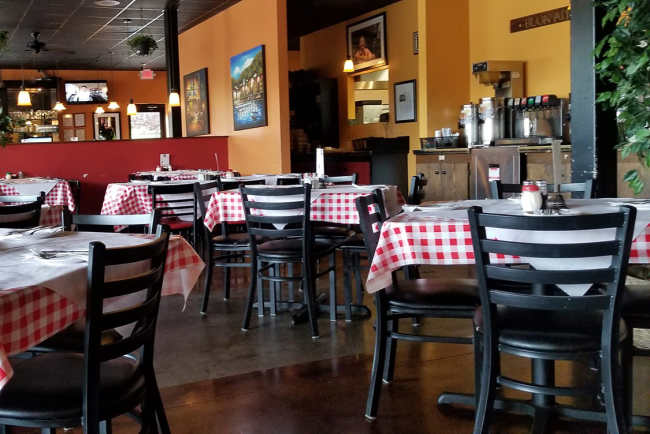
Italian restaurant design has changed significantly over the past several decades. While traditional Italian-American restaurants were often recognized by familiar decorative themes and family-style dining rooms, many of today's concepts place greater emphasis on regional cuisine, hospitality, craftsmanship, and the overall guest experience. The evolution below illustrates how Italian restaurant design has gradually shifted from themed décor toward more experience-driven environments.

Traditional Italian-American

From Theme-Driven Décor

For decades, many Italian restaurants leaned heavily on recognizable visual cues such as red accents, family photographs, wine bottles, murals, and rustic decorative elements. These details helped create familiarity, but they often treated Italian design as a theme rather than a complete dining experience.

Contemporary Italian

To Warm, Material-Driven Spaces

Many Italian restaurants later shifted toward Tuscan and rustic influences, using textured walls, exposed brick, warm woods, stone, wrought iron, and wine displays to create a more grounded hospitality environment. This approach moved the design away from surface decoration and toward atmosphere.

Contemporary Italian

Toward Cleaner, More Refined Interiors

Contemporary Italian restaurants frequently replace decorative themes with carefully selected materials, comfortable furnishings, open kitchens, and layered lighting. The result is an environment that feels modern without losing the warmth, hospitality, and craftsmanship that define Italian dining.

Regional & Experience-Driven

Into Concept-Led Hospitality Design

The strongest modern Italian restaurants are often built around a clear point of view rooted in regional cuisine, wine culture, open-fire cooking, handmade pasta, neighborhood hospitality, or a refined dining experience. Furniture, lighting, materials, layout, and service style all work together to reinforce that identity.

Designing for Different Italian Dining Experiences

Once different customer activities have been identified, the next step is determining how those activities should be accommodated within the floor plan. Rather than distributing identical seating throughout the coffee shop, many successful layouts create distinct seating zones that support different visit durations, group sizes, and customer expectations.

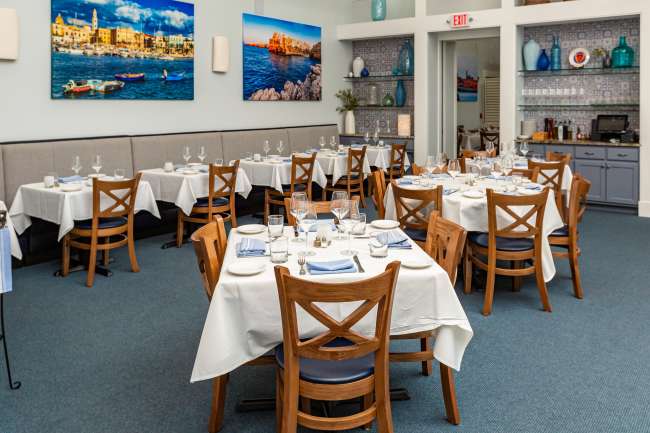
Nunzio - Hilton Head, SC

Furniture installation at Nunzio - Hilton Head, SC.

Neighborhood Trattoria

Warm, welcoming, and built around everyday hospitality

A trattoria is typically a casual Italian restaurant with a relaxed atmosphere, approachable service, and a strong sense of neighborhood hospitality. These spaces often feel personal and familiar rather than formal, making them well suited for family dinners, regular customers, and comfortable weeknight dining.

Furniture should feel durable, warm, and inviting. Wood tables, solid wood chairs, booths, and simple commercial seating help create a dining room that feels grounded without becoming overly themed.

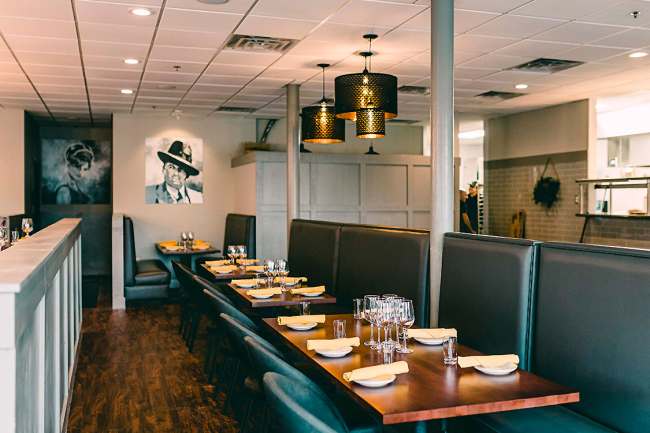
Modern Italian Restaurant

Contemporary design shaped by menu, materials, and atmosphere

A modern Italian restaurant is not defined by décor alone. The concept usually combines contemporary interiors with a more focused menu, regional influences, open kitchen elements, refined presentation, or updated interpretations of traditional Italian dining.

Furniture often reflects that balance between warmth and restraint. Upholstered chairs, designer seating, communal tables, laminate or wood tops, and simple table bases can help create a dining room that feels current without losing hospitality.

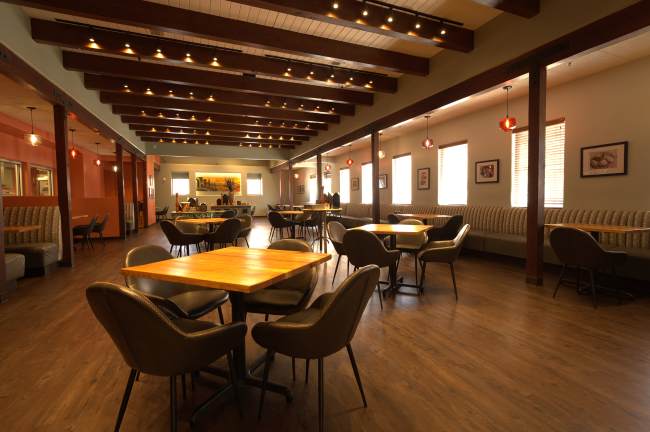
Mtuccis - Albuquerque, NM

Furniture installation at Mtuccis - Albuquerque, NM.

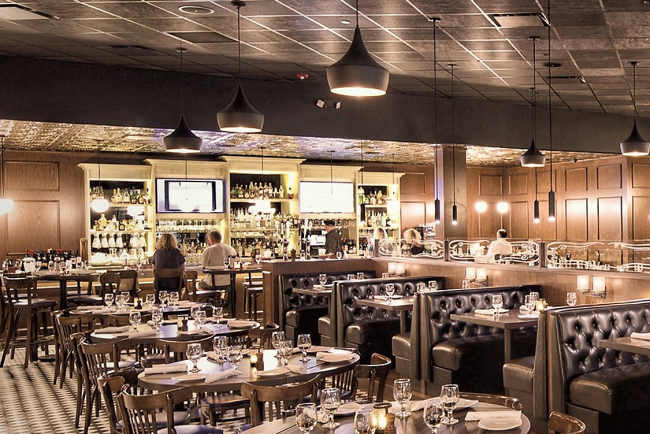
Dievieto Ristorante - Miami, FL

Furniture installation at Dievieto Ristorante - Miami, FL.

Upscale Italian Restaurant

Designed around atmosphere, intimacy, and longer dining occasions

Upscale Italian restaurants often serve date nights, business dinners, celebrations, and longer multi-course meals. These environments usually place greater emphasis on spacing, acoustics, lighting, service flow, and the comfort of the dining experience.

Booths, premium upholstery, larger table spacing, wood tables, and comfortable chairs help create a more refined setting. The goal is not simply to make the room look elegant, but to create an environment where guests can settle in and enjoy the meal at a slower pace.

Italian Wine Bar

Social, flexible, and designed for drinks, small plates, and conversation

An Italian wine bar usually places less emphasis on formal dining and more emphasis on conversation, shared plates, wine service, and flexible seating. Guests may stop in for a glass of wine, gather for a light meal, or spend several hours moving between bar seating, tables, and lounge-style areas.

Bar stools, high-top tables, communal seating, upholstered chairs, and compact table arrangements can all work well in this format. The furniture should support both short visits and longer social occasions without making the room feel overly formal.

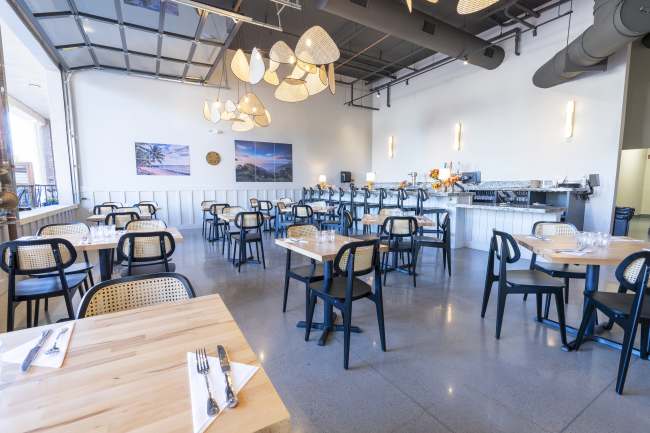
Kula Vinyards & Winery - Atascadero, CA

Furniture installation at Kula Vinyards & Winery - Atascadero, CA.

Layout Planning for Italian Restaurants

Italian restaurants often serve a wide range of dining occasions within the same space. Date nights, family dinners, business meals, celebrations, wine service, and large group gatherings may all take place in a single dining room.

For that reason, layout planning should begin with how guests are likely to use the restaurant. A strong floor plan does not rely on one seating type alone. Instead, it creates a balanced mix of dining areas that support privacy, conversation, flexibility, service flow, and longer meal durations.

Main Dining Room

The main dining room usually carries everyday service and should balance table count with comfort, circulation, and service access.

Booth Seating

Booths can create a sense of privacy and comfort for date nights, families, and longer dining occasions without requiring a separate room.

Group Dining

Larger tables and flexible seating arrangements help accommodate celebrations, family gatherings, and shared dining experiences.

Bar & Waiting Area

Bar seating can support wine service, casual dining, waiting guests, and overflow seating during busy periods.

Outdoor Dining

Patios and sidewalk seating can extend capacity while reinforcing the al fresco quality many guests associate with Italian dining.

Design Takeaway

Successful Italian restaurant layouts rarely depend on a single seating strategy. A flexible mix of tables, booths, bar seating, group dining areas, and outdoor seating helps the restaurant accommodate different occasions while preserving the warmth and hospitality central to the dining experience.

Furniture Details That Shape Italian Restaurant Atmosphere

Italian restaurant atmosphere is not created by décor alone. Much of the guest experience is shaped by the furniture guests physically interact with throughout the meal, including the table surface, chair style, booth upholstery, seating comfort, and spacing between dining groups.

For many restaurant owners, these are the design decisions that can be changed most directly. A dining room may already have its walls, floors, and ceiling conditions in place, but the right furniture combinations can still shift the room toward a warmer trattoria, a refined upscale concept, a modern Italian dining room, or a more social wine bar environment.

Ladder Back seating

Warm Wood & Traditional Seating

Best for trattorias, family-style restaurants, and neighborhood Italian concepts

Wood tables and traditional chairs help create the warmth many guests expect from a casual Italian setting. Ladder-back chairs, bentwood-style seating, and plank or butcher block table tops can make the space feel approachable without relying on overly themed décor.

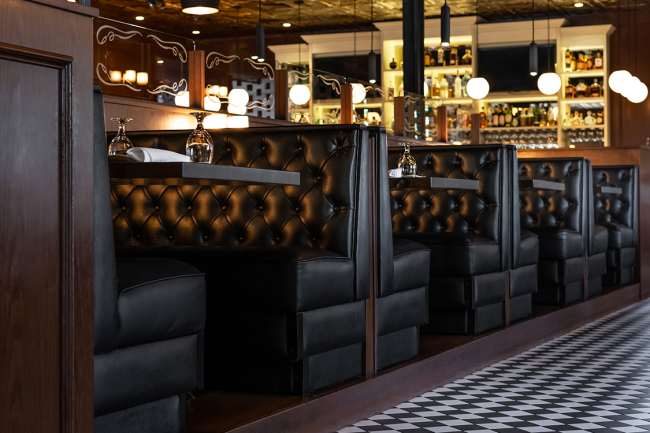
Button Tufted Booth

Upholstery, Booths & Longer Meals

Best for upscale Italian restaurants, date-night dining, and longer guest visits

Italian restaurants often serve guests who expect to spend more time at the table. Upholstered booths, button-tufted seating, padded chairs, and wider table spacing can help create a more comfortable setting for multi-course meals, wine service, and conversation.

Metal Restaurant Chair

Mixed Materials & Modern Contrast

Best for modern Italian restaurants, wine bars, and contemporary dining concepts

Modern Italian restaurants often balance warmth with restraint. Upholstered metal chairs, upholstered booths, and refined wood or laminate table tops can create a more current atmosphere while still preserving the hospitality and comfort associated with Italian dining.

Did you know?

Restaurant atmosphere is not limited to wall color or decorative style. A 2025 study published in PLOS ONE found that restaurant attributes and atmospherics can influence customer satisfaction and behavioral intentions.

Design Insight

Furniture choices should be treated as part of the atmosphere, not separate from it. Table surfaces, upholstery, chair silhouettes, booth comfort, and seating layout all help shape how guests perceive the dining experience.

Bringing the Italian Café Experience Outdoors

Outdoor dining plays an important role in the way many guests imagine Italian hospitality. Sidewalk seating, compact café tables, woven chairs, umbrellas, planters, and warm evening lighting can help extend the restaurant experience beyond the dining room itself.

For many Italian restaurants, the patio serves as an extension of the dining room. It creates street visibility, supports wine service, encourages longer visits, and gives the restaurant a distinctly European-inspired presence.

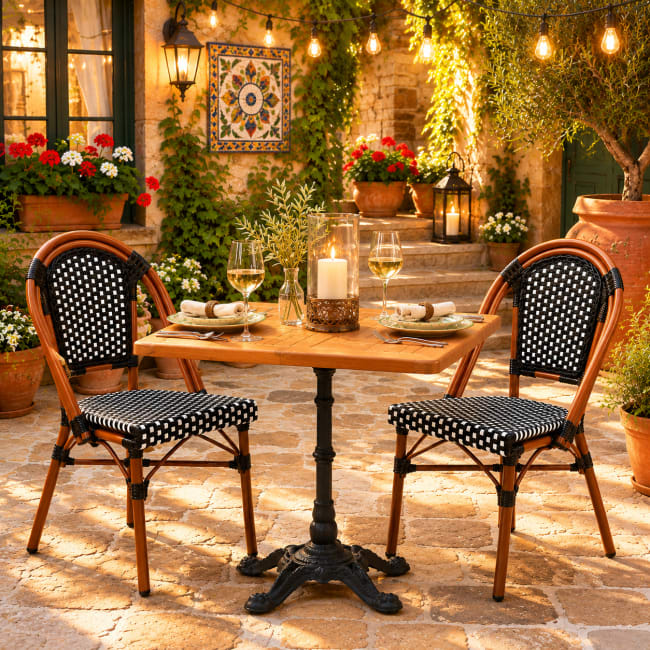
European Café Seating

Best for sidewalk dining, patios, trattorias, and wine-focused concepts

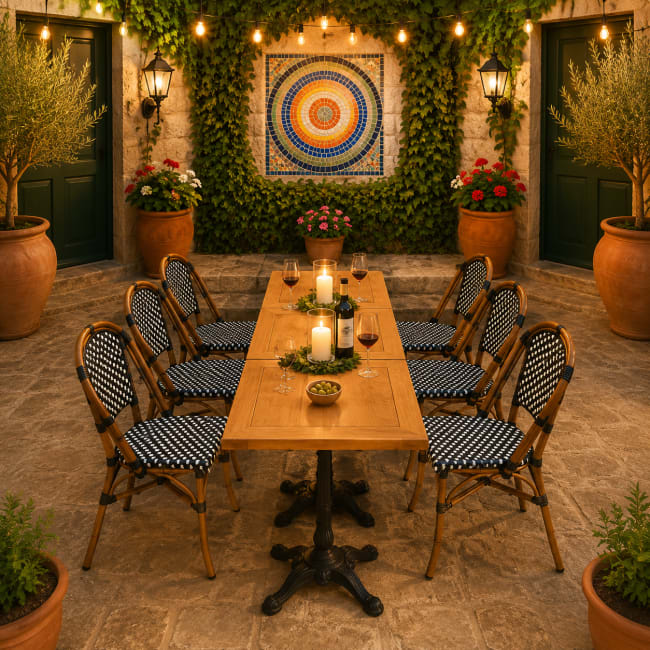
Woven café-style seating has a strong association with European outdoor dining. Lightweight frames, textured seats, and compact proportions make these chairs well suited for Italian patios, sidewalk seating areas, and smaller outdoor dining footprints.

Relaxed Outdoor Hospitality Seating

Best for wine bars, courtyard seating, hotel restaurants, and longer patio visits

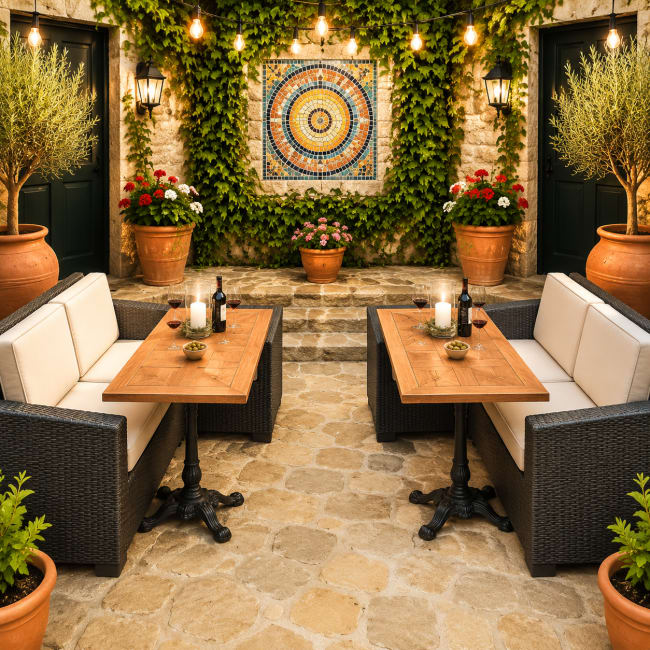
Outdoor booths and lounge-style seating can help create a more comfortable environment for guests who are expected to linger over wine, appetizers, desserts, and conversation. These seating arrangements help patios feel like a natural extension of the dining room while supporting the relaxed hospitality experience often associated with Italian dining.

Flexible Patio Table Arrangements

Best for small patios, sidewalks, seasonal seating, and changing group sizes

Italian-inspired outdoor dining often works best with flexible table arrangements. Smaller outdoor tables can be separated for two-person dining, combined for groups, or rearranged and placed together throughout the day to support changing traffic patterns and service needs.

Whether the goal is a compact sidewalk seating area or a more developed patio, outdoor furniture should reinforce the same hospitality experience created inside the restaurant. Seating, table size, layout flexibility, and overall atmosphere all help determine whether the patio feels like extra capacity or a true extension of the Italian dining experience.

Design Insight

Outdoor dining is often one of the most visible parts of a restaurant. Research from the National Restaurant Association has shown that consumers continue to value outdoor dining options, while OpenTable has reported continued consumer interest in patio and outdoor restaurant seating.

Design Takeaway

Outdoor seating should not feel like an afterthought. With the right patio chairs, compact tables, shade, lighting, and spacing, Italian restaurants can turn exterior seating into one of the most memorable parts of the guest experience.

Lighting Strategy for Italian Restaurants

Lighting has a major influence on how an Italian restaurant feels once guests are seated. While furniture, table spacing, and materials establish the physical environment, lighting helps determine whether the room feels casual, intimate, energetic, romantic, or refined.

Most successful Italian restaurants rely on layered lighting rather than a single overhead source. Ambient lighting provides the general level of illumination, while pendant lights, wall sconces, accent lighting, candles, and table-level lighting create depth and atmosphere throughout the dining room.

Ambient Lighting

Ambient lighting sets the overall brightness of the restaurant. Casual trattorias and family-style restaurants may use brighter ambient lighting to create an open, welcoming environment, while upscale Italian restaurants often use softer lighting to encourage a more relaxed dining experience.

Pendant Lighting

Pendant lights can help define individual seating areas, especially over booths, bar seating, communal tables, and smaller dining zones. In Italian restaurants, pendant lighting often works best when it adds warmth and visual interest without overpowering the table setting.

Accent Lighting

Accent lighting can highlight wine displays, artwork, textured walls, open kitchens, shelving, or architectural details. Used carefully, it helps create a more layered and intentional atmosphere without requiring major structural changes to the space.

Candlelight and Table Lighting

Candles, small table lamps, and low-level lighting can add intimacy to dinner service, especially in date-night, wine-focused, and upscale Italian concepts. These details should support the atmosphere without making menus difficult to read or service more complicated for staff.

Did you know?

Research published in the ASEAN Journal on Hospitality and Tourism found that ambient elements such as lighting and scent can significantly influence how guests perceive the dining experience.

Design Takeaway

Italian restaurants should use lighting to reinforce the type of dining experience they want to create. Brighter, more even lighting may suit casual family dining, while warmer, layered lighting often works better for wine service, longer meals, and more intimate dining occasions.

The goal is not simply to make the dining room darker or brighter. Effective lighting helps guide the mood of the restaurant throughout the day, supporting lunch service, dinner service, bar seating, private dining, and patio transitions without making the space feel flat or overly staged.

Final Thoughts

Successful Italian restaurant design is rarely defined by a single furniture style, decorative theme, or architectural detail. Instead, it is the result of thoughtful decisions that work together to support the way guests experience the meal. Seating comfort, table layouts, lighting, materials, and atmosphere each contribute to creating an environment that feels welcoming, comfortable, and authentically hospitable.

Whether the goal is a neighborhood trattoria, contemporary Italian restaurant, upscale dining room, or wine-focused concept, the most effective interiors balance aesthetics with functionality. Furniture should support conversation, accommodate different dining occasions, and provide the flexibility needed for day-to-day operations without sacrificing the warmth that has long been associated with Italian hospitality.

Ultimately, the most memorable Italian restaurants are those where the dining environment feels as carefully considered as the menu itself. By designing around the guest experience rather than simply following trends, restaurant owners can create spaces that encourage repeat visits while supporting the long-term success of the business.