


Successful restaurants are often carefully engineered to encourage specific customer behaviors while supporting the operational goals of the restaurant itself. Most guests never stop to think about why one restaurant feels energetic and fast-moving while another feels calm, private, and comfortable enough to linger for hours, but those reactions are rarely accidental. Some hospitality venues are designed to maximize movement and turnover, while others are built around comfort, conversation, and longer dining experiences. In many cases, the physical environment of a restaurant begins shaping the customer experience long before food ever reaches the table.
The Hidden Business Mechanics Behind Restaurant Design by Venue Type


In this article
How Restaurant Atmosphere Shapes Customer Behavior
Restaurant atmosphere is often experienced emotionally before guests consciously evaluate the physical environment itself. Layout, spacing, seating, and exposure can all influence how customers perceive energy, comfort, pace, and social interaction within the same space.
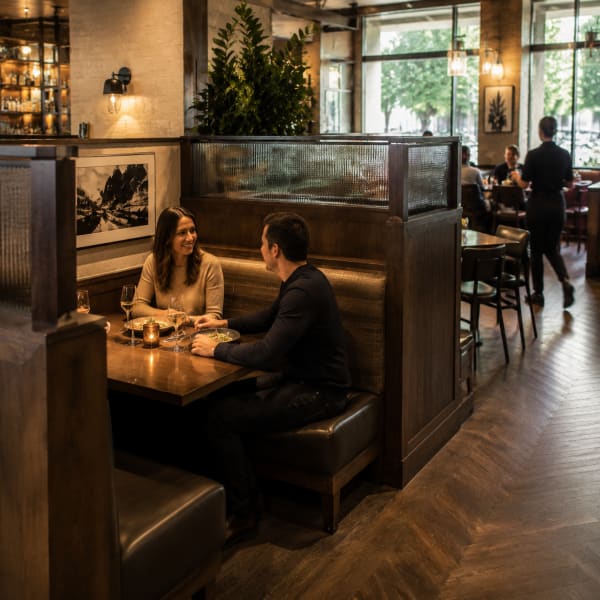
Perceived Exposure Changes Behavior
Guests often perceive a restaurant differently depending on how exposed they feel while dining. Seating positioned against walls, inside booths, or within partially separated sections can make customers feel more relaxed and settled, while wide-open seating arrangements often create a more energetic and fast-moving atmosphere.
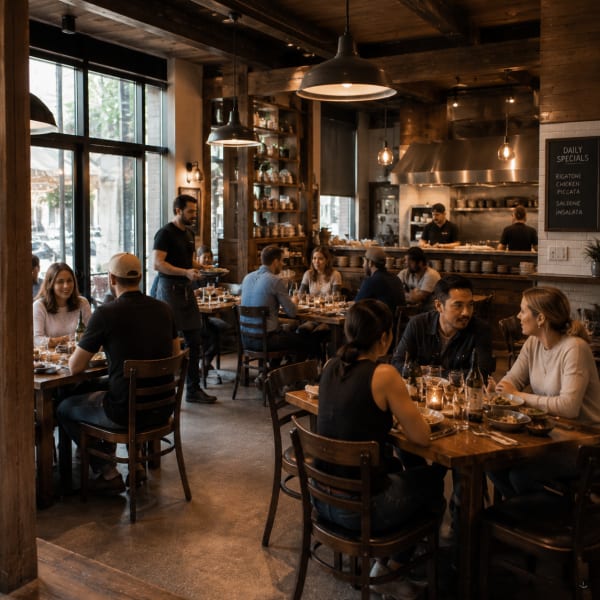
Physical Space Influences Social Energy
The amount of physical space inside a restaurant often determines whether the room feels stressful, energetic, social, or relaxed. Dense layouts can increase noise, movement, and perceived activity, while wider spacing often slows the pace of the environment and changes how guests interact with both the restaurant and one another.
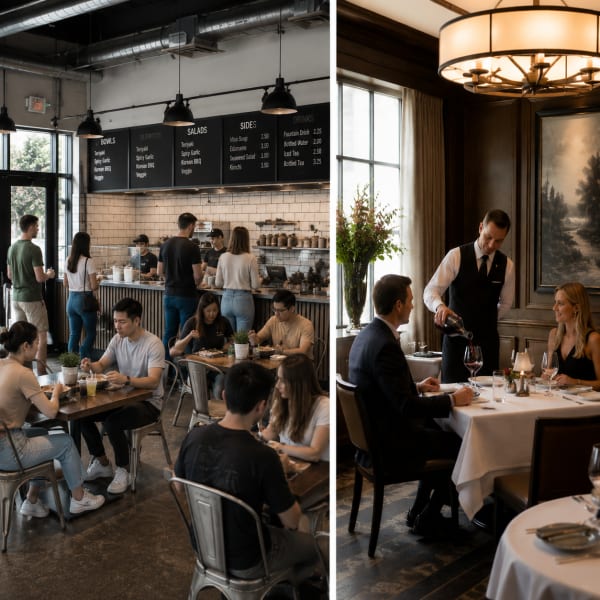
Restaurants Often Communicate Pace Through Seating
Customers frequently begin responding to the pace of a restaurant before any interaction with staff ever occurs. Upright seating, tighter layouts, and simplified furniture arrangements often support shorter visits and faster turnover, while softer seating and more relaxed layouts can encourage guests to settle in and remain longer.
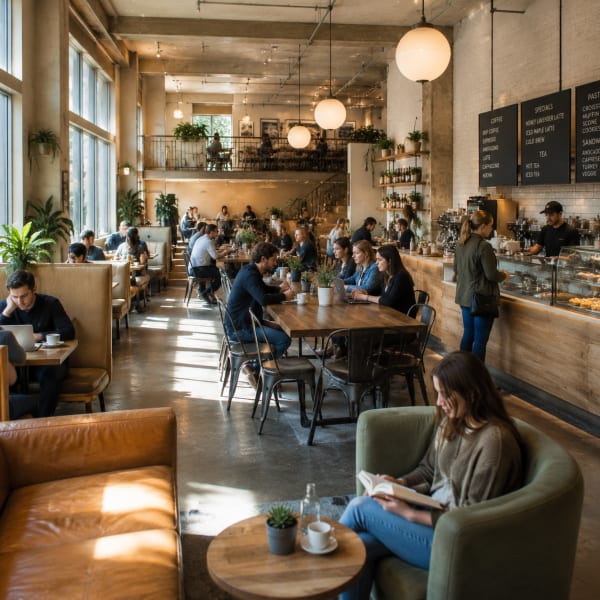
Some Layouts Are Designed for Flexibility
Many successful hospitality spaces are designed to support multiple types of customer behavior within the same environment. A customer working on a laptop, a couple meeting for drinks, and a larger group gathering for dinner may all prefer completely different seating experiences, which is one reason mixed layouts remain common throughout many modern hospitality concepts.
Moving Forward
The physical environment of a restaurant often shapes customer behavior long before guests consciously evaluate the experience itself. Once that relationship becomes visible, the differences between restaurant environments begin to feel far less accidental.
Different Venue Types Demand Different Design Strategies
Different restaurants are rarely trying to create the same type of customer experience. Some are built around speed and continuous customer movement, while others are designed for conversation, social interaction, longer meals, or customers who may remain in the space for hours at a time. As those goals change, the physical design of the restaurant often changes with them.
| Type of Hospitality Experience | What the Space Often Needs to Support | Common Physical Design Responses |
|---|---|---|
| Faster-paced dining | Continuous movement, easier circulation, shorter visits, faster table turnover | Upright seating, tighter layouts, durable surfaces, simplified traffic flow |
| Flexible family dining | Group seating, varied customer needs, comfort balanced with steady turnover | Booth seating, mixed table layouts, durable upholstery, adaptable seating arrangements |
| Social and high-energy gathering spaces | Group interaction, standing movement, active circulation, louder social settings | Communal seating, bar seating, mixed-height tables, open layouts |
| Lingering and repeat visits | Customers remaining for extended periods, solo use, work sessions, casual social interaction | Lounge seating, mixed seating styles, softer layouts, layered seating arrangements |
| Slower and immersive dining | Privacy, conversation, pacing, perceived exclusivity, longer meals | High-backed booths, wider spacing, softer materials, layered floor plans |
Moving Forward
Once these differences become easier to recognize, restaurant layouts begin to feel far less interchangeable. The following venue types demonstrate how different hospitality concepts apply these ideas in completely different ways depending on the type of experience they are built to support.
Fast Casual / Quick Serve Venues
Fast casual and quick serve restaurants are often designed around one core challenge: maintaining speed, movement, and operational consistency throughout continuous daily use. Customers circulate quickly, tables turn over constantly, and staff movement remains continuous during peak service hours, all within dining rooms that still need to feel organized, comfortable, and easy to navigate.
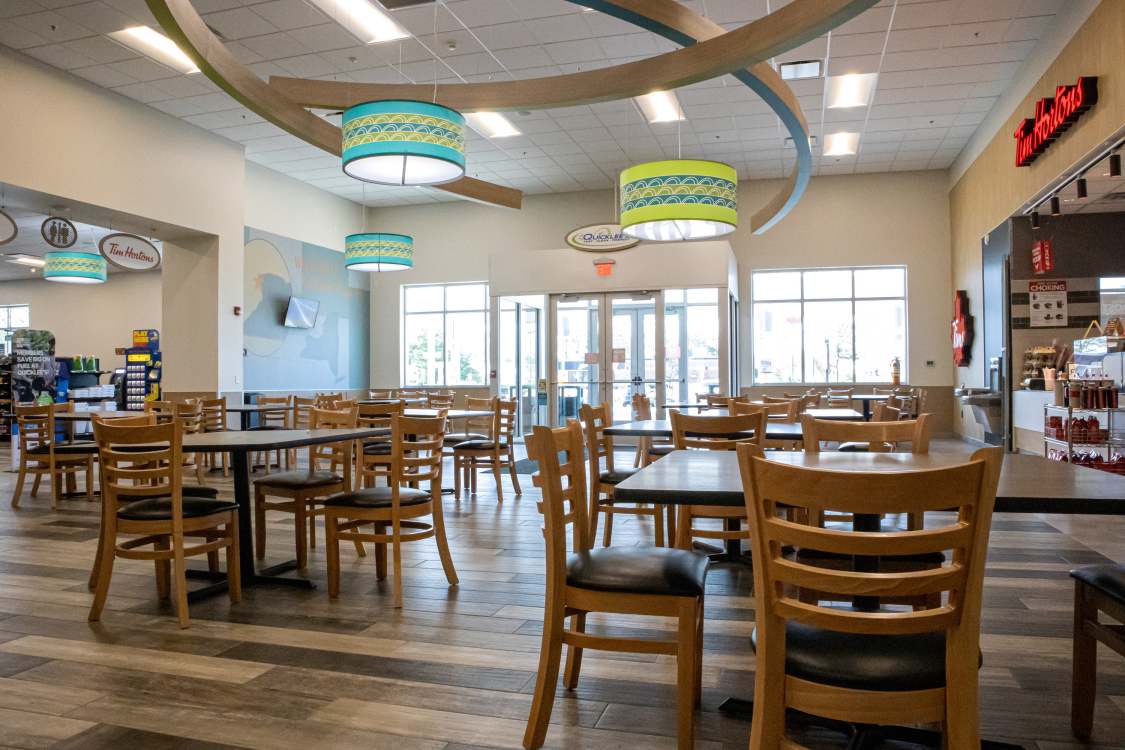
Quicklee's Travel Center installation furnished by RestaurantFurniture.net. Click the image above to view the full project.
In these spaces, the physical layout of the dining room frequently becomes part of the operational strategy itself. Seating arrangements, traffic flow, table spacing, and furniture selection all help support faster circulation, easier cleaning, predictable customer movement, and the continuous pace associated with high-volume service throughout the day.
The Physical Design Challenges Behind Quick Serve Layouts
In fast casual dining, even small layout decisions can affect circulation, cleaning efficiency, customer pacing, and overall operational flow throughout the day. As a result, many quick serve environments rely on specific physical design strategies intended to reduce congestion, simplify maintenance, and support continuous movement during busy service periods.
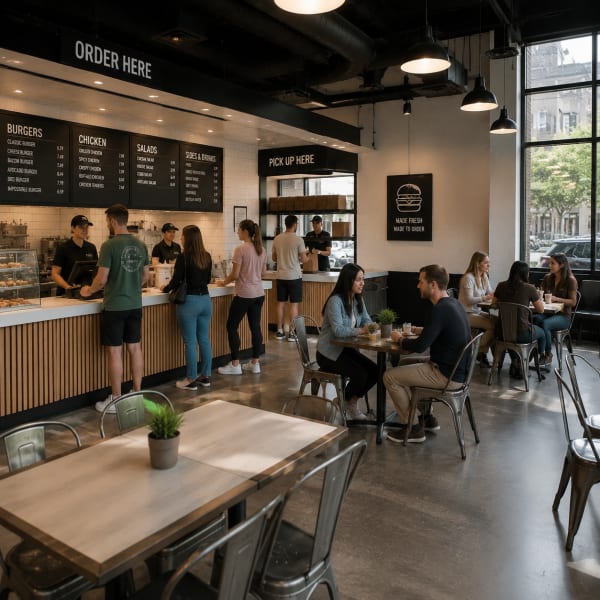
Designing for Constant Movement
Quick serve environments are often designed around constant movement from both customers and staff throughout the day. Pickup stations, ordering lines, compact seating layouts, and simplified traffic flow all help reduce congestion during peak service hours. Lighter seating, stackable chairs, and smaller table footprints are commonly used because operational flow directly affects both efficiency and customer experience in high-volume environments.
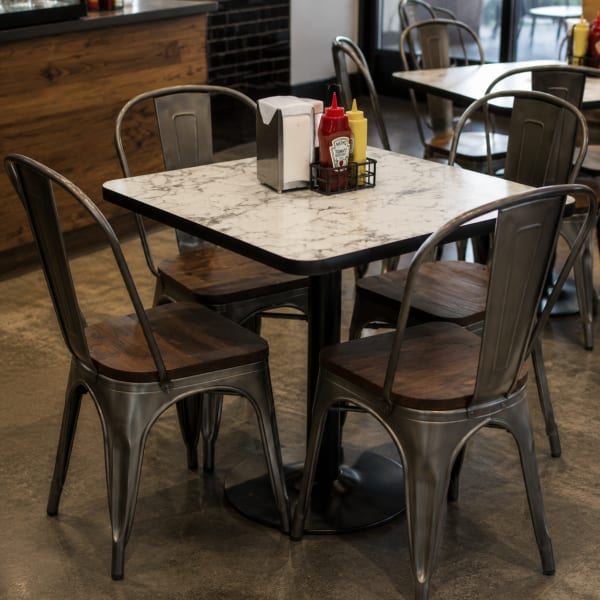
Durability Under Continuous Use
Few hospitality environments place more physical stress on furniture than quick serve restaurants operating continuously throughout the day. Seating may experience thousands of daily interactions while also being exposed to spills, impacts, sanitization, and constant movement. Because of these demands, fast casual environments often rely on durable metal or molded resin seating, powder coated frames, commercial laminates, and other materials designed for long-term commercial durability.
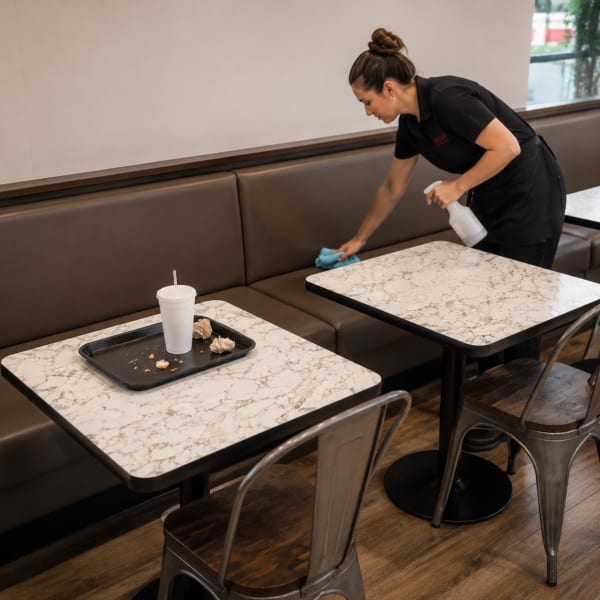
Cleaning and Reset Efficiency
Fast casual environments are often designed around the ability to clean, reset, and return tables to service quickly throughout the day. Frequent sanitization, spilled beverages, and continuous guest turnover place significant demands on surfaces and seating materials. Easy-clean laminates, commercial vinyl upholstery, and moisture-resistant finishes help simplify maintenance while supporting a cleaner and more consistent dining environment during busy service periods.
Seating Designed for Faster Pacing
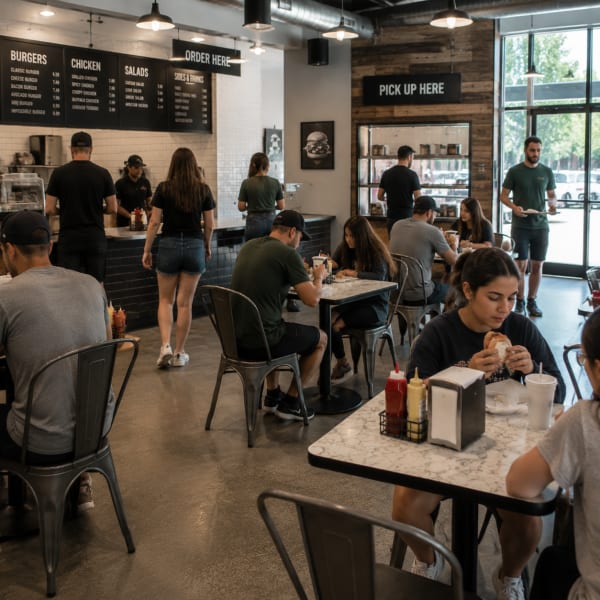
Seating within quick serve environments is often designed around shorter dining durations and higher customer turnover rather than extended comfort. Upright seating positions, simplified ergonomics, and more efficient table spacing naturally support faster dining patterns while still maintaining customer comfort during shorter visits. In many fast casual concepts, the dining room itself reinforces the quicker pace of the restaurant.
Furniture Choices That Support the Environment
The physical demands placed on hospitality furniture often vary dramatically depending on the type of environment a restaurant is trying to create. In quick-serve spaces, seating, table surfaces, and layouts are frequently selected not only for appearance, but for their ability to withstand continuous traffic, repeated cleaning, faster customer turnover, and long-term commercial use. The furniture categories below are commonly used in fast casual environments because they support both the operational pace and durability requirements associated with high-volume service.
| Furniture Category | Common Quick Serve Choices | Why These Choices Are Common in QSR Environments |
|---|---|---|
| Seating | Metal dining chairs, stackable seating, vinyl upholstered metal chairs | Metal seating withstands heavy traffic and constant movement. Stackable seating simplifies floor cleaning and resets. Vinyl upholstery adds comfort while maintaining wipe-down surfaces for faster table turns. |
| Table Surfaces | Laminate table tops or durable resin table tops | Laminate and resin surfaces resist stains, moisture, impacts, and repeated sanitization throughout continuous daily service. |
| Booth Seating | Vinyl upholstered booths, wall bench seating | Booth layouts improve circulation while maximizing seating capacity. Vinyl upholstery supports faster cleaning and quicker table resets between guests. |
| Table Layout Strategy | Compact two-top layouts, perimeter seating arrangements | Smaller footprints improve circulation and reduce congestion around queue lines, pickup areas, and primary traffic paths. |
Moving Forward
Quick serve environments are often designed around speed, circulation, and operational efficiency during continuous daily service. The next hospitality environments we explore slow that pace down, creating spaces built more around comfort, flexibility, group accommodation, and longer dining experiences within the environment itself.
Family Dining Restaurants
Family dining restaurants are often designed around flexibility, familiarity, and broad customer accommodation throughout the day. Unlike quick serve concepts built primarily around speed and turnover, family dining spaces frequently need to support larger groups, longer meals, repeat local traffic, multi-generational seating needs, and a wider range of customer behaviors within the same dining room.
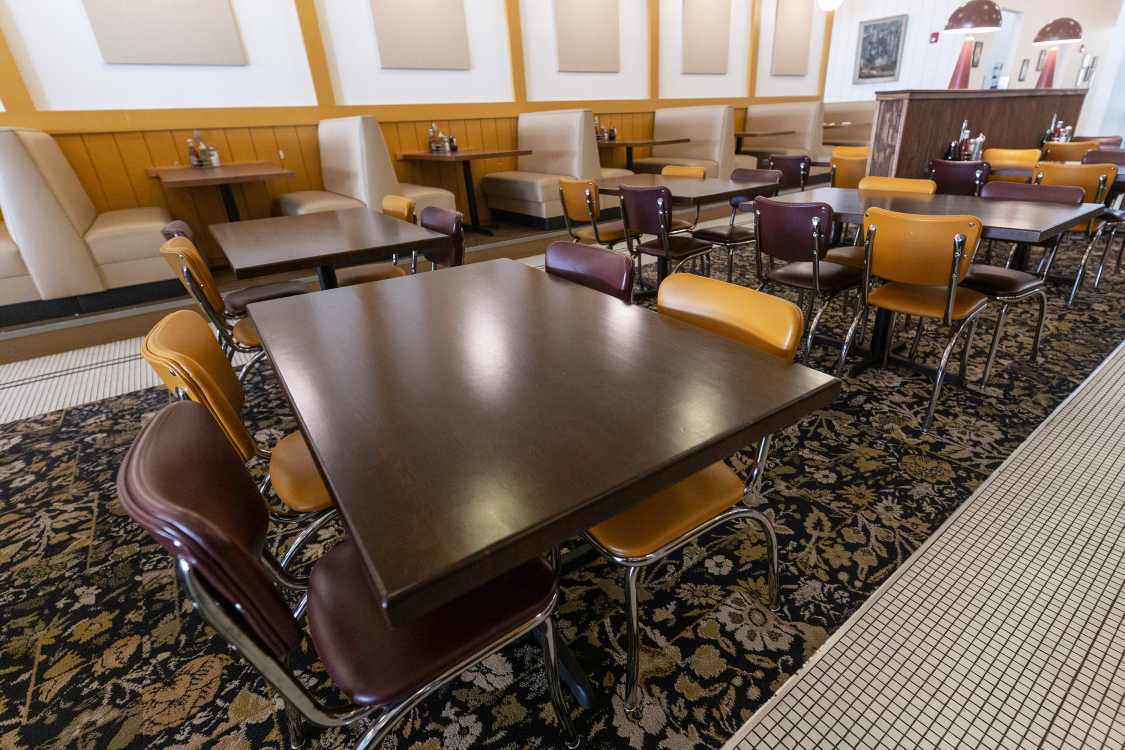
Big Bad Breakfast installation furnished by RestaurantFurniture.net. Click the image above to view the full project.
In these spaces, the dining room often needs to feel comfortable and predictable without becoming overly formal or restrictive. Booth placement, table flexibility, seating comfort, and aisle spacing all help support the broader usability expected from many midrange dining concepts throughout daily service.
Designing for Flexible Guest Accommodation
Family dining restaurants often need to accommodate a much wider range of customer behaviors than many other hospitality concepts. Seating layouts, booth placement, traffic flow, and furniture flexibility all help support the balance between comfort, usability, efficient service, and the changing demands of daily dining traffic.
Booths Often Create Familiarity and Comfort
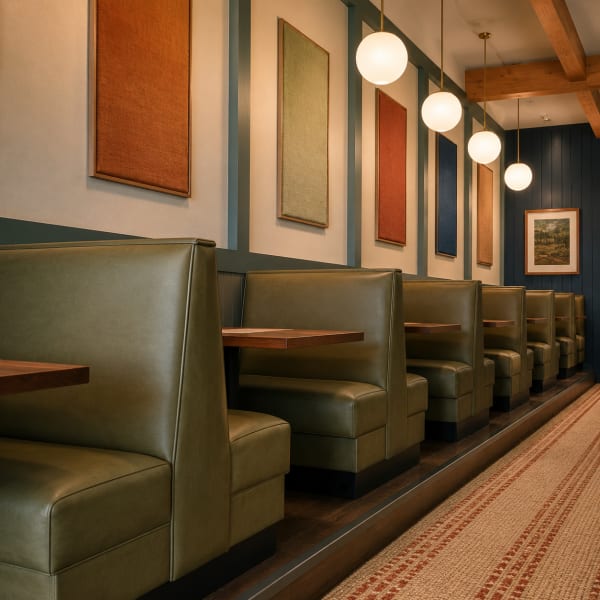
Booth seating remains common throughout many family dining restaurants because it creates a sense of comfort and familiarity that customers already understand instinctively. Families, older guests, and repeat local customers often gravitate toward booths because they feel more settled, predictable, and accommodating during longer meals and group dining situations.
Family Oriented Venues Need to Adapt Throughout the Day
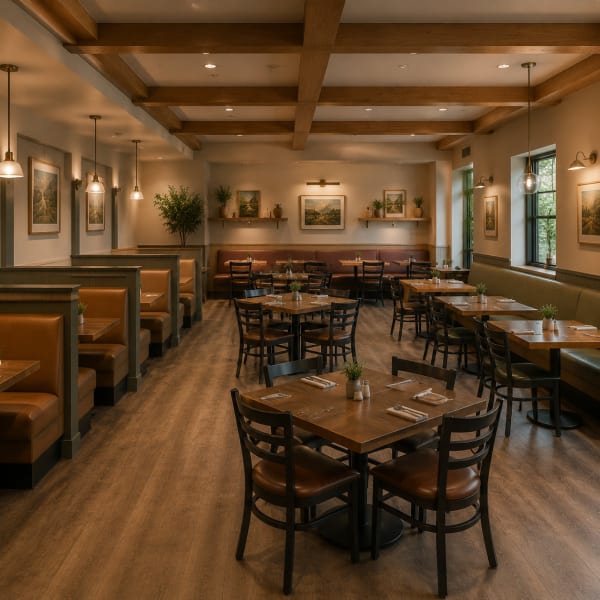
Many family dining restaurants regularly shift between couples, families, larger groups, seniors, and weekend rushes within the same dining room. As a result, layouts often rely on movable tables, flexible seating arrangements, and balanced spacing that can accommodate changing group sizes without disrupting circulation or service flow.
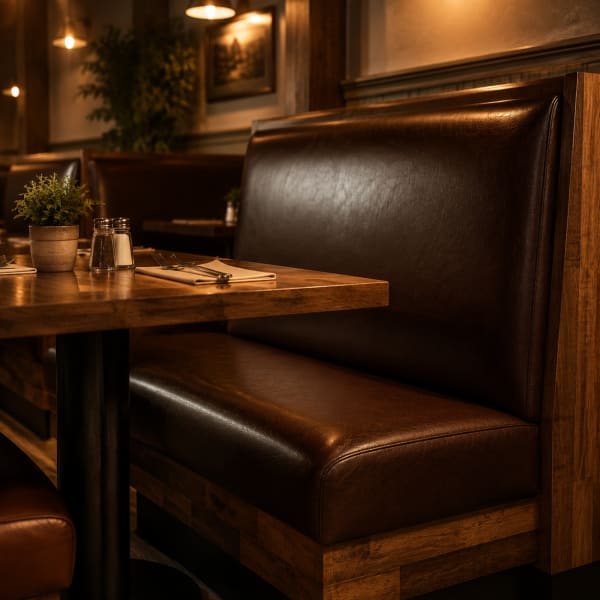
Comfort Often Matters More Than Speed
Unlike many quick serve concepts designed around shorter visits, family dining restaurants frequently encourage customers to remain longer within the space. Seating comfort becomes increasingly important in these environments, particularly when customers may order multiple courses, gather socially, or return regularly throughout the week.
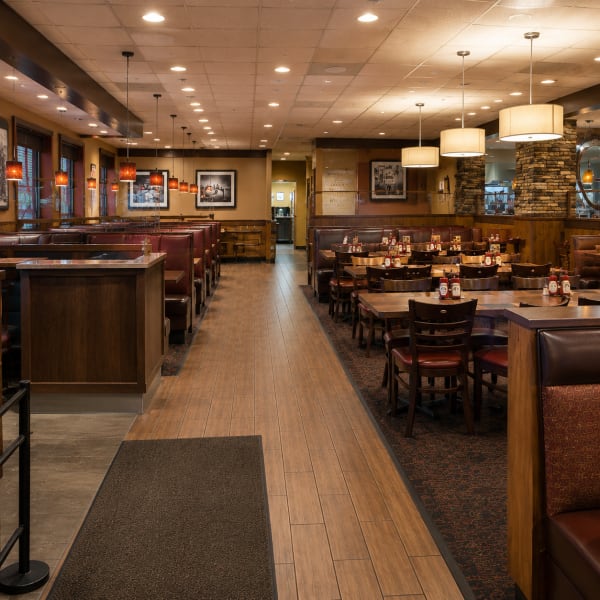
Familiar Layouts Improve Customer Comfort and Flow
Many successful family dining concepts rely less on novelty and more on predictability. Customers often feel more comfortable in spaces where seating layouts, traffic flow, booth arrangements, and dining patterns feel easy to understand immediately upon entering the restaurant. That familiarity can make larger dining rooms feel more approachable and easier to navigate during busy service periods.
Furniture Choices That Support Daily Family Dining Service
Family dining furniture needs to balance comfort, flexibility, durability, and broad customer usability throughout continuous daily service. Because these restaurants regularly accommodate larger groups, repeat local traffic, children, and longer dining durations, furniture selections are often chosen around adaptability and practical comfort rather than highly specialized dining experiences.
| Furniture Category | Common Family Dining Choices | Why They Work Well in Family Dining |
|---|---|---|
| Booth Seating | Upholstered restaurant booths, high-back booths, wall benches | Booth seating helps create familiarity, supports larger groups comfortably, and allows customers to settle into longer meals without the dining room feeling overly formal |
| Dining Seating | Upholstered chairs, or durable metal chairs with wood look, comfortable seating | Family dining seating often balances durability with practical comfort across a wide range of customer ages and dining durations |
| Table Tops | Laminate table tops, wood-look laminate surfaces, low maintenance commercial tops | Family dining tables frequently need to withstand continuous cleaning, larger groups, frequent turnover, and daily commercial use without excessive maintenance |
| Table Layouts | Freestanding restaurant tables, movable two-top and four-top layouts | Flexible table arrangements help dining rooms adapt to changing party sizes throughout the day while maintaining smoother service flow |
| Traffic Flow and Accessibility | Wider aisle spacing, balanced booth placement, accessible seating layouts | Family dining rooms often need to accommodate children, seniors, larger groups, and steady traffic without making the space feel crowded or difficult to navigate |
Moving Forward
Family dining restaurants are often designed around familiarity, flexibility, and broad customer comfort across many different types of guests throughout the day. The next hospitality concepts we explore begin placing far greater emphasis on social energy, movement, customer interaction, and the overall atmosphere created within the space itself.
Bars and Breweries
Bars and breweries are often designed around movement, visibility, social interaction, and high-energy customer circulation throughout the space. Unlike hospitality concepts centered around predictable seating patterns or longer table-focused dining experiences, many bars and breweries rely on layouts that encourage customers to move, gather, interact, and remain socially engaged throughout the visit itself.
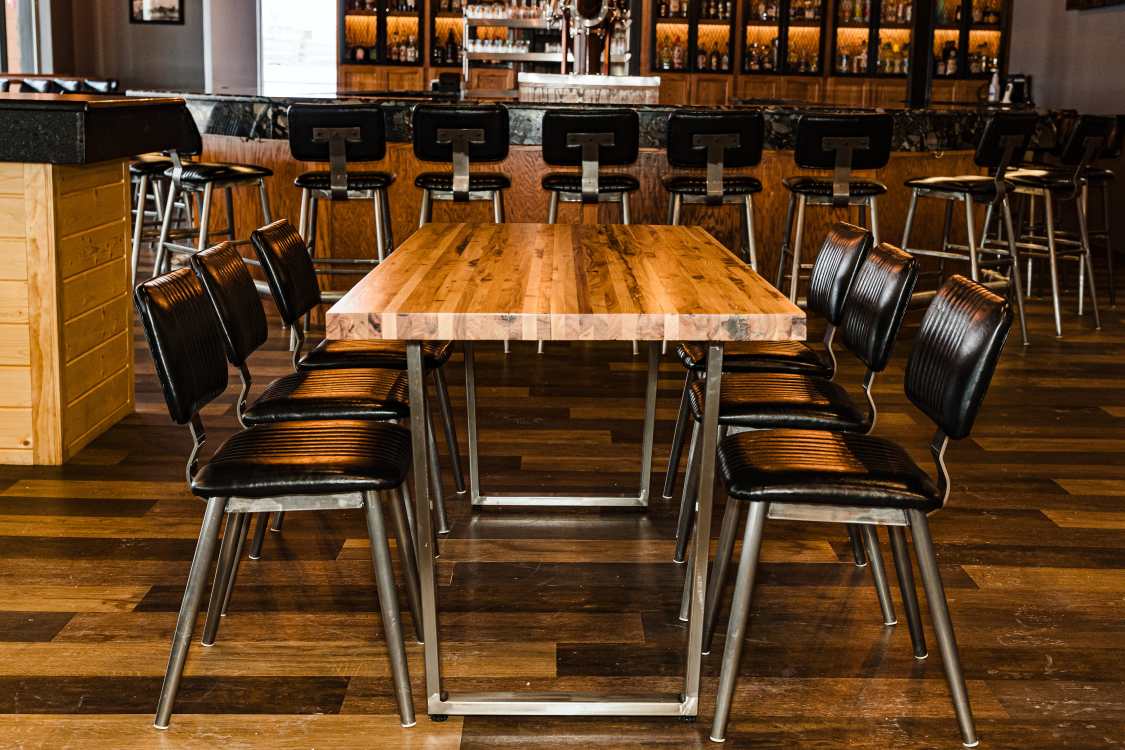
Bootleggers installation furnished by RestaurantFurniture.net. Click the image above to view the full project.
In these spaces, the physical layout frequently shapes how customers interact with both the venue and one another. Seating density, traffic flow, standing areas, bar placement, and mixed seating arrangements all help influence how social energy moves throughout the space during busy service periods.
Designing for Social Movement and Interaction
Bars and breweries often need to support far less predictable customer behavior than many traditional dining concepts. Groups expand and contract throughout the night, customers move between seating areas frequently, and circulation patterns constantly shift during service. As a result, many hospitality decisions within these spaces are designed around visibility, movement, flexibility, and social interaction rather than fixed dining routines.
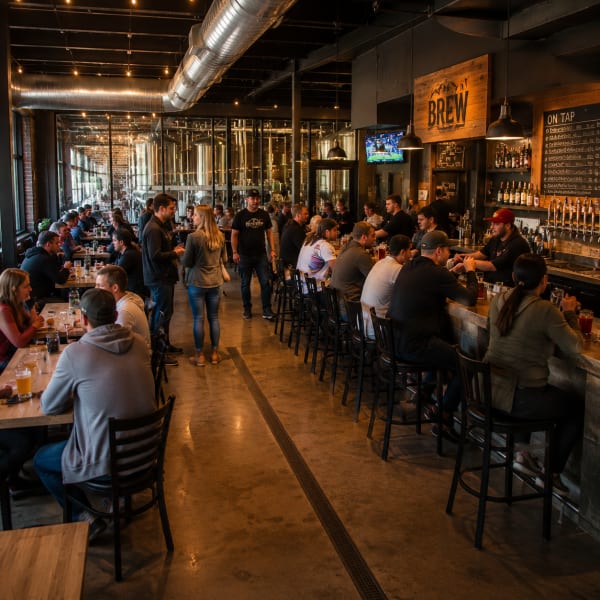
Bars Often Function Around Constant Movement
Unlike many dining concepts where customers remain anchored to one table throughout the visit, bars and breweries frequently operate around continuous circulation within the space itself. Customers move between the bar, tables, patios, standing areas, and service points throughout the night, creating constantly shifting traffic patterns that directly affect how the layout functions during service.
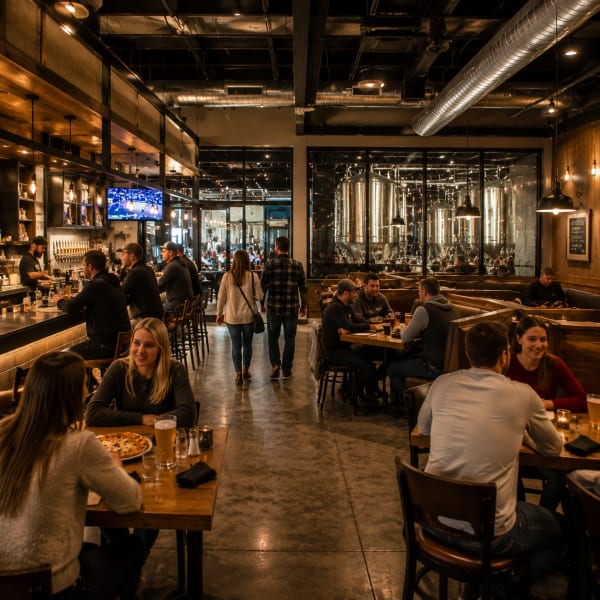
Social Visibility Changes How Customers Interact
Many bars intentionally rely on open sightlines, visible crowd density, and shared social visibility to help shape the atmosphere inside the space. Customers often respond differently when they can easily see activity happening throughout the room, which is one reason many bars rely on open layouts, exposed seating arrangements, and communal gathering areas that make the energy of the room feel more visible and connected.
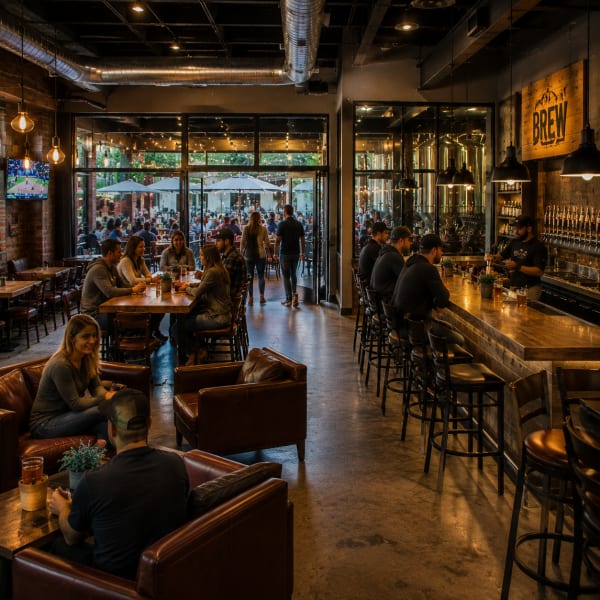
Mixed Seating Creates Different Social Zones
Many successful bars and breweries rely on multiple seating styles within the same space because customers often use the venue differently throughout the night. Bar seating, communal tables, lounge seating, high tops, patios, and standard dining tables all help support different types of social interaction while allowing the overall layout to feel more layered and adaptable during service.
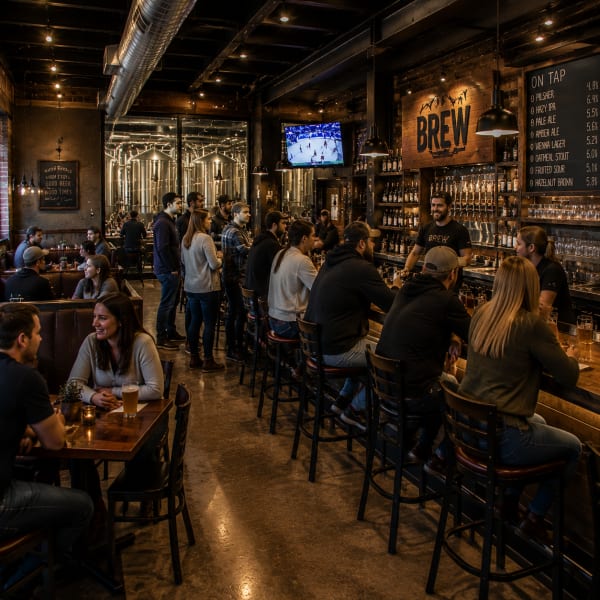
Denser Layouts Often Create More Energy
The amount of physical space between customers can significantly affect how energetic a bar or brewery feels during operation. Tighter seating layouts, active circulation paths, and denser floor plans often increase perceived activity inside the space, helping the venue feel more social, louder, and more dynamic even before occupancy reaches full capacity.
Furniture Choices That Support High-Energy Hospitality Spaces
Bars and breweries often place very different demands on furniture than traditional table-focused dining concepts. Seating regularly experiences constant movement, shifting occupancy, standing interaction, heavier circulation, and longer operating hours, all within spaces that still need to feel social, flexible, and visually cohesive during busy service periods.
| Furniture Category | Common Bar and Brewery Choices | Why They Work Well in Bars and Breweries |
|---|---|---|
| Bar Seating | Metal bar stools, wood bar stools, swivel bar stools, backless bar stools | Bar seating often needs to support constant movement, easier circulation, and shorter seating cycles throughout busy service periods. |
| Dining Seating | Metal restaurant chairs, metal wood-look finishes, industrial-style chairs | Seating in bars and breweries frequently experiences heavier movement, denser layouts, and more continuous use throughout the day and evening. |
| Table Tops | Laminate table tops, butcher block tops, solid wood tops | Table surfaces regularly experience spills, continuous cleaning, heavier daily use, and prolonged operating hours. |
| Mixed Seating Layouts | Bar-height tables, communal tables, patio seating, and luxurious lounge seating | Mixed seating arrangements help bars support multiple types of social interaction within the same layout during service. |
Moving Forward
Bars and breweries are often designed around movement, visibility, and social energy throughout the space itself. The next hospitality concept we explore operates very differently, relying less on crowd interaction and far more on layered occupancy, personal comfort, habitual use, and longer individual stays within the same space.
Coffee Shops and Cafés
Coffee shops and cafés are often designed around comfort, repeat daily use, and customers remaining in the space for extended periods throughout the day. Unlike hospitality concepts built primarily around turnover, group dining, or high-energy social interaction, many cafés are designed to support customers who may work, study, meet socially, or remain alone within the same space at the same time.
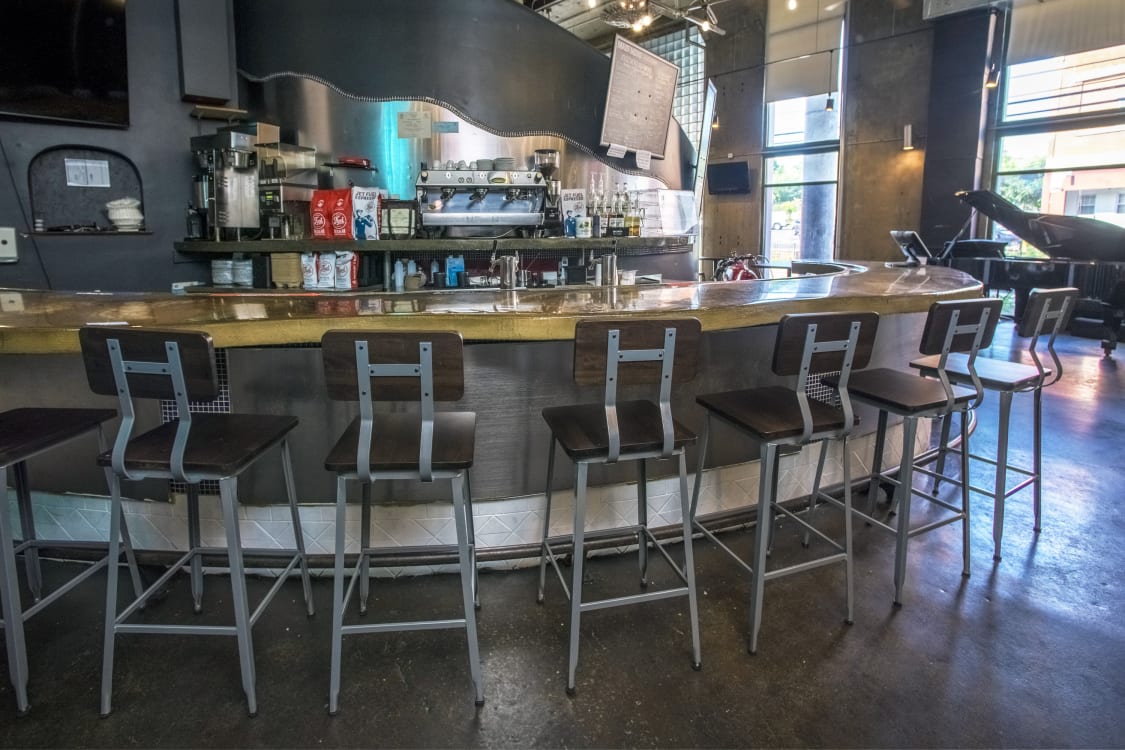
Petrolhead Cafe installation furnished by RestaurantFurniture.net. Click the image above to view the full project.
In these spaces, seating arrangements, table spacing, lighting, acoustics, and furniture variety often help shape how comfortable customers feel remaining inside the café for longer periods throughout the day. Many successful coffee shops rely on layouts that support both privacy and passive social interaction at the same time.
Designing for Different Types of Customer Use Throughout the Day
Coffee shops frequently accommodate a wider range of customer behavior than almost any other hospitality concept. Customers may work alone, meet socially, study quietly, remain briefly, or occupy the same seat for hours at a time while sharing the same space simultaneously. As a result, many café layouts are designed around comfort, flexibility, and varied seating experiences rather than fixed dining patterns.
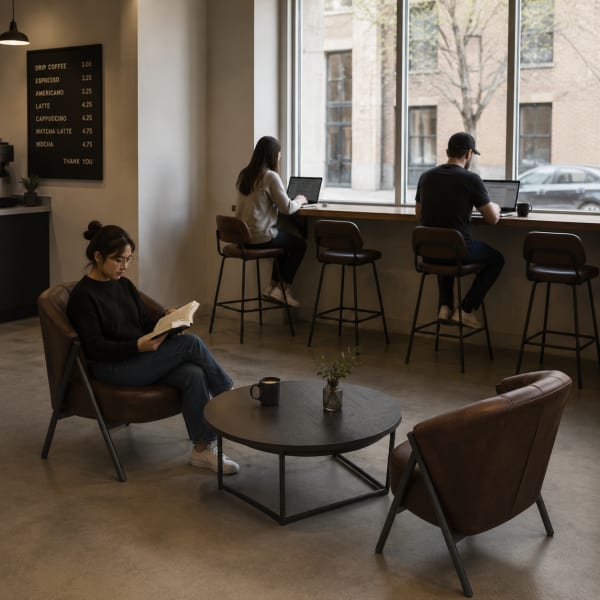
Coffee Shops Often Support Customers Remaining for Hours
Unlike many traditional dining concepts designed around turnover and table rotation, coffee shops often encourage customers to remain inside the space for extended periods throughout the day. Seating comfort, lighting, acoustics, and spacing frequently work together to make prolonged occupancy feel socially acceptable and comfortable without requiring continuous purchasing or active dining.
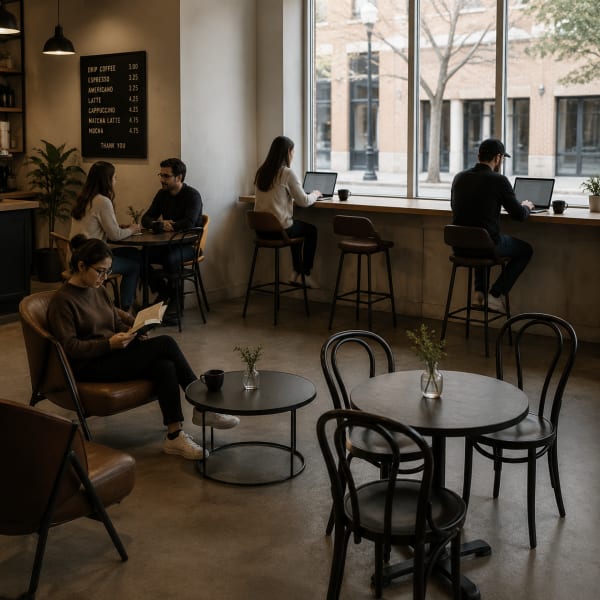
Different Seating Types Support Different Customer Behavior
Many successful cafés rely on multiple seating styles within the same space because customers often choose seating based on how they intend to use the café itself. Lounge seating may support longer stays and casual conversation, while smaller two-top tables, window seating, and communal tables often accommodate solo customers, laptop use, shorter visits, or quieter work sessions throughout the day.
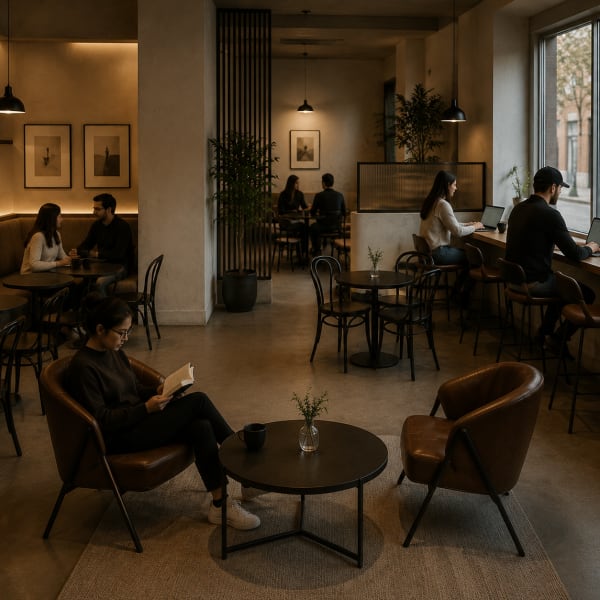
Partial Privacy Often Feels More Comfortable Than Full Exposure
Many coffee shops rely on layered seating layouts, wall seating, corner seating, and partially separated arrangements because customers often feel more comfortable when they can remain socially present without feeling fully exposed to the entire room. Even subtle visual separation inside a café can significantly affect how long customers remain comfortable occupying the space.
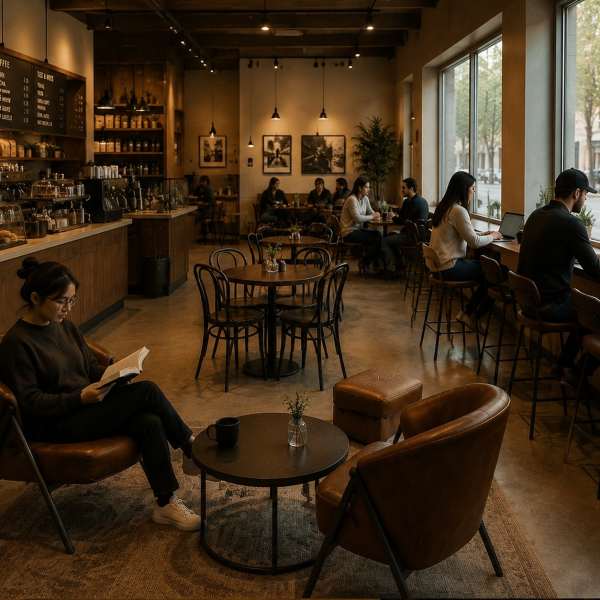
Many Coffee Shops Are Built Around Habitual Use
Many successful cafés rely heavily on repeat customers returning regularly throughout the week. Familiar seating arrangements, predictable layouts, consistent lighting, and comfortable occupancy patterns often help coffee shops function less like traditional dining rooms and more like temporary personal spaces customers naturally return to as part of their daily routines.
Furniture Choices That Support Longer Occupancy and Flexible Use
Coffee shop furniture often needs to balance comfort, durability, flexibility, and prolonged daily occupancy across many different types of customer behavior. Because cafés frequently support solo use, repeat local traffic, longer stays, and varied seating preferences throughout the day, furniture selections are often designed around adaptable occupancy rather than fixed dining routines alone.
| Furniture Category | Common Coffee Shop Choices | Why They Work Well in Coffee Shops |
|---|---|---|
| Lounge Seating | Upholstered bucket seats, lounge-style cafe seating | Lounge seating helps support longer stays, relaxed occupancy, and more comfortable individual use throughout the day |
| Dining Seating | Upholstered wood chairs, bentwood chairs | Dining seating often needs to balance comfort, durability, and flexibility across many different customer behaviors and visit lengths |
| Communal Seating | Communal tables, shared work tables, window counter seating | Shared seating arrangements help support solo occupancy without making customers feel isolated from the rest of the café |
| Table Tops | Solid wood table tops, laminate table tops, small two-top tables | Table surfaces regularly support prolonged occupancy, laptop use, continuous cleaning, and varied customer traffic throughout the day |
| Mixed Seating Layouts | Lounge seating, window seating, communal seating, smaller dining tables | Multiple seating styles help cafés accommodate different customer behaviors within the same space simultaneously |
Moving Forward
Coffee shops and cafés are often designed around personal comfort, habitual use, and customers remaining in the space for extended periods throughout the day. The final hospitality concepts we explore rely far more heavily on controlled pacing, privacy, separation, and highly intentional dining atmospheres designed around immersive customer experiences.
Steakhouses and Upscale Dining
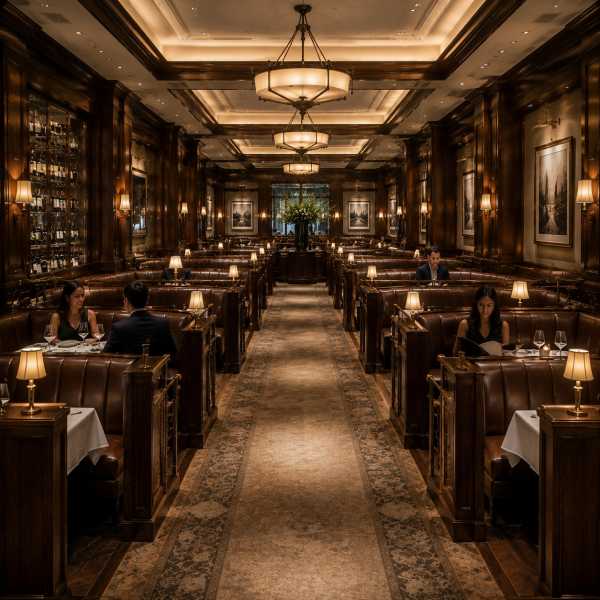
Steakhouses and upscale dining concepts are often designed around pacing, privacy, separation, and immersive customer experience throughout the dining room itself. Unlike hospitality concepts built primarily around movement, flexibility, or social circulation, many upscale dining spaces rely on controlled layouts and layered seating arrangements intended to slow the pace of the experience and make customers feel more insulated from the activity surrounding them.
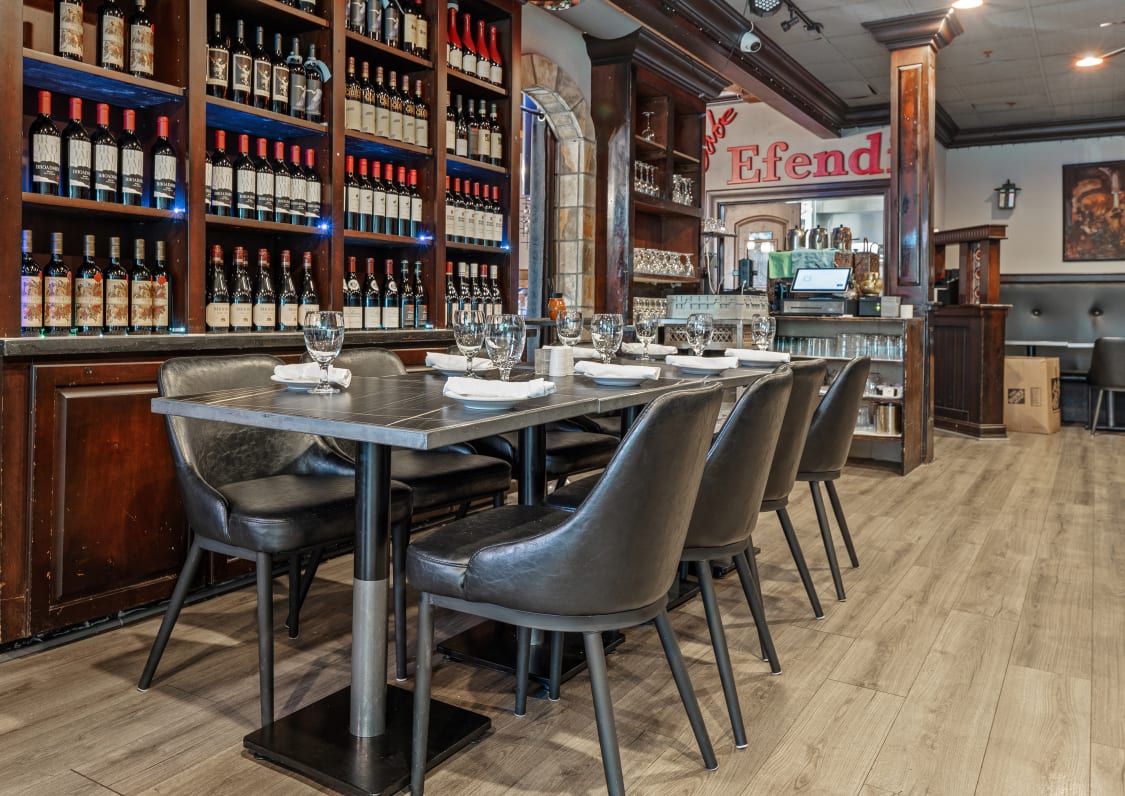
Cafe Efendi installation furnished by RestaurantFurniture.net. Click the image above to view the full project.
In these spaces, seating placement, spacing, lighting, acoustics, and furniture selection often work together to shape how private, comfortable, and immersive the dining experience feels throughout the meal itself. Many successful steakhouses rely on layouts that intentionally reduce visual exposure, soften noise, and create a greater sense of separation between guests inside the room.
Designing for Different Types of Customer Use Throughout the Day
Coffee shops frequently accommodate a wider range of customer behavior than almost any other hospitality concept. Customers may work alone, meet socially, study quietly, remain briefly, or occupy the same seat for hours at a time while sharing the same space simultaneously. As a result, many café layouts are designed around comfort, flexibility, and varied seating experiences rather than fixed dining patterns.
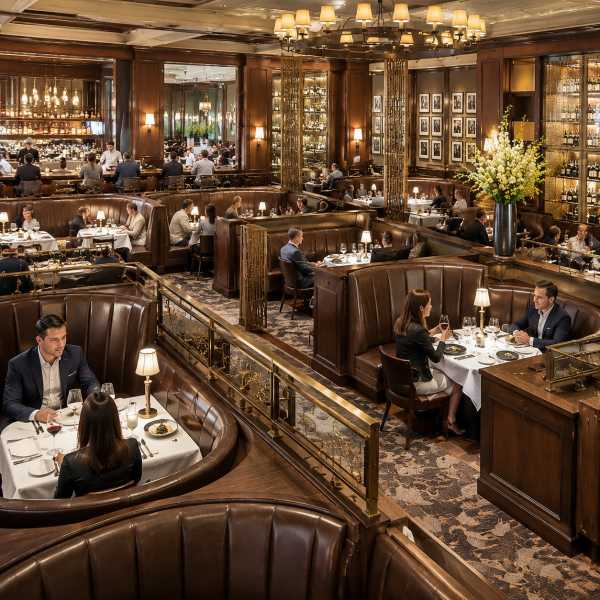
Designing for Privacy, Pacing, and Immersion
Upscale dining concepts frequently rely on a very different type of customer behavior than many other hospitality spaces. Guests often remain longer, conversations become more central to the experience, and the atmosphere itself frequently becomes part of the perceived value of the restaurant. As a result, many physical design decisions inside steakhouses are intended to slow movement, soften distractions, and create a stronger sense of comfort and separation throughout the dining experience.
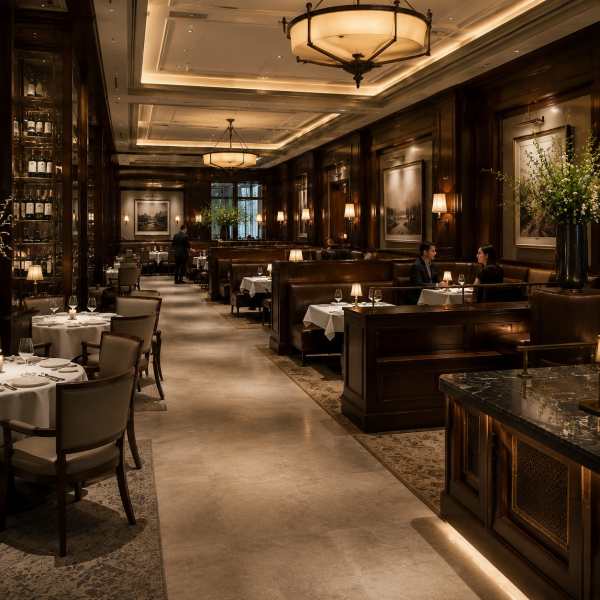
Visual Separation Changes Behavior
Many upscale dining rooms rely on high-back booths, layered seating arrangements, partitions, and visual separation because customers often behave differently when they feel less exposed to the activity surrounding them. Even subtle separation inside a dining room can make conversations feel more private while helping the overall experience feel calmer and more immersive throughout the meal.
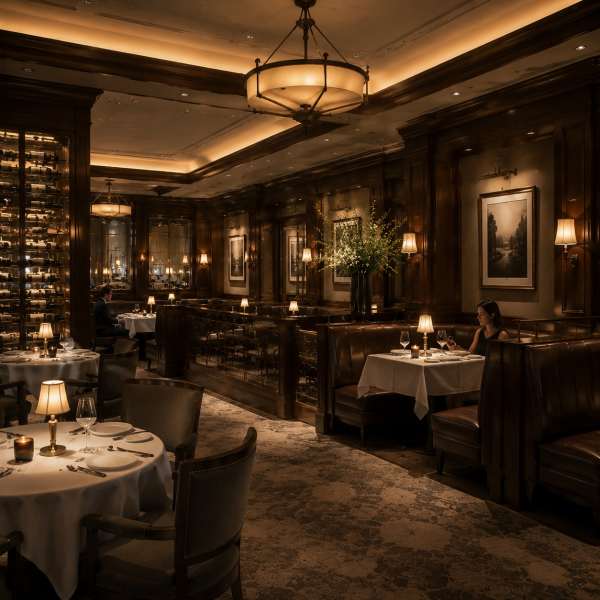
Lighting and Acoustics Often Shape Perceived Exclusivity
Many steakhouses rely on softer lighting, warmer materials, upholstered seating, and controlled acoustics because exclusivity is often shaped as much by atmosphere as by the food itself. Lower lighting levels and reduced noise frequently help upscale dining spaces feel more insulated, intentional, and immersive throughout longer dining experiences.
Permanent Layouts Create Stability
Unlike many hospitality concepts that rely on frequent layout adjustments or flexible seating arrangements, upscale dining rooms are often designed around permanence and visual stability. Fixed booth placement, anchored seating layouts, and more structured dining room arrangements frequently help reinforce the controlled pacing and intentional atmosphere many upscale concepts are trying to create.
Furniture Choices That Support Privacy and Longer Dining Experiences
Furniture inside steakhouses and upscale dining spaces often needs to balance durability with comfort, visual warmth, perceived quality, and longer dining durations throughout service. Because these concepts frequently rely on slower pacing, layered seating arrangements, and more immersive dining atmospheres, furniture selections are often chosen around comfort, permanence, and visual separation rather than flexibility or rapid turnover alone.
| Furniture Category | Common Steakhouse Choices | Why They Work Well in Upscale Dining |
|---|---|---|
| Booth Seating | High-back booths, Upholstered booths , button-tufted booths, wood booths | Booth seating helps create privacy, separation, and a greater sense of comfort throughout longer dining experiences |
| Dining Seating | Upholstered solid wood chairs, premium upholstered chairs | Dining seating often emphasizes comfort, permanence, and perceived quality throughout slower-paced service |
| Table Tops | Solid wood table tops, Stone-look table tops | Table surfaces frequently help reinforce visual warmth, material quality, and the more immersive atmosphere associated with upscale dining |
| Layout Structure | Wider table spacing, layered booth placement, anchored seating layouts | Table surfaces regularly support prolonged occupancy, laptop use, continuous cleaning, and varied customer traffic throughout the day |
| Acoustics and Atmosphere | Upholstered seating, softer materials, enclosed booth seating | Softer surfaces and layered seating arrangements help reduce noise while reinforcing privacy and perceived exclusivity throughout the space |
Final Thoughts
Restaurants are often experienced emotionally long before customers consciously evaluate the furniture, layout, or atmosphere surrounding them. The spacing between tables, the visibility of the room, the comfort of the seating, the pace of movement, and the overall structure of the dining area frequently shape how guests behave, how long they remain, and how they remember the experience itself.
Successful hospitality spaces are rarely built around furniture alone. Seating, table layouts, materials, spacing, lighting, and traffic flow all work together to support the operational goals and customer experience the restaurant is trying to create. The physical design of a dining room often influences customer behavior just as much as the menu, service style, or concept itself.
At RestaurantFurniture.net, our commercial furniture collection supports a wide range of hospitality layouts and design styles, from high-volume quick serve dining rooms and flexible family restaurants to social brewery layouts, layered café seating, and upscale dining spaces designed around privacy and immersion. Our team understands how different venue types operate, helping restaurant owners make more intentional furniture, layout, and design decisions that support both the customer experience and the long-term operational demands of the space itself.