Talk to the Experts (888) 409-1115

Live Chat

Navigate ADA Guidelines Smoothly - Complete Accessibility Guide for Restaurants

Navigate ADA Guidelines Smoothly: Tips for Avoiding Unintentional Non-Compliance

The Americans with Disabilities Act (ADA) sets standards that ensure equal access for all customers and employees. For restaurants, ADA compliance is essential for legal protection, customer experience, and inclusive design. The 2010 ADA Standards apply to new construction, remodels, and many existing buildings. ADA readiness also supports better customer flow and smoother operations.

Entrances and Accessible Routes

Entrances and accessible routes are the first point of interaction for every guest entering your restaurant. The ADA requires that these spaces provide safe and convenient access for individuals using wheelchairs, walkers, mobility scooters, or other assistive devices. Clear and unobstructed pathways ensure that customers can move from parking areas to entrances and through the interior of the restaurant without barriers. These features are critical for creating an inclusive experience and avoiding compliance issues that often stem from overlooked entry points, narrow aisles, or unexpected obstructions.

Entrance Requirements

  • Entrance doors must have a minimum clear width of 32 inches.
  • Thresholds should be no higher than 1/2 inch.
  • Ramps must not exceed a slope of 1:12 and should be at least 36 inches wide.
  • Accessible routes must connect parking, sidewalks, entrances, seating areas, restrooms, and service counters.
  • Flooring must be stable, slip resistant, and free of abrupt level changes.

While meeting these physical measurements is essential, it is equally important to ensure that entrances remain consistently functional throughout daily operations. Factors such as weather conditions, high-traffic periods, delivery schedules, and seasonal decor can unintentionally create barriers. It is good practice to regularly review these areas to confirm that accessibility is maintained.

Modern Tips

  • After layout changes or remodels, verify that all aisles still meet the required 36 inch minimum width.
  • Do not place seasonal decorations, plants, podiums, or special event equipment in accessible routes.
  • For outdoor entrances, keep snow, debris, mats, and water accumulation out of accessible pathways.

Seating and Table Accessibility

Accessible seating must be available both indoors and outdoors and should offer patrons a choice of location rather than isolating them to a single area:

  • At least 5 percent of seating must be accessible.
  • Accessible tables require a clear floor space of at least 30 inches by 48 inches.
  • Table height must be between 28 and 34 inches.
  • Knee clearance must be at least 27 inches high, 30 inches wide, and 19 inches deep.
  • Aisles must allow a minimum 36 inch width for wheelchair movement.

Outdoor Dining Requirements

Outdoor dining areas have become increasingly popular and are considered an extension of your restaurant's service space. These areas must remain accessible to all guests, including individuals using wheelchairs or mobility devices. Ensuring proper surface conditions, clear pathways, and accessible table options helps maintain ADA compliance and creates an inviting, inclusive outdoor experience.

  • Outdoor seating must follow all the same rules as indoor areas.
  • Surfaces should be level and firm.
  • Permanently installed seating should include accessible options.
  • Do not block exterior pathways with heaters, umbrellas, signs, or seasonal furniture.

Post Pandemic and Modern Layout Tips

As restaurants adapt to evolving guest expectations and changing operational needs, flexible design has become more important than ever. Many dining rooms now prioritize adaptable layouts that support comfort, safety, and accessibility without sacrificing seating capacity. Incorporating movable furniture, open pathways, and thoughtful spacing helps ensure that accessibility requirements are met even as the layout changes throughout the day or season.

  • Use mobile or modular tables so layouts can be changed without reducing accessibility.
  • When spacing tables for comfort or safety, maintain ADA aisle and clearance measurements.
  • Ensure QR code menus are readable and that a physical accessible menu option is available.

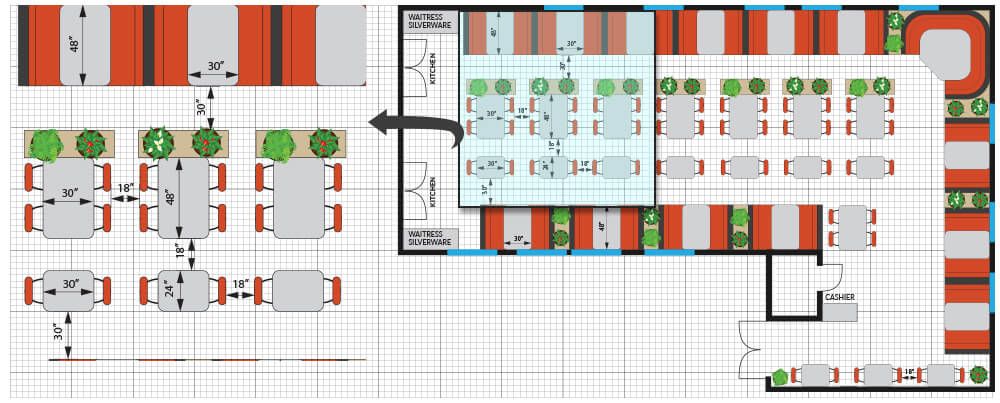
Below is a basic floorplan of a restaurant that adheres to the minimum level of ADA compliance. There is a clear floor space of 30” by 48” for wheelchairs, and a maneuvering area of 36" clear width around the tables. There is accessible accommodation here for most disabled patrons.

restaurant furniture spacing floor plans

Restroom Requirements

Restrooms play a key role in overall accessibility and are often evaluated closely during compliance reviews. Ensuring that at least one restroom or stall is accessible allows guests with mobility devices to navigate the space safely and independently. Proper layout, clear floor space, and correctly installed fixtures help support a comfortable and dignified experience for all visitors.

  • Restroom entrances must have at least a 32 inch clear door width.
  • At least one accessible stall must be provided in each restroom.
  • Accessible stall turning space should provide a 60 inch diameter circle or a T shaped turning area.
  • Toilets should be 17 to 19 inches high to the top of the seat.
  • Grab bars must be installed behind and beside the toilet, 33 to 36 inches above the floor.
  • Sinks must be mounted no higher than 34 inches with 27 inches of knee clearance underneath.
  • Faucets should be operable with one hand without tight grasping, pinching, or twisting.
  • Soap dispensers, hand dryers, and toilet paper dispensers must be within accessible reach ranges.

Communication and Service Accessibility

Accessibility extends beyond the physical environment and includes the way information and services are communicated to guests. Clear communication practices help ensure that individuals with visual, hearing, or cognitive disabilities can fully participate in the dining experience. Providing multiple menu formats and training staff to offer respectful assistance strengthens inclusivity and supports ADA requirements for effective communication.

Requirements and Best Practices

  • Provide menus in alternative formats such as large print, braille, or accessible digital versions.
  • Train staff to assist customers who need help with seating, reading menus, or navigating the space.
  • Service counters must include a lowered accessible portion no higher than 36 inches.
  • Online ordering and reservation systems should follow accessibility guidelines for screen reader support, clear contrast, and keyboard navigation.

Requirements and Best Practices

Implementing effective communication practices ensures that all guests can engage fully with your services, regardless of their individual needs. These requirements and best practices help create an environment where information is accessible, assistance is readily available, and customers feel supported throughout their visit.

  • Provide menus in alternative formats such as large print, braille, or accessible digital versions.
  • Train staff to assist customers who need help with seating, reading menus, or navigating the space.
  • Service counters must include a lowered accessible portion no higher than 36 inches.
  • Online ordering and reservation systems should follow accessibility guidelines for screen reader support, clear contrast, and keyboard navigation.

Reasonable Accommodation and Flexible Design

Creating an inclusive dining environment often requires more than meeting minimum ADA measurements. Reasonable accommodations and thoughtful design choices help ensure that guests with different mobility needs feel welcome and comfortable. By planning for flexibility and proactively addressing potential barriers, restaurants can provide a smooth and enjoyable experience for all visitors.

Best Practices

  • Use flexible seating layouts to accommodate customers who need additional clearance.
  • Distribute accessible seating throughout multiple areas rather than isolating it.
  • Conduct periodic accessibility checks, especially after furniture shifts, seasonal changes, or busy event nights.
  • Keep a process in place for responding to and resolving accessibility requests quickly.
  • Maintain accessible paths when adding temporary elements such as holiday decor, patio expansions, or promotional displays.

Choosing Furniture and Components for Full ADA Compliance

It's important to know that only 5% of your venue needs to be accessible, with accommodations thoughtfully distributed throughout the space. Our carefully curated selection of furniture is designed to help you meet and exceed these requirements, enhancing spatial flexibility and ensuring that every guest is comfortably accommodated. From adaptable tables and bases to high weight capacity seating, these pieces are crafted to create dynamic, inclusive environments that align with ADA standards while optimizing your venue's layout.

wood restaurant chair

Upscale Solid Wood Chairs

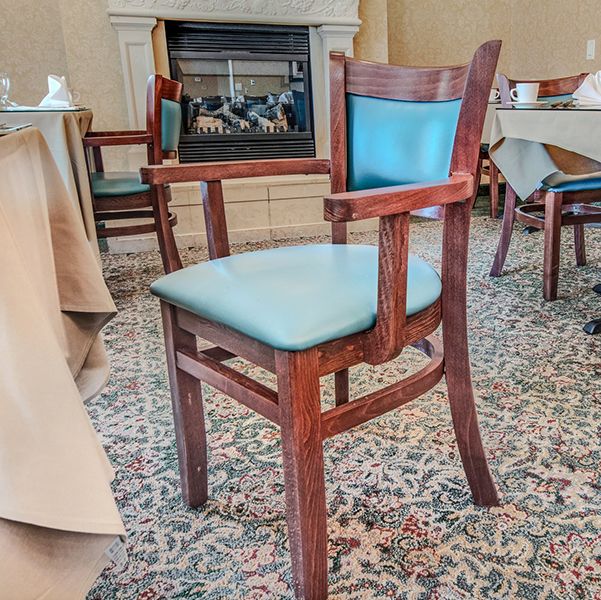
The chair of choice for San Clemente Villas by the Sea, a prestigious senior living facility in Southern California, the Premium Padded Back Wood Chair is one of many from our extensive line of wood chairs and stools. Each piece is crafted for durability under demanding conditions, ensuring it meets the needs of every patron in every venue. Most of our solid wood products feature a weight capacity of 500 lbs and come with nylon glides for stability, guaranteeing guest safety and easy access.
Senior Living Chair

Senior Living Series

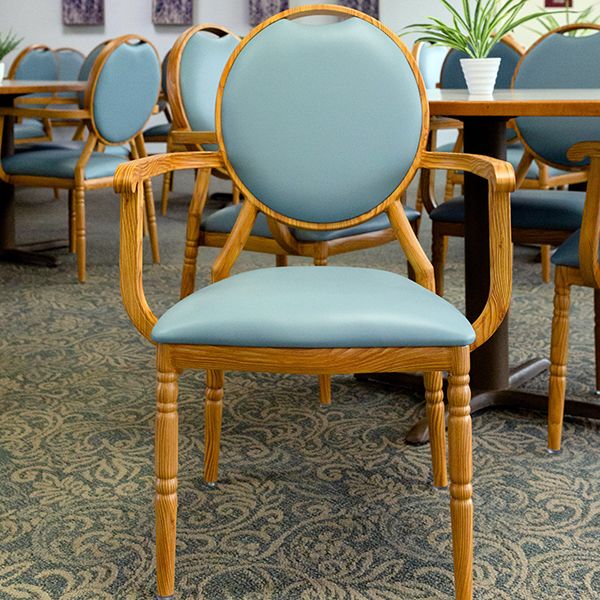
The Louis Wood Grain Armchair, shown below, is a prime example from our carefully curated range of durable senior living chairs, tailored specifically for use in adult care and assisted facilities. Our senior living line includes many models with or without arms, all designed to withstand up to 500 lbs while remaining sturdy, stable, and safe for all users. Many, such as the Louis, offer wider seats for ease of transitioning from a wheelchair. Nylon glides ensure traction, preventing slips and falls.
Metal Restaurant Chair

Metal Chairs & Stools

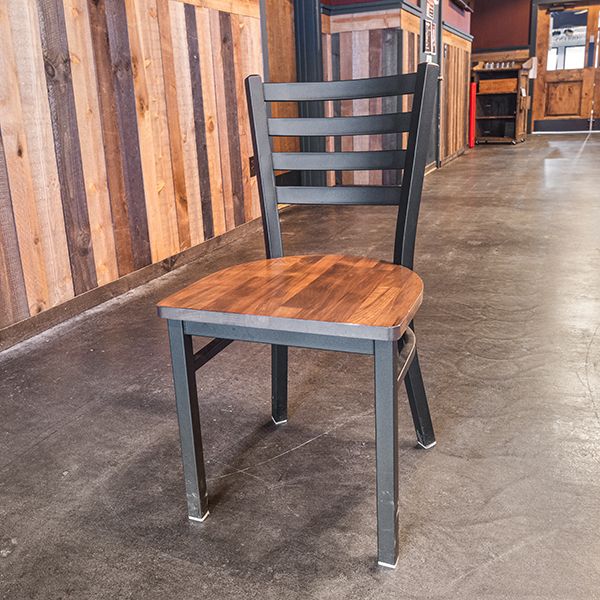
Our Metal Ladder Back Chair, part of our extensive line of metal chairs and bar stools, is designed to accommodate every patron and ensure ADA reasonable accommodations are met. Featuring a fully welded metal frame, this chair offers exceptional strength and stability with a weight capacity of up to 500 lbs. Available in a variety of styles and upholstery options, it seamlessly integrates into any decor while providing lasting durability under heavy use.
booth seating

Booth Seating

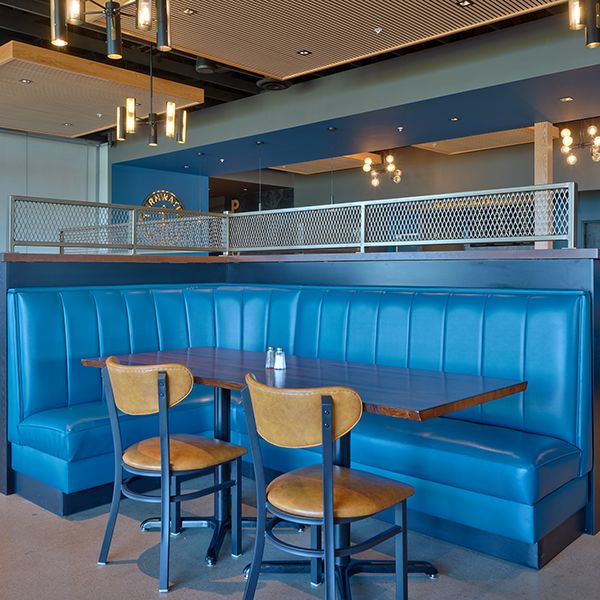
Booth seating is an excellent solution for optimizing space while providing comfortable and private dining areas. Our extensive selection of custom booths can be configured in various ways to maximize space efficiency and ensure clear pathways for wheelchair users. For example, placing booths along walls or in corners frees up central floor space, allowing for flexible table and chair arrangements. See our Booth Table Seating Guide for additional information.
adaptable tables

Adaptable Tables

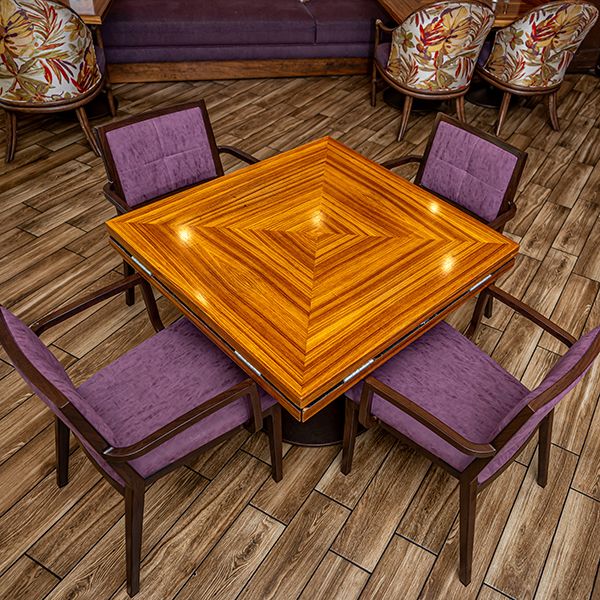
Incorporating adaptable tables, such as drop leaf tables, or folding tables and bases, offers a versatile solution to changing seating needs. These tables can be extended to accommodate larger groups or can be folded down to save space or make room for disabled guests. This adaptability helps maintain the required clear floor space for wheelchair users, ensuring compliance with ADA guidelines and providing a seamless dining experience during peak hours.
drop leaf open

Drop Leaf Flexibility

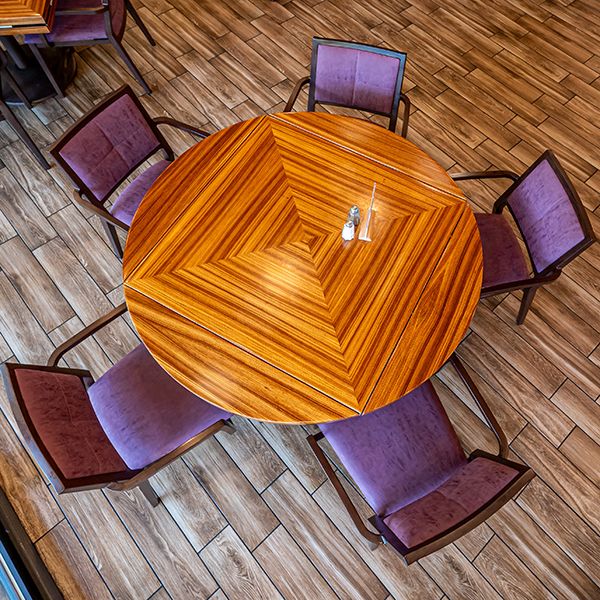
Our 36” x 36” solid wood table tops with optional drop leaf open into a 51” diameter circle. By folding down the leaves, an additional 7 ½” of aisle space is available on each side, creating more room for wheelchair access and ensuring that guests with disabilities can move freely and comfortably. This flexibility allows for quick adjustments to meet varying needs, making your dining space more inclusive without sacrificing style or functionality.
cantilever base

Ottis Table Set

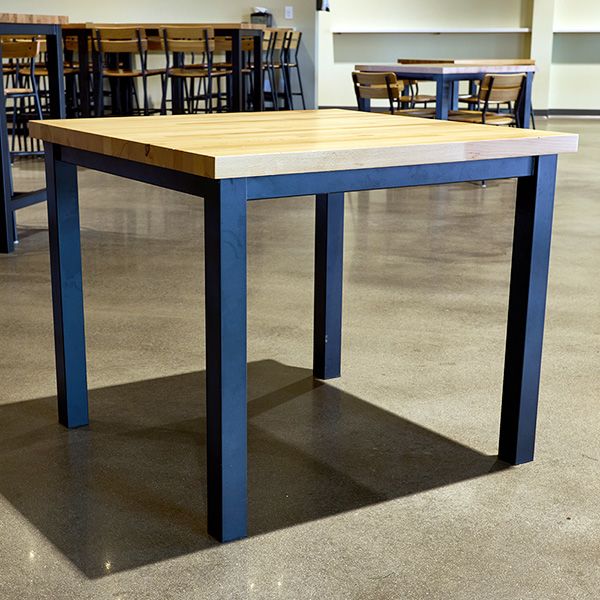
Options such as the Ottis Table Set provide full accessibility in sizes of 36" x 36" and larger, with a four-leg frame that eliminates obstacles common with centrally placed bases. This configuration adheres to ADA guidelines by offering ample legroom and wheelchair access from all directions.
2p table base

2-Prong Table Base

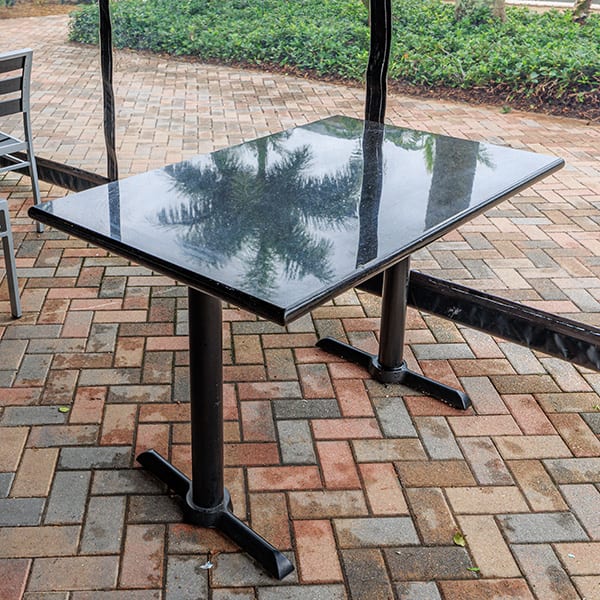
Easily and efficiently allowing for a fully compliant setup, our 2 Prong Table Base offers excellent stability and support while ensuring ample legroom when used with table top sizes of 30" x 48" or greater. One base is positioned at each of the shorter sides rather than a single base in the center, ensuring the necessary space for wheelchair access and maneuverability.
u-shaped table leg

U-Shape & Trapezoid Table Leg

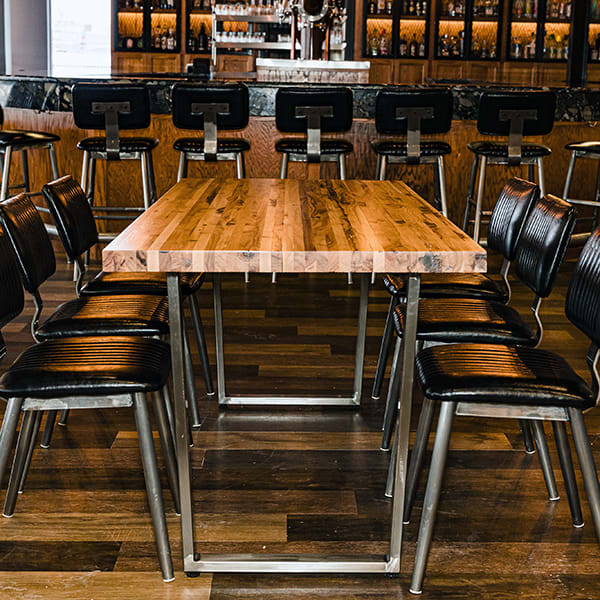
Both our U-Shaped and Trapezoid table legs provide excellent stability and support while maximizing legroom, making them ideal for wheelchair accessibility. The design of these legs allows for full free space under the tables, unlike center-mounted bases that can obstruct movement.

Prioritize Accessibility with Restaurant Furniture.net

Imagine a restaurant layout where accessibility and seating capacity coexist harmoniously, as shown in the floor plan diagram below. This design philosophy goes beyond simply meeting ADA requirements, it’s about crafting an environment where every guest feels welcome and comfortable. By integrating flexible and adaptable solutions, such as extra aisle space for wheelchairs and seating that accommodates guests of all sizes, you not only maximize your space but also show a genuine commitment to inclusivity. The result is a dining experience that is both efficient and inviting, ensuring that every guest can enjoy their meal without compromise.

reasonable accommodation

Creating an inclusive and welcoming environment in your restaurant starts with ADA-compliant furniture. By choosing our range of commercially tried and tested tables, chairs, and booths, you ensure all guests can enjoy their dining experience comfortably. Visit RestaurantFurniture.net to explore our full selection and invest in quality furniture that meets industry standards, enhances accessibility, and sets your restaurant apart as a leader in inclusivity and customer care. Make your venue a standout choice for all patrons with our premium quality, adaptable furniture solutions.

ADA Quick Reference Checklist for Restaurants

This checklist provides an easy way to verify that key accessibility features are in place throughout your restaurant. It can be used during daily walk-throughs, seasonal layout changes, or remodeling projects to ensure that entrances, seating areas, restrooms, and service interactions remain fully accessible. Reviewing these items regularly helps maintain compliance and supports a welcoming environment for all guests.

Use this checklist during daily operations, remodels, or seasonal changes.

Entrances and Routes

  • Entrance door width is at least 32 inches
  • Ramps follow the 1:12 slope maximum and are at least 36 inches wide
  • Accessible pathways are at least 36 inches wide
  • No obstructions in accessible routes
  • Floor surfaces are slip resistant and free of abrupt changes

Seating and Dining Areas

  • At least 5 percent of seats are accessible
  • Tables meet the 28 to 34 inch height requirement
  • Knee and toe clearance meet ADA dimensions
  • Aisles meet minimum width requirements
  • Outdoor seating includes accessible options

Restrooms

  • Accessible stall provided
  • Turning space meets minimum requirements
  • Grab bars placed at required heights
  • Sink height and clearance meet ADA standards
  • Accessories are within reach ranges

Communication and Service

  • Accessible menus available
  • Staff trained in ADA customer service
  • Service counter includes a 36 inch high accessible section
  • Online platforms meet digital accessibility standards

Maintenance and Updates

  • Furniture changes do not affect accessible paths
  • Seasonal or event setups maintain required clearance
  • Regular inspections performed
  • Outdoor dining adjustments maintain accessibility

References for Restaurant Owners