How to Choose Commercial Bar Stools That Hold Up
Bar stools take more punishment than any other piece of furniture in a restaurant. People lean back on two legs, swivel around to talk to the person next to them, drag them across the floor, and hop on and off dozens of times a night. If you bought stools rated for a dining room at home, you'd be replacing them within a year.
Commercial bar stools are built for exactly that kind of abuse. Reinforced steel or hardwood frames, footrests welded rather than glued, finishes that handle nightly sanitizer without peeling, and weight ratings starting at 300 lbs. This guide covers materials, height measurements, style options by venue type, swivel vs. stationary, durability ratings, cleaning by material, and bulk ordering.
Bar Stool Materials: Metal, Wood, and Upholstered
Metal Bar Stools
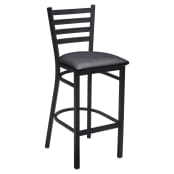
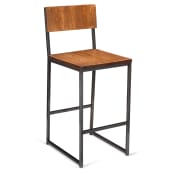
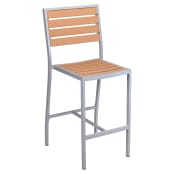
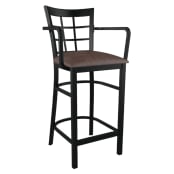
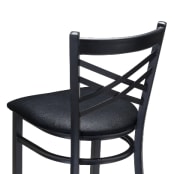
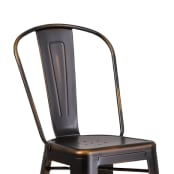
Metal bar stools are the workhorse of commercial seating. Steel frames using 16 to 18-gauge tubing handle 500-lb static loads without adding unnecessary weight. Aluminum is the other option, mostly for outdoor use where rust is a concern. Powder coating is the standard finish: pigment bonded through electrostatic charge and baked on, creating a shell harder than paint. From a day-to-day standpoint, metal is the lowest-maintenance material. Wipe it down with sanitizer, and you're done.
Wood Bar Stools
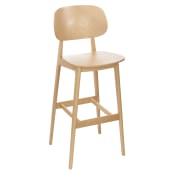
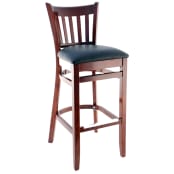
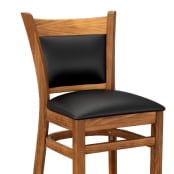
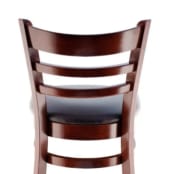
Wood bar stools bring a warmth that metal cannot fully replicate, though our wood grain steel finishes offer a close alternative for high-traffic settings where durability is a priority. For commercial use, beech is a preferred wood species because it is dense enough to withstand daily wear. Look for wood that is kiln-dried to 6% to 8% moisture content, built with mortise-and-tenon joinery and corner blocks rather than dowel-only construction, and finished with catalyzed lacquer to resist wine, cocktails, and commercial cleaners.
Upholstered Bar Stools
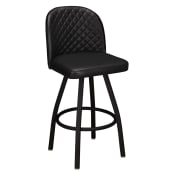
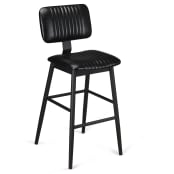
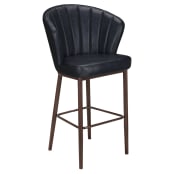
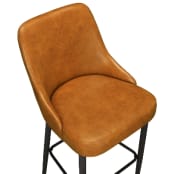
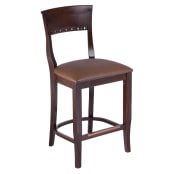
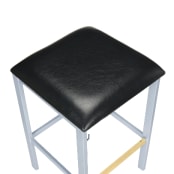
Upholstered bar stools add comfort and visual richness, making them the default in upscale bars, hotel lounges, and full-service restaurants where guests sit 45 minutes or more. For commercial use, vinyl and faux leather are the practical choices: wipeable, stain-resistant, and durable under daily cleaning. The foam spec matters more than most buyers realize. Commercial-grade runs 1.8 to 2.5 lb density, compared to 1.5 lb residential foam that bottoms out within a year. If you choose fabric, check the Wyzenbeek double-rub count: you need at least 30,000 for commercial, and 100,000 or higher for heavy traffic.
Bar Stool Heights: Counter, Bar, and Spectator
Getting the height wrong is one of the most common and most frustrating mistakes in restaurant furniture. The rule is simple: 10" - 12" of clearance between the seat top and the underside of the bar surface. Counter-height stools measure 24” - 27” and pair with 34” - 36” counters. Bar-height stools measure 28” - 30” and match 40” - 42” bar tops. Spectator-height stools run 33" - 36" for elevated surfaces. Before you order, measure your actual bar. Don't assume it's standard. For a deeper breakdown, check our bar stool height and sizing guide.
Choosing the Right Bar Stools
In full-service restaurants and bars, guests sit for 60 to 90 minutes, so you need stools with backs, padded seats, and footrests at the right height. In most traditional interiors the bar area should match the dining room tying the two together so if you're running dark wood restaurant chairs at the tables, put dark wood stools at the bar.
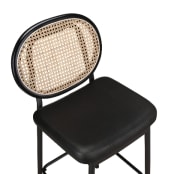
Sports bars and breweries practically require Industrial bar stools fit the brewery aesthetic naturally with exposed metal and matte finishes. Hotels and upscale cocktail bars call for higher investment per stool: traditional bar stools with turned legs for classic lobbies, or modern bar stools with slim profiles for contemporary lounges.
Fast-casual spots need tough, light, easy-to-clean counter-height stools. Metal frames with contoured seats hit the sweet spot. For outdoor bars, outdoor patio bar stools need rust-proof frames and UV-resistant seats. If your city requires secured outdoor seating, bolt-down bar stools mount directly to the floor, maintaining consistent spacing and preventing theft. Space them 26” - 28” center-to-center at a straight bar.
Swivel vs. Stationary Bar Stools
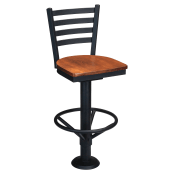
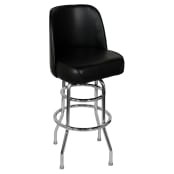
Swivel bar stools let guests rotate 360 degrees without moving the stool. Commercial-grade swivels use a steel ball-bearing ring that handles tens of thousands of rotations. Budget swivels use plastic that loosens within 6 to 12 months. Stationary stools are simpler, lighter, and cheaper, with no moving parts to fail, making them well-suited for counter-service restaurants and coffee shops.
Durability, Weight Ratings, and Commercial Standards
Commercial bar stools need at least a 300-lb static rating, and high-volume venues should go for 400 to 500 lbs. That headroom accounts for dynamic forces when someone leans back, drops into the seat, or pushes off the footrest. On the metal side, 18-gauge steel is the industry standard. For wood, beech is most popular. Don't overlook the footrest: welded steel outlasts bolt-on versions, and a chrome or powder-coated finish on the rail prevents wear-through to bare metal.
Cleaning and Maintaining Commercial Bar Stools
Metal stools are easiest: a damp cloth and sanitizer. Avoid abrasive pads on powder-coated surfaces, and touch up chips before rust starts. Wood stools need finish inspections every few months, especially on the footrest area and front seat edge. Avoid bleach-based cleaners on wood. Upholstered stools take the most work: vinyl wipes clean with soap and water, but fabric needs a stain-protector treatment at install and deep cleaning every 3 to 6 months. The most common reason upholstered bar stools get replaced early isn't structural failure. It's stains and odors that build up over time.
Pairing Bar Stools with Restaurant Chairs and Tables
The bar area should share selected commonalities with the dining room. If your dining room uses metal restaurant chairs, put metal stools at the bar. If your restaurant booths use black vinyl, put the same vinyl on the bar stool seats. Coordinate your restaurant tables and table bases at the same time so the entire space reads as a single, intentional design.
Why Restaurants Choose RestaurantFurniture.net
Every stool on this site is rated for commercial use, tested against real-world abuse, and selected by a team that evaluates frame construction, swivel mechanisms, and finish quality. A large portion of our inventory is manufactured in the US, meaning faster shipping and simpler warranty claims. Call us at (888) 409-1115 or start a live chat to help you pick the right stool.
Browse our full bar stools collection, or shop by material: metal, wood, or upholstered. Filter by style: modern, traditional, or industrial. Need a swivel? Browse our swivel bar stools. And when you're ready to outfit the rest of the space, we carry restaurant chairs, tables, booths, and patio furniture that all work together.