How to Choose Restaurant Booths That Last
Booths are the highest-traffic seating in most restaurants. Guests want them. Servers prefer them. The host fills them first because they make the room look busy even when it's half empty. That popularity comes at a cost: the upholstery takes a beating from every spill, every kid kicking the backrest, and every busser wiping down the seat between turns. When a booth starts to fail, you're not just replacing one seat, you're pulling out a built-in structure.
Choosing the right restaurant booths up front saves you from that headache. The material, frame construction, foam density, fabric specs, and dimensions all need to align with how your restaurant actually operates. This guide covers materials, sizing, venue-specific recommendations, durability specs, cleaning by material type, and bulk ordering.
Booth Materials: Upholstered vs. Wood
Upholstered Booths
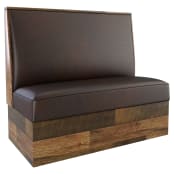
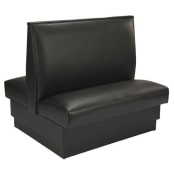
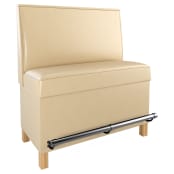
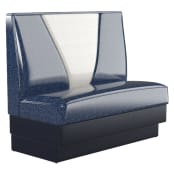
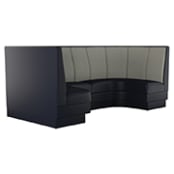
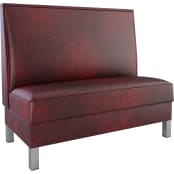
Upholstered restaurant booths are the most common choice in full-service restaurants because padded seats and backrests keep guests comfortable through a 90-minute dinner. Vinyl is the workhorse cover material: wipeable, stain-resistant, and durable under daily sanitizer spray. A good commercial vinyl runs 1.0 to 1.2 mm thick with a woven backing for tear resistance. Thinner vinyls crack and peel within 18 to 24 months.
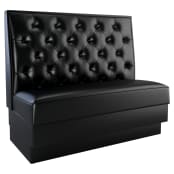
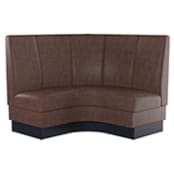
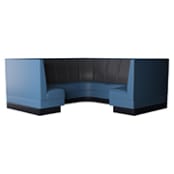
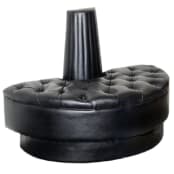
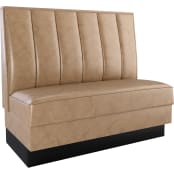
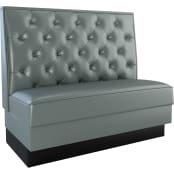
The foam is where most manufacturers cut corners. Commercial booth foam should have a density of at least 1.8 lb per cubic foot for the seat and 1.5 lb per cubic foot for the backrest. Some manufacturers use a dual-density approach: 2.5-lb foam on top of a firmer 3.0-lb base layer. That combination holds its shape through years of daily traffic. Back style options include channel-back booths for a modern ribbed look, button-tufted booths for a traditional diamond pattern, and plain-back booths that wipe clean in seconds.
Wood Booths
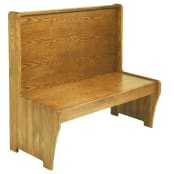
Wood restaurant booths have no padding, so guests sit on contoured hardwood. That works perfectly for meals lasting 30 to 45 minutes, which is why diners, pizzerias, and fast-casual restaurants use them. Oak, maple, and beech are the standard species. The wood should be kiln-dried to 6 to 8 percent moisture, with mortise-and-tenon joinery and corner blocks. Catalyzed lacquer is the best finish for a restaurant environment because it resists commercial sanitizers and spills.
Choosing Restaurant Booths by Venue Type
Fine-dining guests expect deep seats (20” - 24”), high backs (42” - 48”) for privacy, and rich upholstery. Foam density should run 2.0 to 2.5 lb minimum because guests sit for 90 minutes to two hours. Diners and casual restaurants need vinyl upholstery that handles three or four full table turns during a breakfast rush. Standard 36” backs and 17” - 18” seat depth keep turnover up while staying comfortable for a 30 to 45 minute meal.
Bars and breweries typically line booth seating along perimeter walls. Vinyl is non-negotiable because fabric soaks up beer and cocktails. Bar-height booths pair with 42" tables and give the room a different energy. Pair them with bar stools at the main bar for consistent height across the room. For banquet halls and event spaces, waiting benches and legged booths work well because they can be repositioned when the layout changes. Quick-service restaurants do best with wood booths at 16" - 17" seat depth.
Booth Dimensions and Sizing Guide
The standard booth seat height is 18” above the floor. Seat depth ranges from 16” for quick-service setups to 24” for fine dining. Back height ranges from 36” (standard) to 72” (high-back privacy booths). The most common configuration is an 18” seat height, an 18” seat depth, and a 42” back height. A single booth for two per side needs at least 44” in length, and three per side needs a minimum of 64”. For booth-to-booth distance with a 30” table, plan on 78” total. If your dining room needs to meet ADA requirements, check our ADA guidelines for restaurants to make sure the layout accommodates wheelchair access.
Durability Standards and Weight Ratings
Booth frames should be kiln-dried hardwood or heavy-gauge plywood. Avoid particleboard frames in commercial settings because they absorb moisture and lose fastener grip. A hardwood frame with corner bracing handles 300 to 500 lbs per seat position. For vinyl, check thickness (1.0 mm minimum), backing type (woven or knit resists tearing), and abrasion resistance. For fabric, the Wyzenbeek double-rub count should be at least 30,000 for a restaurant and 50,000 for a bar. Many municipalities require upholstery to meet California Technical Bulletin 117 for fire retardancy, so make sure your supplier can provide a Certificate of Compliance.
Cleaning and Maintaining Restaurant Booths
Vinyl booths are the simplest: wipe the seat, back, and side panels with sanitizer after every table turn. Pay attention to the seam where the seat meets the backrest, because that crease traps food debris. Once a week, do a deeper clean with a vinyl-specific conditioner. Avoid bleach on vinyl because it strips the plasticizers and accelerates cracking. Wood booths need a damp cloth after each use, but don't soak the wood. Inspect the finish on the seat and the top edge of the backrest every few months. For fabric booths, apply a stain protector at installation, spot-clean spills the same day, and schedule professional deep cleaning every 3 to 6 months.
Ordering Restaurant Booths
Quick-ship booths ship from a US warehouse within 5 to 10 business days. Custom booths with specific upholstery, dimensions, or back styles take 4 to 8 weeks. Many of our booths are American-made, which means shorter lead times and no overseas shipping delays.
Pairing Booths with Restaurant Chairs and Tables
If your booths use black vinyl, use the same black vinyl on your restaurant chairs. Standard booth seats are 18” high, so your restaurant tables should be 29” to 30” high with matching table bases. For bar-height booths, you need 42" tables. If your dining room mixes booth seating along the walls with freestanding tables in the center, match at least one design element between the aisle chairs and the booths, whether that's stain color on wood trim or the same upholstery fabric.
Why Restaurants Choose RestaurantFurniture.net for Booths
Every booth on our site is built for daily commercial use, from the frame materials and foam density to the vinyl specs and finish. A large portion of our inventory is manufactured in the United States, meaning faster shipping and simpler warranty claims. Need help planning your layout? Call us at (888) 409-1115 or start a live chat.
Browse our full restaurant booths collection, or shop by type: upholstered, wood, or custom. Shop by style: channel-back, button-tufted, or plain-back. Need a faster turnaround? Check our quick-ship booths. And when you're ready to outfit the rest of the dining room, we carry restaurant chairs, bar stools, tables, and patio furniture that all work together.