Restaurant Seating Guide: How to Choose Restaurant Chairs That Last
The chairs you pick during a restaurant buildout will either save you thousands over the next five years or quietly drain your budget with replacements you didn't plan for. We've seen it happen over and over. An owner grabs a set of dining chairs that look great in the showroom, and six months later, the joints are wobbling, the finish is scratched to bare metal, and half the seats have a permanent lean. That's what happens when residential-grade furniture meets a real dinner service.
Commercial restaurant chairs aren't just heavier versions of what you'd put in a home dining room. The frames are reinforced at every stress point; weight ratings start at 400 lbs; and BIFMA testing ensures that a chair that passes those tests handles your busiest traffic with ease. Below, we cover materials, sizing, venue fit, and how to order smart.
Restaurant Chair Materials: Wood, Metal, and Upholstered
Wood Restaurant Chairs
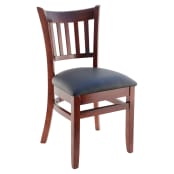
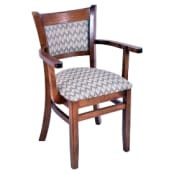
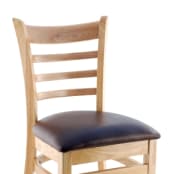
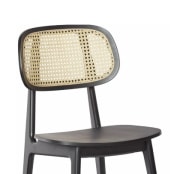
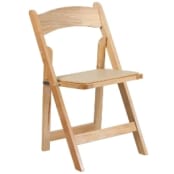
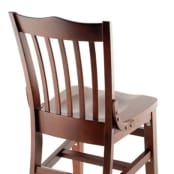
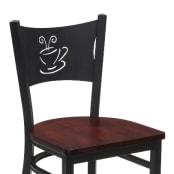
Solid wood works best in full-service restaurants, steakhouses, and anywhere the dining room needs warmth. The best wood restaurant chairs use beech, oak, or mahogany that's been kiln-dried to 6-8% moisture. Joints should be mortise-and-tenon with corner blocks, not dowel-only. Dowels work at home but loosen fast under restaurant-level stress.
For finishes, catalyzed lacquer beats standard polyurethane because it shrugs off water rings, spilled wine, and commercial cleaners.
Metal Restaurant Chairs
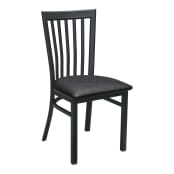
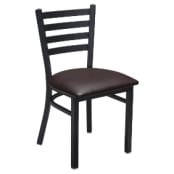
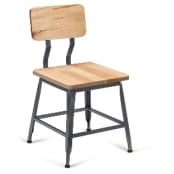
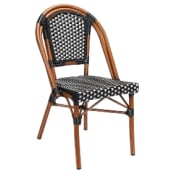
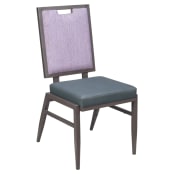
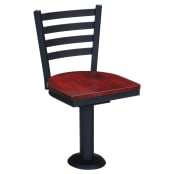
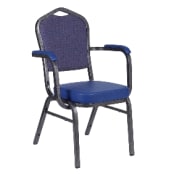
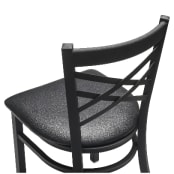
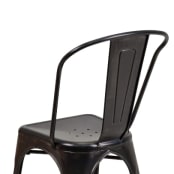
Metal restaurant chairs range from lightweight aluminum for outdoor chairs to heavy-gauge steel in industrial styles. Powder-coated finishes, baked on at a minimum thickness of 2 mils, won't peel and stand up to daily stacking, table-edge contact, and whatever sanitizer your staff is spraying at close range. For higher-traffic environments or areas where maintenance is a concern, our wood grain metal chairs offer the look of natural wood with the added durability and low maintenance of metal construction. Steel frames commonly carry 500-lb weight ratings, and from a maintenance standpoint, metal is about as easy as it gets: wipe them down, and you're done.
Most of our metal chairs feature fully welded frames, providing a level of structural stability that cannot be achieved with screw-assembled construction. Over time, frequent use can cause screws to loosen, leading to wobbling and reduced user confidence. In contrast, fully welded frames maintain their integrity as a single, solid unit, ensuring long-term durability and consistent performance even in high-traffic restaurant environments.
Upholstered Restaurant Chairs
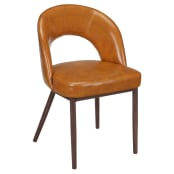
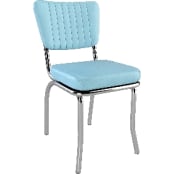
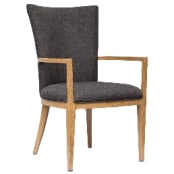
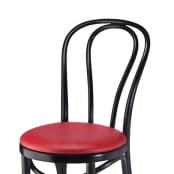
Upholstered restaurant chairs are best suited for fine-dining restaurants, wine bars, and hotel dining rooms where guests are likely to remain seated for an hour or longer. One of the most important performance specifications is the double-rub count: residential fabrics typically rate around 15,000 double rubs, whereas commercial settings should start at 30,000, with high-volume operations often requiring 100,000 or more. Vinyl and faux leather often exceed those benchmarks. They are also easier to clean, making them especially well suited for family restaurants, diners, and other high-turn environments.
Foam quality is equally important. Commercial-grade foam typically ranges from 1.8 to 2.5 lb density, compared with 1.5 lb residential foam, which can compress prematurely under heavy use. Molded foam is another worthwhile upgrade, as it provides more consistent support and retains its shape better over time than cut foam.
Bucket Chairs
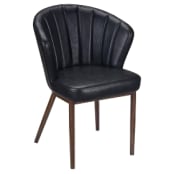
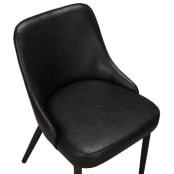
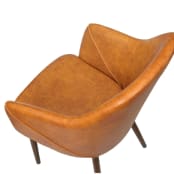
Bucket chairs offer a more supportive, contoured seating experience, making them a strong choice for upscale dining rooms, lounges, wine bars, and hospitality settings where guest comfort and presentation are priorities. Their wraparound backs and integrated arms create a more substantial, refined look while helping guests remain comfortable during longer dining occasions.
Choosing Restaurant Chairs by Venue Type
Your chairs need to fit how your restaurant actually works on a busy night. In fine dining, guests sit for 45 to 90 minutes, so comfort is the whole point: padded seats with at least a 2" cushion, supportive backs, and restaurant armchairs at the best tables. Fast-casual spots need chairs comfortable enough for a 15 to 25 minute meal but not so inviting that people camp out with laptops. Metal chairs with contoured seats hit that sweet spot, and stackable restaurant chairs that go 8 to 10 high save serious time on layout changes.
Bars and breweries lean toward industrial restaurant chairs with exposed metal frames and distressed finishes. Quick sizing note: 42" bar tops require 30" seat-height commercial bar stools, and 36" counters require 24" seat height. Banquet halls buying 100 to 500 stack chairs should prioritize aluminum frames at 7 to 9 lbs each over steel at 12 to 14 lbs, because your setup crew is moving the furniture around for each event. For outdoor patios, restaurant patio chairs need rust-proof frames and UV-resistant seats.
Durability Standards and Weight Ratings
When a chair says "500 lb capacity," that number usually comes from testing, which covers static load, impact, stability, and back strength. Impact and fatigue tests better predict real-world longevity than static load alone. On the metal side, 16 to 18-gauge steel tubing is the industry standard for balancing strength and weight. Among woods, beech is the strongest species commonly used, followed by oak and then maple. Don't ignore floor glides: nylon for hard surfaces, and avoid felt pads, which last about two weeks in a restaurant.
Cleaning and Maintaining Restaurant Chairs
Metal is simplest: a damp cloth, restaurant sanitizer, done. Don't use abrasive pads on powder-coated surfaces, and touch up chips before rust starts. Wood needs periodic joint checks and refinishing once the front seat edge or armrests show wear. Avoid bleach-based cleaners on wood finishes. Upholstery takes the most work: vinyl wipes clean with soap and water, but fabric needs a stain-protector treatment at install and deep cleaning every 3 to 6 months. The number one reason upholstered chairs get replaced early isn't broken frames. It's stains and smells that won't come out. Premium commercial grade fabrics are stain and water proof to an extent but still require timely maintenance and cleaning.
Why Restaurants Choose RestaurantFurniture.net
Every chair on this site was selected for commercial use. Our team evaluates frame construction, weight ratings, and checks finish quality before anything goes into the catalog. A big part of our inventory is manufactured in the US, so lead times are shorter and warranty service is simpler. If you're not sure what fits your project, call us at (888) 409-1115 or start a live chat.
Browse the full restaurant chairs collection, shop by material or filter by style and when you're ready to round out the dining room, we've got restaurant tables, bar stools, and booths that all work together.